By Rachael Ali, Distinguished Writer
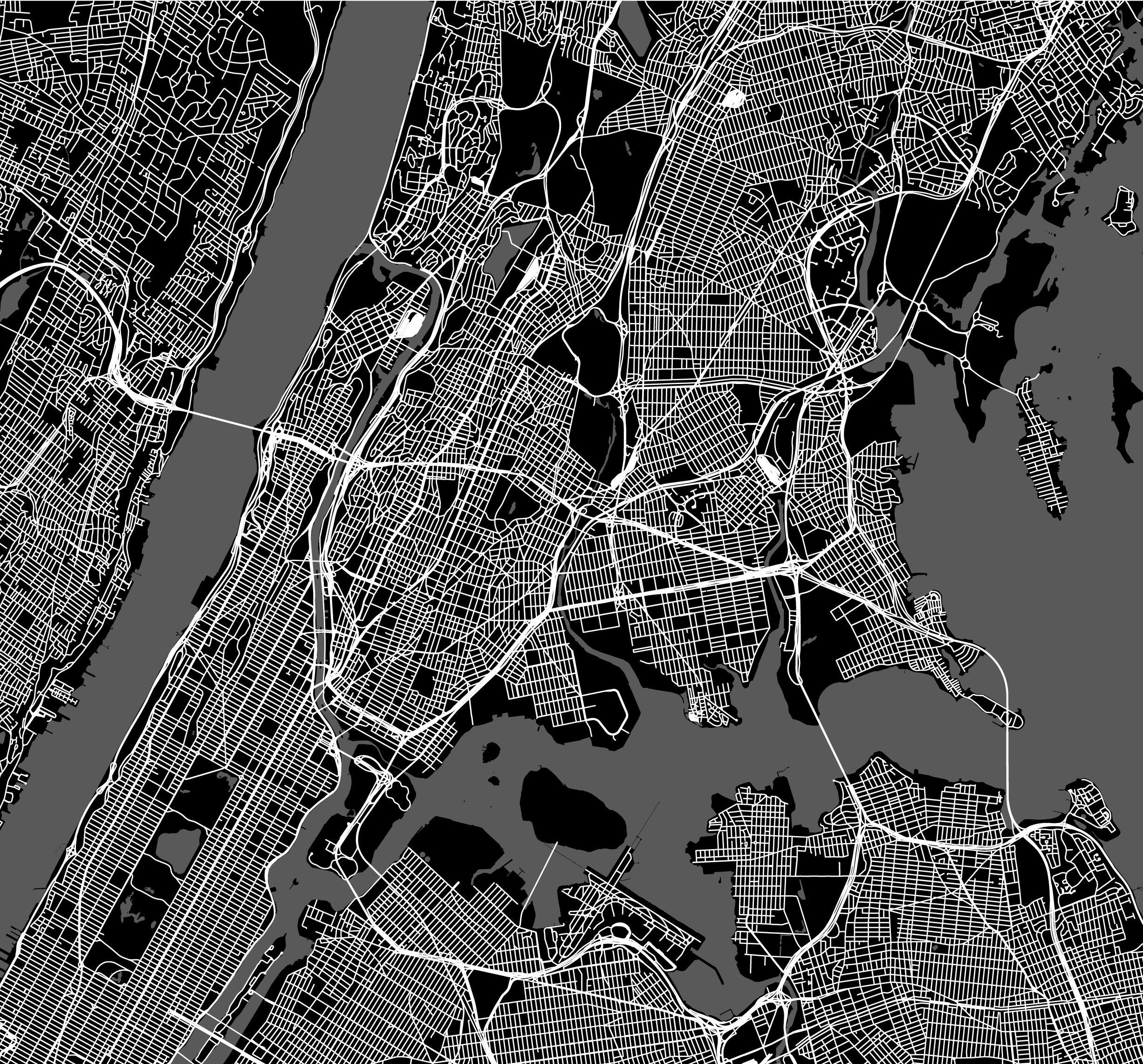
I was born and raised in the Bronx, the daughter of two Trinidadian immigrants. Throughout middle and high school, I went to a predominantly white, all-girls private school on a scholarship in the affluent city of Greenwich, Connecticut. For eight years, I traveled daily between these two cities, observing the differences between the two communities—and there were many. Greenwich looked so prim and proper, with many families of four living in six-bedroom mansions on 10-acre properties. In contrast, my neighborhood was overcrowded, with my sidewalks covered in feces and litter. It was not uncommon for parents, grandparents, and five children to live together in a two-bedroom apartment. Why were our communities so different?
To start, there is a clear racial divide between low-income communities in NYC and wealthier communities throughout the state. According to the US Census Bureau, 9.0% of the Bronx population is white, while 44.3% is Hispanic/Latino and 43.8% is Black/African American (US Census 2021). Many of my high school classmates were from Rye, New York. I had been to Rye a few times to visit friends from school; I even went to a country club there for the first and only time in my life. I remember seeing lots of greenery throughout Rye, as well as large houses and clean-cut hedges. Rather than the trash-littered streets I was used to, the streets of Rye were littered with expensive boutiques and brands I had never heard of, like LuluLemon and Lily Pulitzer. In stark contrast with the Bronx, 83.8% of the Rye population is white, 9.6% Hispanic, and 2.1% Black (US Census 2021).
The US Census Bureau also provides economic data, stating that 24.4% of people in the Bronx live in poverty, yet this number is only 4.9% in Rye (US Census 2021). The median household income in the Bronx was $41,895 in 2020, less than a quarter of Rye’s $193,919 (US Census 2021). These statistics are mirrored when looking more broadly at the United States. In 2019, the poverty rate for the Black population was 18.8%, while this number was 15.7% for Hispanic communities, and 7.3% for whites (Creamer 2020).
Where do these racial and economic disparities come from? It goes back decades, as the federal and local governments implemented several racist laws, such as racially restrictive covenants. These clauses were written into property deeds for individual homes or even entire neighborhoods and explicitly banned people of color from renting or purchasing properties (Brenzel 2022). These covenants became common in the 1920s but were rendered unenforceable by the Housing Rights Act of 1968 (“Bill” 2022). However, racist language from these covenants can still be found in deeds throughout New York. In 2020, it was discovered that 288 deeds in Brighton, NY contained a clause that “[n]o lot or dwelling shall be sold to or occupied by a colored person” (Brenzel 2022). Several states, such as Idaho (“Bill” 2022) and California (“California Law” 2022), have passed bills requiring this discriminatory language to be erased from property deeds. New York has no such laws, but the State Assembly passed a bill in March 2022 that would require property owners to remove these racial deed restrictions (Brenzel 2022). This bill is still awaiting Senate approval over a year later.
Redlining, once backed by the federal government (Brooks 2020), was also a crucial factor in the racial segregation of US cities. The practice of redlining started in the 1930s as many banks throughout the US denied mortgages to people of color at disproportionate rates, preventing them from buying houses in certain areas or getting loans to renovate their homes (Brooks 2020). In addition to the Housing Rights Act of 1968, the Community Reinvestment Act of 1977 (CRA) helped ban this harmful and discriminatory practice (Brooks 2020).
Rye is located in Westchester County—one of the most expensive places to live in the United States (“Westchester” 2017). In the 1920s, several cities in Westchester took the lead on implementing zoning laws to prevent housing for Black and Latino populations (Hannah-Jones 2012). However, in 2017, after an 8-year-long battle with the federal government, Westchester began construction on affordable housing units to promote racial integration (“Westchester” 2017). Despite this progress, there are still drastic racial and economic differences throughout New York. There are a number of other ways in which this state’s racist history manifests itself today, especially when looking at public school funding.
The reason why I went to a school in a different state, 40 minutes away, was because the public schools in the Bronx were severely underfunded, run-down, and even dangerous. I do remember, though, that public schools in more affluent suburbs like New Rochelle and Greenwich had abundant resources and spacious campuses. Why were our public schools so different?
School district borders reflect the decades of residential segregation mentioned above. More than half of American students go to “racially concentrated” schools, meaning that populations at these schools are either more than three-quarters white or more than three-quarters non-white (Lombardo 2019). In terms of funding, predominantly white school districts throughout the United States receive around $23 billion more than districts that serve primarily students of color (Lombardo 2019).
Schools that have lower funding also tend to have higher drop-put rates. In fact, the Bronx has the highest drop-out rate (9.4%) of all the boroughs in NYC (“Dropout Rate” 2020). This percentage is significantly higher than other boroughs whose drop-out rates range from 3.8% in Staten Island to 5.3% in Brooklyn (“Dropout Rate” 2020). In 2018, the dropout rate for Black students was 6.4%, with that number at 4.2% for white students (Cai 2020). This high dropout rate correlates directly with statistics regarding race and unemployment. For example, 22% of Black 18 to 24-year-olds were neither enrolled in school nor working in 2018, and this was notably higher than the percentage of all other Americans in this age group (14%) (Cai 2020). Faced with these challenges, NYC parents and City Council members protested Mayor Adams’ proposal to cut the city’s Department of Education (DOE) budget by $1 billion (Rama 2022). However, the most recent city budget has actually reflected a budget increase instead of the proposed budget cuts. As of this year, the DOE’s spending has increased by $121 million (Gould 2023). These funds are intended to increase school-based mental health support (Gould 2023) as well as the Summer Rising Program which provides free academic enrichment activities (field trips, arts/crafts, outdoor recreation) to all NYC public school students in grades K-8 (“Summer Rising” 2023). These activities are supervised by licensed teachers and the state provides these children with free breakfast and lunch (“Summer Rising” 2023).
It is important to note the racial demographic changes that have taken place in New York City in the past century. The Bronx saw an influx of white immigrants (Irish, Italian, European-Jewish) at the turn of the 20th century. These high immigration rates were the result of rapid urbanization (more jobs) and low-cost public transportation. By 1926, the Bronx was infamous for its high crime rate and rampant gang activity (“History of the Bronx” 2008). This low quality of life resulted in a common phenomenon known as “white flight,” when white populations migrate from urban areas to more suburban neighborhoods (“White Flight” 2023). After climbing the social ladder, white immigrant families moved out of the Bronx between the 1930s and 1960s, and they left behind housing and job opportunities for a new wave of Black and Brown immigrants (“History of the Bronx” 2008). However, these new immigrants of color have faced racial discrimination for decades and are still unable to escape a crippling cycle of poverty.
Due to decades of racially motivated housing and educational policies, Black and Brown children in NYC are forced to survive shabby housing conditions and a discriminatory educational system. I was fortunate enough to receive a scholarship and financial aid to attend a prestigious private school in Greenwich CT, but American children should have equal educational opportunities no matter where they live. I shouldn’t have needed to travel roughly 80 minutes every day over state lines just to receive a good education; Black and Brown children deserve the same opportunities that white students have been afforded for decades.

Rachael Ali is a senior originally from the Bronx and majoring in political science with a double minor in Spanish and French. Rachael is a distinguished writer at Happy Medium Magazine, formerly serving as the publication’s head writer for foreign affairs. Rachael’s goal is to attend law school and become an international lawyer. Topics that Rachael is passionate about include immigration, reproductive rights, indigenous communities, gun laws, and environmental justice.
References
“Bill to Remove Racially Restrictive Covenants from Home Deeds Sails out of Committee.” 2022. Idaho House & Senate Democrats, February 2. https://idahodlcc.org/bill-to-remove-racially-restrictive-covenants-from-home-deeds-sails-out-of-committee/.
Brenzel, Kathryn. 2022. “New York Lawmakers Move to Ban Racial Covenants in Deeds.” The Real Deal New York, March 31. https://therealdeal.com/2022/03/31/state-bill-seeks-to-eliminate-racial-restrictions-in-deeds/.
Brooks, Khristopher J. 2020. “Redlining’s Legacy: Maps Are Gone, but the Problem Hasn’t Disappeared.” CBS News, CBS Interactive, June 12. https://www.cbsnews.com/news/redlining-what-is-history-mike-bloomberg-comments/.
Cai, Jinghong. 2020. “Black Students in the Condition of Education 2020.” Perspectives, National School Board Association, June 23. nsba.org/Perspectives/2020/black-students-condition-education.
“California Law Requiring Removal of Racial Covenants from Property Records Now in Effect.” 2022. Yahoo! News, July 6. https://news.yahoo.com/california-law-requiring-removal-racial-164257727.html.
Creamer, John. 2020. “Inequalities Persist Despite Decline in Poverty for All Major Race and Hispanic Origin Groups.” United States Census Bureau, September 15. https://www.census.gov/library/stories/2020/09/poverty-rates-for-blacks-and-hispanics-reached-historic-lows-in-2019.html.
“Dropout Rate” 2020. Citizens’ Committee for Children of New York, https://data.cccnewyork.org/data/table/135/dropout-rate#135/219/99/a/a.
Gould, Jessica. 2023. “Mayor Adams’ Budget Deal Includes Education Spending Boost, but Big Funding Fight Looms.” Gothamist, July 7. gothamist.com/news/mayor-adams-budget-deal-includes-education-spending-boost-but-big-funding-fight-looms.
Hannah-Jones, Nikole. 2012. “Soft on Segregation: How the Feds Failed to Integrate Westchester County.” ProPublica, November 2. https://www.propublica.org/article/soft-on-segregation-how-the-feds-failed-to-integrate-westchester-county.
“The History of the Bronx, NY.” 2008. UrbanAreasnet, urbanareas.net/info/resources/the-history-of-the-bronx-ny/.
Lombardo, Clare. 2019. “Why White School Districts Have So Much More Money.” NPR, February 26. www.npr.org/2019/02/26/696794821/why-white-school-districts-have-so-much-more-money.
Rama, Kala. 2022. “NYC Parents, Pols Urge Mayor Adams to Restore School Funding.” PIX11, July 19. pix11.com/news/local-news/nyc-parents-pols-urge-mayor-adams-to-restore-school-funding/.
“Summer Rising 2023.” 2023. Nyc.gov, www.nyc.gov/site/dycd/services/after-school/summer_rising.page.
“U.S. Census Bureau Quickfacts: Bronx County, New York.” 2021. United States Census Bureau, https://www.census.gov/quickfacts/bronxcountynewyork.
“U.S. Census Bureau Quickfacts: Rye City, New York.” 2021. United States Census Bureau, https://www.census.gov/quickfacts/ryecitynewyork.
“Westchester County’s Zoning Laws ‘Deemed Acceptable’ Following Years-Long Fight with Feds.” 2017. CBS News, CBS Interactive, July 18. https://www.cbsnews.com/newyork/news/westchester-county-zoning-laws/.
“White Flight.” 2023. Oxford Reference, www.oxfordreference.com/display/10.1093/acref/9780199599868.001.0001/acref-9780199599868-e-2046.

 Happy Medium
You must be logged in to post a comment.