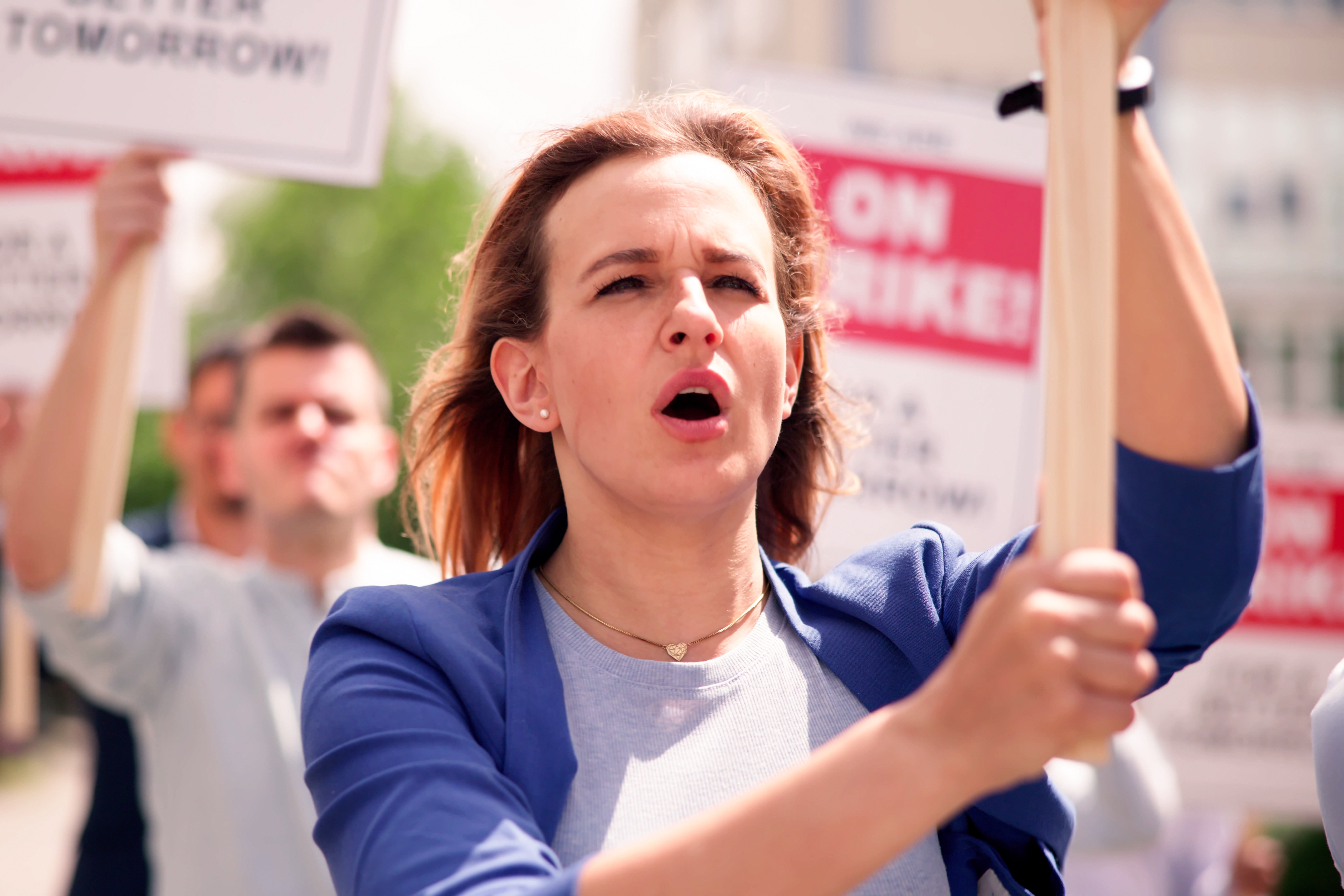
According to the Economic Policy Institute, a worker living in the city of Binghamton must earn a minimum of $36,261 per year to cover costs of living. Up to the 2022-2023 school year, according to the Binghamton Graduate Student Employee Union (GSEU), Binghamton University graduate student teaching assistants made an average of $19,428 annually, a massive shortfall. Graduate students were struggling to make payments for rent, food, healthcare, and transportation. Something needed to change.
After months of petitions, rallies, and writing campaigns, the GSEU and Binghamton University settled on increases in pay for some graduate workers set to be implemented in the Fall of 2023. But this is not the happy ending it might seem to be. It’s only the start of a larger struggle for better conditions.
The pay increases, according to members of the GSEU, were not significant enough to cover the cost of living. In fact, due to rising inflation, graduate students ended up worse off than they were the previous year. They were not significant enough to close the increasingly wide gap between graduate employee wages and the cost of living, and most employees did not even receive a raise. Masters students were left out of the deal, too. Now the difference in minimum wages between masters and doctoral students is close to $10,000 annually, and conditions remain relatively the same for all graduate students.
Matthew Midgett, a PhD student working as an English TA and a leader in Binghamton’s GSEU chapter, has been struggling due to the university’s consistently poor compensation. “TAs, GAs, RAs, and adjuncts are consistently paid poverty wages, sometimes for teaching the same courses and/or course load as our full-time counterparts.” Matthew looks forward to every teaching year, but the poverty wages, frequent unpaid overtime, and indifference from the university’s administration make him feel restricted. Matthew, as a doctoral student, makes a larger salary than many of his peers, but it is still not enough. Sometimes the university will offer reimbursement for any work-related expenses, but it makes little difference. “My low wages prevent me from feeling financially comfortable enough to front the money and wait for a reimbursement,” comments Midgett.
On top of low pay, a significant portion of the wages earned by the graduate workers are eventually reclaimed by the school in the form of various fees. For most students, these fees total up to around $1,200 per semester. For international students, this number could increase by hundreds per semester. These fees are required to pay for amenities provided by the school, including technology and transportation. As pointed out by a petition conducted in November 2023, the technology fee covers materials that are required for graduate students to perform their jobs in the first place, and the school’s transportation is used far more by undergraduates than by graduate students. These fees have caused major backlash from students both graduate and undergraduate and sparked accusations of wage theft against the school.
The State University of New York system provided each of its flagship schools with funds to eliminate the need for fees placed on graduate employees in Fall of 2023. Binghamton University has not yet used these funds, and comments from Binghamton University’s president Harvey Stenger have suggested that the school does not intend to apply those funds equally despite that being its explicit purpose.
The struggles of Binghamton graduate workers are by no means unique. The same issues these student workers face impact workers everywhere in the United States today. It is estimated that as of 2020, around 40% of all American renters spend 1/3 or more of their monthly income on rent (Statista Research Department 2020). Additionally, the Survey of Household Economics and Decision Making, a study conducted by the United States Federal Reserve Board, estimates that, as of 2019, over 16.4 million Americans work multiple jobs, speculated to have only expanded since then. Low wages like the ones paid to Binghamton graduate workers are just not enough to cover the costs of living. Supporting family members, affording quality healthcare, and achieving total food security are all becoming increasingly inaccessible for millions.
The United States’ economy-wide productivity has shot up over 60% since 1979, yet median wages have only risen by around 14% (Cooper and Mishel 2023). Despite soaring profits for companies and inflation demanding increased spending from Americans, the vast majority of workers have not seen any significant improvement in their earnings. “The administration has consistently made me feel as if the most important role I play for the university is to help their bottom line,” says Midgett, “It’s hard not to understand this dynamic as anything other than the university cutting corners on labor compensation to save money or increase profits.”So what is the way forward? How can conditions improve for workers with this fundamental conflict between the goals of companies and the needs of their employees? Although it isn’t a perfect solution, we can look to labor unions as an answer to these questions. Labor unions, put briefly, are democratic organizations composed of workers. Unions effectively consolidate bargaining power among workers. Unions leverage the necessity of workers to influence the decisions of management. Historically, unions have been overwhelmingly successful in improving conditions for workers of all kinds. On average, for the same position and working hours, union-covered workers earn around 11% more per hour than their non-union counterparts (Banerjee et al. 2021). Unions also have been shown to greatly improve job security, increase paid leave time, and secure universal health insurance for workers (Zoorob 2018, and Amick et al., 2015, as cited in Banerjee et al. 2021). The benefits of unions also extend to workers who are not even in a unionized field. The 17 states with the highest unionization rates have minimum wages 20% higher than the national average (Banerjee et al. 2021). This means that, even though they are not represented by a union, workers in states with notable union membership (≥13.5% of the state’s workers) see notable increases in their hourly earnings. Unions have won major victories over the course of 2023 that have not been seen in years. United Auto Workers, the Writers’ Guild of America, Kaiser Permanente nurses, and Unite Here have all gone on strike in 2023, with the resolved strikes as of November of 2023 ending with major victories for the workers despite major pushback from the companies that employed the striking workers. The GSEU, after less than one school year of serious campaigning, has already secured better conditions for doctoral students and does not intend to stop there. The GSEU has also secured endorsements from recently elected Binghamton City Council members who intend to support them in their continued fight for better conditions, so the organization is feeling optimistic. “We feel confident that the councilmembers we endorsed will work tirelessly toward enacting policies that will benefit the people who live in Binghamton rather than the businesses that live here,” comments Midgett.

Travis Rayome is a sophomore majoring in English with an economics minor from Alexandria, Virginia. He hopes to work for humanitarian NGOs around the Washington, DC area, continue writing on politics and economics, and play music. His areas of political interest are propaganda and information dissemination, structural violence and inequality, and power consolidation.
References
Banerjee, Asha. 2021. “Unions Are Not Only Good for Workers, They’re Good for Communities and for Democracy.” Economic Policy Institute, December 15. https://www.epi.org/publication/unions-and-well-being/.
Cooper, David and Mishel, Lawrence. 2023. “America’s Vast Pay Inequality Is a Story of Unequal Power.” American Bar Association, January 6. https://www.americanbar.org/groups/crsj/publications/human_rights_magazine_home/wealth-disparities-in-civil-rights/americas-vast-pay-inequality-is-a-story-of-unequal-power/.
GSEU Binghamton. 2023. “Don’t Leave Some Grad Workers Behind on Fee Elimination.” https://actionnetwork.org/petitions/dont-leave-some-grad-workers-behind-on-fee-elimination.
GSEU Binghamton. 2023. “Living Wage.” https://gseubing.org/campaign.
Rho, Hye Jin and Fremstad, Shawn. 2020. “Multiple Jobholders: Who Are They and How Are They Impacted by the Pandemic?.” Center for Economic Policy Research, July 17. https://cepr.net/multiple-jobholders-who-are-they-and-how-are-they-impacted-by-the-pandemic/.
Statista Research Department. 2022. “Gross Rent As a Share of US Household Income in 2020.” https://www.statista.com/statistics/186732/gross-rent-as-a-percent-of-household-income-in-the-us/.

 Happy Medium
You must be logged in to post a comment.