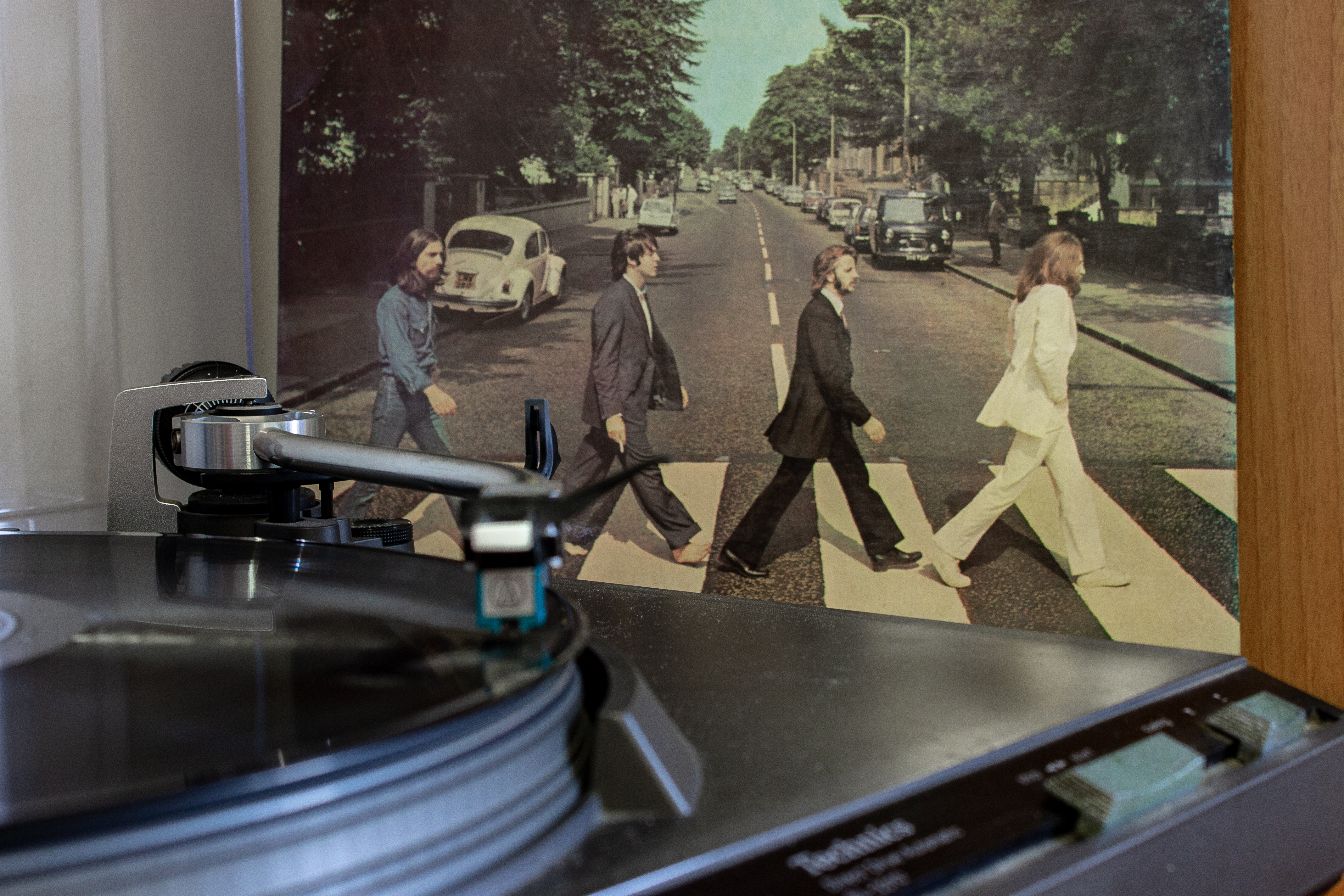
In an April 1966 edition of Time Magazine, the sociocultural landscape of Britain was vividly described as being “in the midst of a bloodless revolution” (“Time Magazine” 1966). The city of London “burst into bloom”; it had shed its “sedate,” mundane former self and instead ushered in a new wave of “fads,” “styles,” and “people” willing to participate in cultural change. Members of the old “Tory-Liberal Establishment” were slowly losing their grip on societal control while simultaneously being replaced by a “[new] leadership community” that included “actors,” “photographers,” “singers,” and other grassroots professionals. The rejection of the elite-dominated status quo ushered in the creation of a new social order– a society in which people wore “suspiciously bright cloth[ing],” listened to catchy beat music, and talked openly about sex.
The “Swinging” 1960s were born. Driven by the increasingly influential Baby Boomer Generation, a “visibly different youth culture” marked by bold experimentation and new artistic flare in arts, music, and fashion emerged (Holden 2004). Young Britons began to reject prevailing moral orthodoxy and instead openly depicted previously taboo subjects– like homosexuality, abortion, drug use, and non-marital sex– through film and visual art (Holden 2004). The development and release of oral contraceptives in the 1960s, despite initially being made for married couples only, helped to break the stigma surrounding open discussion of sex and sexuality (Holden 2004). Many traditionalists decried such societal change as ushering in a wave of “permissiveness” and a newfound “disrespect” for the conservative moral standards of the 1940s and 1950s (Weeks 1989). Nevertheless, images of this youth-driven counter-culture movement became permanently embedded in the collective historical memory of 1960s Britain.
The cultural transformation in Britain prompted both individuals and key social institutions to demand that Parliament enact liberalizing reforms. Longstanding prohibitions or restrictions against same-sex intimacy, abortion access, and contraception were increasingly seen as being harsh and outdated (Weeks 1989). Censorship of theater plays and stringent obscenity laws against literary publications became out-of-step with softening attitudes toward public discussion of sexuality (Weeks 1989). Reform-minded members of Parliament were receptive to growing calls for change, and they introduced and passed transformative pieces of legislation reflecting the evolving social climate of 1960s Britain. An examination of two such pieces of legislative initiatives will demonstrate how parliamentary action came as a response to the broader societal shifts of the 1960s. As previously restrictive moral codes began to be lightened, the push for parliamentary reform further increased– creating a quasi-feedback loop resulting in substantial legal reform and increasing acceptance of previously taboo subjects.
Sexual Offences Act of 1967
Both chambers of Parliament passed the Sexual Offences Act in July 1967 to decriminalize private, consensual acts of same-sex intimacy between adult men over the age of 21 (Holden 2004). Such intimate conduct was a capital offense for centuries in Britain until 1861. Beginning in 1885, sexual activity between males had been regrettably classified as constituting “gross indecency” and liable to possible imprisonment (Weeks 1977). Notably, sexual intimacy between women was not subjected to criminal sanction (Levy 2023). As the number of gay men arrested spiked in the early 1950s, a government-assembled committee was formed in 1954 to evaluate the merits of prevailing prohibitions on such sexual conduct (“Wolfenden Report”). In 1957, the Wolfenden Committee published a findings report that recommended, among other things, that private acts between two consenting adults of the same sex be decriminalized (“Wolfenden Report”). Starting from the notion that “the function of law” is not to enforce “a particular moral code” in most circumstances, the Wolfenden Committee relied heavily on the enlightened viewpoints held by representatives of social institutions– like the Anglican Church (Holden 2004).
The Wolfenden Report’s recommendations made a splash in the media– but initially landed like a dud in Parliament. Out of fear that general public opinion would not approve of liberalizing reform, the House of Commons in 1958 was in no rush to implement the Wolfenden Committee’s recommendations pertaining to homosexuality. While it remains likely impossible to truly determine what the national consensus of Britons was with respect to decriminalization, a closely followed Gallup poll immediately following the House of Commons debate showed that a plurality of those surveyed were against the Wolfenden Report’s conclusions (Holden 2004). When Labour M.P. Kenneth Robinson in 1960 introduced a motion urging the Conservative government of P.M. Harold Macmillan to implement the Wolfenden recommendations, it was defeated by a vote of 213 to 99 (Holden 2004).
As the 1960s progressed, however, public opinion on decriminalization markedly shifted. A poll conducted in 1965 by the conservative-leaning Daily Mail showed that 63% of those surveyed believed that private sexual intimacy between gay adults should be decriminalized (Holden 2004). The push in favor of reform by the Anglican Church likely contributed significantly to the apparent shift in public opinion (Holden 2004). The shift was also facilitated by broader societal openness towards sexual liberation. A “better-educated middle class” became participants in the 1960s counterculture movement– one in which new trends in “[m]usic, clothes, [and] style” were inspired by the pioneering–both “sexually” and “socially”–pop stars of the 1960s (Weeks 1989). It is no surprise, then, that the younger generation seemed to be much more supportive of decriminalization: a 1964 poll of undergraduate students at Oxford University found that three-quarters of undergraduates surveyed supported decriminalization of same-sex intimacy between consenting males (“Oxford Supports Wolfenden”).
Throughout the next several years, both chambers of Parliament debated various bills introduced to amend the prevailing British laws against homosexuality. The election of Labour Leader Harold Wilson as Prime Minister in 1964 marked the arrival of a new government more open to reform (Holden 2004). Even before his election, several reform supporters in Parliament believed that it was their duty to amend the law– despite looming uncertainty over how the general public truly felt. M.P. Kenneth Robinson in 1960, for example, voiced his support for reform on the Commons floor by stating his belief that the Government should “lead” rather than merely follow public opinion (“Hansard”). As parliamentary debate pushed the subject of decriminalization into the limelight, the general public was able to refine or even change their previously held opinions on the subject. The proposed bills were narrow in scope: decriminalization would only apply to England and Wales, and several military branches would be wholly exempt from reform (Weeks 1989). By the summer of 1967, when M.P. Leo Abse’s bill became law, Parliament had demonstrated its ability to both actively lead and respond to rapidly changing morality standards in the 1960s.
Abortion Act of 1967
Increased willingness to debate sexuality and other previously taboo subjects also paved the way for changes in female access to reproductive care. Under English common law, abortion was originally not considered criminally offensive if performed before “quickening”– or the moment where the fetus begins to move within the womb (Green 1968). After 1803, any abortion attempt–regardless of what stage the mother was at– became severely punishable under law. In England and Wales, abortion remained a severe criminal offense under the Offences Against the Person Act of 1861 (Green 1968). The formation of the Abortion Law Reform Association (ALRA) in 1936 served to further the cause of women who sought reform of this draconian law (Green 1968). In 1961, M.P. Robinson– the same legislator who introduced the failed 1960 motion to implement the Wolfenden recommendations– introduced a bill that would permit a woman to proceed with an abortion if her pregnancy resulted from a “criminal offense” (e.g. rape) or if the child was likely to have a severe medical “deformity” (Green 1968). However, that bill never received a vote before the session adjourned. By 1966, advocacy groups like the ALRA began to galvanize support for a change in the law. A poll conducted on behalf of the ALRA in July of that year indicated that three-quarters of those surveyed indicated their support for reform (Holden 2004).
In July 1966, the House of Commons considered M.P. David Steele’s Medical Termination of Pregnancy Bill (Green 1968). The bill would allow for a registered physician to perform an abortion if the pregnancy: (a). would result in “serious risk” to the life of health of the mother, (b). would result in a child being “seriously handicapped” by “physical or mental abnormalities,” (c). would cause the woman’s capacity as a mother to be “seriously overstrained,” or (d). was a result of rape or occurred when the woman was under the age of sixteen (Green 1968).
Despite notable public resistance from the Roman Catholic Church, public polling throughout 1966 indicated that a sizable majority of the public remained in favor of passing abortion reform (Greene 1968). Before final passage of the bill through both chambers in July 1967, a clause was added to the legislation that provided an escape valve for practitioners who hold “conscientious objection[s]” to performing abortions in general (Green 1968).
While forces opposed to abortion consolidated in the 1960s and subsequent decades, women who sought to exercise a new degree of bodily autonomy were well helped by the Abortion Act’s passage. The rate of recorded abortions increased in the years following 1968– which reflects two broad shifts spurred by the Act’s passage: (a). movement away from dangerous “back-alley” abortions towards those performed safely in clinical settings, and (b). the growing acceptance of abortion as an option in case birth control fails (Weeks 1989). Parliamentary passage of the Abortion Act followed the heels of broader social acceptance of sexual openness and the ability of women to “control their own fertility” (Weeks 1989).
British society remade itself in the 1960s. Reforms passed by Parliament ushered in a new landscape where contemporary standards of morality within British society were not necessarily embedded within legal code. Reflecting broader shifts towards greater, more open discussions of sexuality, Parliament began to liberalize previously draconian restrictions that sought to govern how Britons ordered their private lives. From the expansion of abortion access to the decriminalization of intimacy between members of the same sex, such legislative action encapsulated how the British government responded to dynamically shifting public attitudes during the Swinging ‘60s.

Joseph Brugellis, Marketing Editor, is a sophomore from New Hyde Park, NY, double-majoring in history and philosophy, politics, and law. After graduation, Joseph plans to go onto law school and hopes to one day be appointed as a federal judge. Joseph is passionate about the American judicial branch and is deeply interested in how different interpretative philosophies held by judges shape constitutional law. During this past summer, Joseph worked as an intern in the office of United States Senator Kirsten Gillibrand. In his free time, Joseph enjoys reading, listening to music, and exploring nature.
References
Green, David. 1968. “The Abortion Act 1967.” The British Journal of Criminology.
https://www.jstor.org/stable/pdf/23635216.pdf?refreqid=fastly-default%3A4cc4fa95185fe757624f67c528d8e97e&ab_segments=&origin=&initiator=&acceptTC=1
“Hansard.” U.K. Parliamentary Papers. https://parlipapers-proquest-com.proxy.binghamton.edu/parlipapers/result/pqpdocumentview?accountid=14168&groupid=96878&pgId=e02c217a-7b81-463b-9204-25e434d0d82e&rsId=18C697269F7
Holden, Andrew. 2004. “Makers and Manners: Politics and Morality in Postwar Britain.”
London: Politico’s Publishing.
Levy, Michael. 2023. “Britannica: Gay Rights Movement.”
https://www.britannica.com/topic/gay-rights-movement#ref1077994
“Oxford Supports Wolfenden.” 1964. Times, October 7.
https://link-gale-com.proxy.binghamton.edu/apps/doc/CS85157703/TTDA?u=bingul&sid=bookmark-TTDA&xid=e40ee2ba
“Time Magazine.” 1966. The TIME Magazine Vault.
https://time.com/vault/issue/1966-04-15/page/38/
Weeks, Jeffrey. 1977. “Coming Out: Homosexual Politics in Britain from the Nineteenth Century to the Present.” London: Quartet Books.
Weeks, Jeffrey. 1989. “Sex, Politics, and Society: The Regulation of Sexuality since 1800.”
London: Longman Group.
“Wolfenden Report.” UK Parliament. https://www.parliament.uk/about/living-heritage/transformingsociety/private-lives/relationships/collections1/sexual-offences-act-1967/wolfenden-report-/

 Happy Medium
You must be logged in to post a comment.