By Halina de Jong-Lambert, Interviews
In this high-stakes presidential election, with the Democratic and Republican tickets grabbing the majority of headlines, we are prone to forget about third-party candidates.
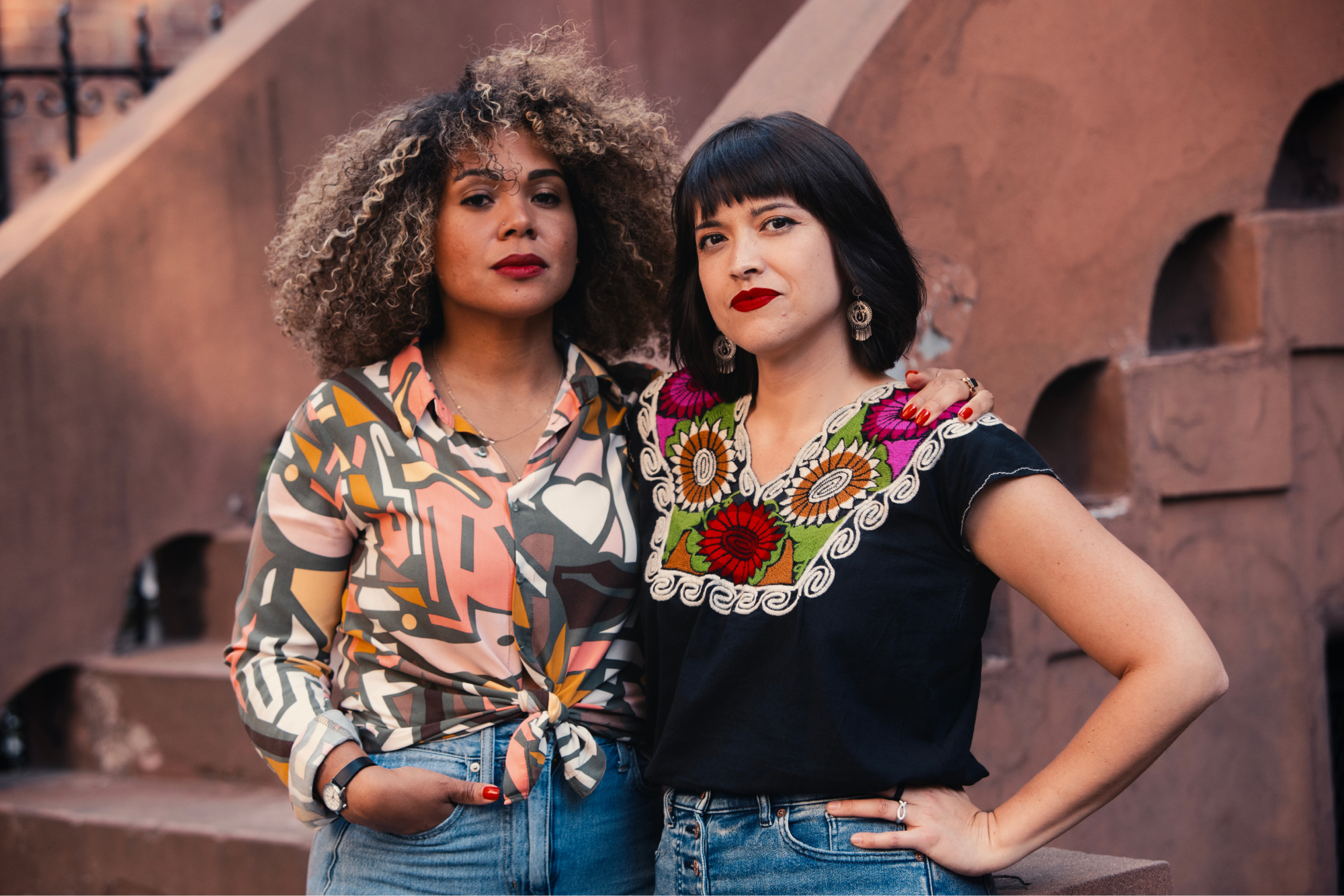
Claudia De la Cruz, the candidate for the Party for Socialism and Liberation, has a revolutionary agenda and a piercing gaze that demands you not disregard her. She acknowledges that many would consider components of her plan to end capitalism (as well as the plan itself) “radical:” notably, seizing the 100 most prominent corporations in the United States and subjecting them to collective ownership, as well as disbanding the United States Senate, Supreme Court, and Federal Reserve. But to De la Cruz, these are necessary steps for a long-overdue reformation of a profoundly unequal country.
When I asked her about her agenda for corporation nationalization, De la Cruz asserted, “Take into consideration a corporation—like Amazon for example—[it] wouldn’t be Amazon, and it wouldn’t accumulate the amount of profit it does, if it were not because of the workers that work there.” For De la Cruz, the robber barons of the Gilded Age are alive and well in today’s America. She asked me, “Why is it that the United States ruling class is so brutal and so criminal towards the majority of people in this country; why is it that they don’t care about humanity or the planet?”
The biggest shift required by a socialist revolution, according to De la Cruz, is a mental one. She says of her “revolution,”—“It is possible, but we need to disassociate ourselves from a capitalist object that tells us that the only reality is this.” I proceeded to mention the troubled history of socialism as a possible factor that might deter potential supporters, notably the failure and collapse of the USSR. She quickly responded with one of the most surprising statements of our conversation: that the USSR was “sold out,” and that “the person in power, Gorbachev, was very friendly with the United States and gave up the revolution.”
According to De la Cruz, the United States played a role in the downfall or economic failure of many socialist nations, considering them a threat to US hegemony. Regarding Cuba, she cited the US’s long-standing economic sanctions against them which have restricted possible revenue: “What can a country do with $15 million? It’s a whole lot a country could do.” In the case of Venezuela, she said, “see what Venezuelans can do with having their gold given back to them, with giving them back their petroleum and oil companies,” (referring to oil sanctions against Venezuela). De la Cruz’s argument that socialism has never really gotten a fair trial due to “US imperialism” rested on another assumption, one which those who have lived under a socialist socio-economic structure might challenge. She told me, “If their people didn’t want them, they wouldn’t be there.”
Much of De la Cruz’s cynicism about the US’s international influence seems to come from the same place as her disdain for the nation’s governmental and economic structure: that is, its history of suppressing activist groups. She noted to me, “If you’re principled and you fight for those things, the United States government administrations will guarantee that you die.” Many leftist activists have voiced variations on this opinion throughout American history, and one might expect that a candidate who places herself on the side of activists would consider herself closer to the Democratic party than the Republican Party, or at least able to share common ground with them. When I asked De la Cruz about this, a gleam appeared in her eye. De la Cruz sees the Democratic party as “the most undemocratic element in American society.” She may even have a preference for the Republican Party over Democrats. She told me, “The Republican Party—we know exactly what it is. The Democratic Party is like a fox in so many ways that they’ll smile at you, but their intention is still to bite into your flesh and eat you. They’re not there to move the country towards progressive policies.” This Little Red Riding Hood-esque Democratic Party is, in fact, one of her main justifications for a socialist revolution, as she reiterated many times that the Democrats are simply an ”obstacle” to real change.
So where did this hardening against America’s political, social, and economic structure come from? De la Cruz pinpoints much of her disillusionment with the American dream to her upbringing in the South Bronx. As she described to me, “this is the poorest congressional district in the United States, and it has been the poorest congressional district for a long time. This is a neglected community, an abandoned community with high levels of healthcare issues from asthma to diabetes.” Growing up, she experienced what she saw as “a huge gap between what your reality is and what they show you is possible,” perpetuated by Jay Z and other cultural icons who lived “a lavish life” that appeared diametrically opposed to her own experience. She spoke with special passion about her family’s struggles under a system that seemed stacked against them. “My mom has worked religiously in the Department of Education for the city. So why is it that she’s barely making it and she also needs to buy supplies to take to her school? Why is it that my father doesn’t only work construction, but he’s also working as a porter on Fifth Avenue; why is it that they have to struggle so much?” Her thoughts about potential solutions were solidified when she visited Cuba at seventeen and was surprised by the clean tap water, health care system, and lack of student debt under the socialist government. To De la Cruz, “they have so little and they’re doing so much for their people. What could happen if the United States would take everything it has and put it into the people’s needs?”
It is hard not to notice the hypocrisy in some of De la Cruz’s hardest stances. I attended her lecture hosted by Binghamton University’s Democratic Socialists Club (in conjunction with other student organizations), where she jokingly said of the presidential debate between Donald Trump and Kamala Harris, “They’ll say that ‘I have a plan!’ and spend the two minutes that they have to be able to share the plan just saying ‘I have a plan.’ Right.” On her campaign website, there are no more specific steps to her agenda, which would entail massive changes to systems fundamental to the United States, than only two general ones: taking money away from the wealthy and redistributing it to the general populace. Under an “Our Program” header, even the most disruptive ideas (a 90% cut to the military budget) had little more than a few paragraphs to justify them, notably lacking concrete statistical and logistical planning that would properly address how massively complex a “socialist revolution” would be. There may have been a lot of fluffy language thrown around in the presidential debate (as often happens), but voters tend to trust that there is a detailed and sound, statistic-backed plan behind it.
Despite a lack of popularity and shaky prospects in the upcoming election, De la Cruz may represent something more important, something that presents a contrast to her call for revolution: a test of the strength of both our democracy and voting systems. The Declaration of Independence says, “We not only have the right but we also have the duty to alter or abolish any government that does not secure our unalienable rights.” Claudia De la Cruz is attempting to exercise this constitutional right, and the extent to which she can continue to do so will be proof of our collective strengths and weaknesses as a representative democracy. She has already been disqualified from the ballot in both Pennsylvania and Georgia for “failing to file the proper paperwork” (AP News). Her representative alleges it was “sabotage” by the Democratic Party.

Halina de Jong-Lambert is a sophomore double majoring in economics and political science and minoring in music from Manhattan, NY. She is part of the Student Association and Treble Chorus on campus and is an intern for the NYC Department of Health. She wrote a research article last year on the aftermath of a Universal Basic Income study in Otjivero, Namibia as part of the Source Project, interviewing the heads of the study to get an accurate picture of its complex effects. This project gave her the strong belief that economic opportunity is central to quality of life and must be a top priority globally. She enjoys running, baking, and watching horror movies with her roommates, and hopes to one day be a development economist for an international organization like the IMF or World Bank.
References:
Amy, Jeff. 2024. “Judge disqualifies Cornel West and Claudia De La Cruz for running for President in Georgia.” AP News, September 11. https://apnews.com/article/georgia-presidential-election-ballot-cornel-west-cruz-cdcf0229fca52bd13f97384e53d0f638.

 Happy Medium
You must be logged in to post a comment.