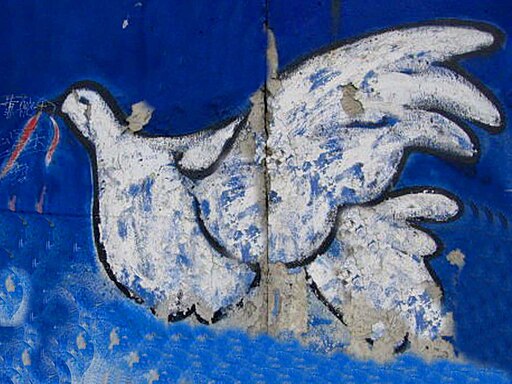
By Hunter Loren, Current Affairs
The international system is rooted in nation states and the competition that occurs among them. In the midst of the powers vying for influence lie politically neutral states. Often, a country not involved in a given conflict will act as a third-party mediator in peace processes. An example of this phenomenon includes the Oslo Accords, which, as their name suggests, were held in Norway to negotiate recognition of the Palestinian Authority in the West Bank (US Department of State, 2009). Another is when Kenya acted as mediator for negotiations in the South Sudanese Civil War (Akech 2024),. Likewise, the majority of UN peacekeeping missions around the world employ neutral states; the top three contributors as of August, 2024 are Nepal, Bangladesh, and Rwanda (United Nations Peacekeeping 2024). This phenomenon has also been observed throughout history–the Spanish-American War ended with a treaty signed in France, a noncombatant state (Craemer, 1946). Such a trend begs the question–why do neutral states bother to mediate conflicts they aren’t involved in?
Certain states, particularly Norway and Switzerland, have built legacies as peace-brokers, positioning themselves as essential players in international affairs. For example, since severing relations with Tehran after the Islamic Revolution in 1980, the United States has frequently used what it refers to as “The Swiss Channel” to indirectly communicate with Iran via Switzerland (Agence France Presse, 2024). The Swiss embassy in Tehran handles all consular affairs between the United States and Iran, including passport requests, civil status changes, and consular protection for US citizens in Iran. The Swiss Channel has been vital in recent years, most notably due to recent soaring tensions in the Middle East, and has played a key role in mediating hostility after Iran’s missile strikes on Israel. Since 2000, Switzerland has been engaged in approximately twenty processes in fifteen different countries and regions (Lanz and Mason 2012).
The motives behind mediating various state conflicts are disputed, and are not unique to Swiss foreign policy. Realists in International Relations would view third-party mediation as an opportunity to advance national interests. Should a state happen to bring about peace between others, it may generate stability for trade and investment, bringing prestige along with it. From the same perspective, the international system is anarchic: an international institution is only upheld when a state actor’s interests align with its principles. The roots of mediation lay in the same kind of international system. Mediation enables states to resolve their respective conflicts, making contributions to territorial integrity a part of the realist world (Boke, 2019).
There are many examples of third-party conflict resolution being utilized as a tool for political gain. In 2023, the UN authorized the deployment of international peacekeeping forces, led by Kenyan police, to Haiti, a state where gangs hold more power than the national military in almost every respect (UN News, 2024). Kenya’s foreign minister claimed on the social media platform X that the motivation for this maneuver was to rebuild Haiti. However, analysts claim that Kenya stands to gain from sending its forces to Port-au-Prince, asserting that the initiative “gives Kenya a very serious political capital. In the eyes of the world, Kenya becomes a dependable ally who is willing to help other countries” (Mohamed 2023).
Additionally, Kenya partakes in diplomatic talks in East Africa. Apart from the prestige earned by states willing to mediate conflicts in which they have no interests, conflicts closer to home present genuine threats to national interests far more important than reputations. Kenya has been a key player in pushing for ceasefires and negotiations in the South Sudanese Civil War, which began almost immediately after South Sudan gained independence in 2011 (Akech 2024). Hosting over 750,000 refugees from surrounding countries, a stable South Sudan is crucial for alleviating Kenya’s refugee crisis and easing the resulting financial burden, which is posed on one of the only politically stable states in the horn of Africa.
It may seem grim to claim that the primary motive behind smaller neutral states engaging in mediation efforts is one of reputational benefit. At the same time, it is possible that other motives may arise simply out of moral conviction. Certain countries’ efforts coincide with their foreign policy goals. Costa Rica, for example, has an established policy dedicated to disarmament in Central America (André 2023). Proving that this policy isn’t just performative, Costa Rica is one of the few countries in the world with no standing military, which has been the case since 1949. Other countries reflect their ideological commitments to seeking peace through their institutions. Neutral states are often home to influential humanitarian organizations, such as the International Committee of the Red Cross (ICRC) in Switzerland. The presence of these organizations fosters a national humanitarian focus that aligns with the state’s mediation efforts, reinforcing a commitment to peace and the protection of human rights. Morals may also manifest in diplomatic soft power. Soft power is both an outcome and a motivation, as it strengthens states’ ability to influence others without relying on military or economic posturing (Council on Foreign Relations, 2023).
The unique political position neutral states fill on an international scale enables them to adopt a niche diplomatic role. States not engaged in war or significant diplomatic disputes are often seen as the primary choices for nonpartisan peacemakers. Decisions to act in such a capacity largely advance the reputation of the state, and consequently give it greater influence; yet overall motivations can be mixed. Neutrality is strategic, yet at the same time shares many connotations with moral and ethical values that are attached to peace, human rights, and global stability. By mediating conflicts, neutral countries enforce self-assigned moral imperatives, enhance their reputations as responsible agents of peace, and strengthen their national identities.

Hunter Loren is a Political Science/Economics major from Great Neck, NY. After his undergraduate years, he aims to pursue a masters degree in International Relations. Building on previous experience in IR tutoring, Hunter intends to shed light on happenings in more unknown parts of the world. When he was nine years old he had an email correspondence with the president of Lithuania and he enjoys motorsports, baseball, and guitar.
References
Lanz, David, and Simon J. A. Mason. 2012 “Switzerland’s Experiences in Peace Mediation.” University of Basel. https://edoc.unibas.ch/47984/1/20121125113738_50b1f4f2e8fed.pdf.
Wakhungu, Juma 2011. “KENYA’S MEDIATION IN THE SUDAN PEACE PROCESS.” http://erepository.uonbi.ac.ke/bitstream/handle/11295/60179/Wakhungu_Kenya
Goetschel, L. (2020), “Neutral States as Peace Mediators: Favoured or Restrained by Norms?” Swiss Polit Sci Rev, 26: 527-534. https://doi.org/10.1111/spsr.12427
United Nations. n.d. 2024. “Troop and Police Contributors.” United Nations Peacekeeping, 31 August. https://peacekeeping.un.org/en/troop-and-police-contributors.
Mohamed, Hamza 2023. “Why Kenya volunteered to lead UN-approved forces to Haiti.” Al Jazeera, 3 Oct. https://www.aljazeera.com/news/2023/10/3/why-kenya-volunteered-to-lead-un-mission-to-haiti
Agence France Presse. 2024. “Vital Swiss Role as US-Iran Go-Between as Tensions Soar.” Barron’s. https://www.barrons.com/news/vital-swiss-role-as-us-iran-go-between-as-tensions-soar-222d51e1.
International Crisis Group 2024. “High-Stakes South Sudan Talks in Kenya.” Crisis Group. 11 September. https://www.crisisgroup.org/africa/horn-africa/south-sudan-kenya/high-stakes-south-sudan-talks-kenya.
Costa Rican Ministry of Foreign Affairs and Worship. n.d. “Costa Rican Foreign Policy.” https://www.rree.go.cr/?sec=servicios&cat=prensa&cont=593&id=7158.
Craemer, Alice R. “PEACE—1898.” Current History 10, no. 53 (1946): 31–35. http://www.jstor.org/stable/45306836.
Cem Boke 2019. “Third-Party Intervention to Civil Wars: Realist, Liberalist and English School Theoretical Perspectives.” Beyond the Horizon International Strategic Studies Group. https://behorizon.org/third-party-intervention-to-civil-wars-realist-liberalist-and-english-school-theoretical-perspectives/.
UN News. 2024. “Haiti: Gangs Have ‘More Firepower than the Police.’” United Nations News, April 4. https://news.un.org/en/story/2024/04/1148231.
U.S. Department of State 2009 “The Oslo Accords, 1993” Office of the Historian. https://2001-2009.state.gov/r/pa/ho/time/pcw/97181.htm.
Council on Foreign Relations 2024. “What Is Soft Power?” Foreign Policy. https://education.cfr.org/learn/reading/what-soft-power.
Image Credit: Marko Kafé, CC BY-SA 4.0 https://creativecommons.org/licenses/by-sa/4.0, via Wikimedia Commons

 Happy Medium
You must be logged in to post a comment.