By James Kang, New York Politics
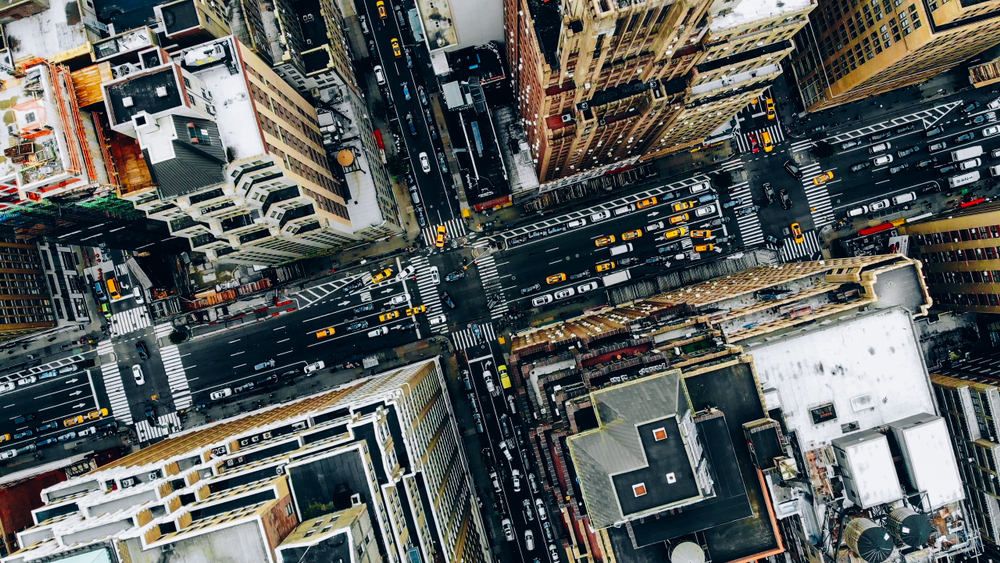
Gridlock is a term that was coined in New York City, referring to the traffic congestion preventing the efficient functioning of the city’s network of intersections, particularly in Manhattan. The term has existed since the emergence of America’s car culture in the 1900s when New York officials believed that a toll system would be the best solution to the traffic problem in Manhattan. However, New York officials have recently developed an ambitious experiment to resolve traffic control: congestion tolling. For decades, New York officials have debated the structure of the tolling system. It wasn’t until January 5, 2025 that Governor Kathy Hochul introduced the Congestion Relief Zone tolling policy under the Metropolitan Transportation Authority (MTA).
With the introduction of the tolling policy, New Yorkers offered mixed reactions. Supporters hoped the congestion pricing would benefit the state enough to upgrade the city’s transportation system, making it safer and more efficient. On the other hand, opponents argued that the tolling system would contribute to inflationary pressures, hurting people’s wallets and adding pollution to areas outside of the congestion pricing zone (New York University 2025).
However, New York officials, especially Governor Hochul, have recently faced a tougher opponent: the federal government. On January 30, 2025, a little over a week after President Donald Trump’s inauguration, the Trump administration considered stopping the NYC congestion pricing program, introducing the possibility of a legal battle between the state and federal government. But what has happened since?
Congestion Relief Zone Tolling
According to the US Department of Transportation, congestion pricing is defined as “a way of harnessing the power of the market to reduce the waste associated with traffic congestion” (US Department of Transportation 2025). With this definition in mind, the MTA has been charging vehicles that enter the Congestion Relief Zone. The zone consists of “local streets and avenues in Manhattan south of and including 60 Street” in order to reduce traffic congestion and pollution, improve the quality of life in New York City, and, most of all, raise revenue to improve public transit (MTA 2025).
When the MTA announced the NYC Congestion Pricing plan, a thorough structure was established. First, while toll rates are applicable 24/7, the rates vary by vehicle type, time of day, and payment type. The peak period toll rate will apply 5 AM-9 PM on weekdays and 9 AM-9 PM on weekends. All other times, drivers will be charged overnight toll rates, 75% less than peak period rates. In the case of vehicle types, passenger and small commercial vehicles pay $9 during the peak period through E-ZPass and $2.25 during the overnight period, which is when there is less congestion. As for motorcycles, the toll is $4.50 during the peak period and $1.05 overnight. All vehicle types are charged once a day. (MTA 2025)
For trucks and some buses, the toll is $14.40 during peak hours and $3.60 during the overnight period. Large trucks and tour buses pay a larger toll of $21.60 during peak and $5.40 overnight. On the other hand, taxis and for-hire vehicles with a NYC Taxi & Limousine Commission license are eligible for a smaller charge paid by the passenger. (MTA 2025)
Furthermore, information on other aspects of the toll structure is provided by the MTA. The MTA suggested that the easiest way for customers to pay the Congestion Relief Zone toll is through the E-ZPass tags regularly used to pay tolls on other roads, bridges, and tunnels. Those without an E-ZPass tag receive a bill to pay tolls by mail, but these are regarded as more expensive and less convenient to pay. The MTA even announced that discount plans are given to low-income drivers while exemption plans are available for individuals or organizations with disabilities. It also offered how the toll structure would phase over a six-year period, as it would increase from the initial $9 peak toll for cars to $12 in 2028 and $15 in 2031.
Benefits
The tolling system initially proved to be a success: “traffic in Manhattan’s central business district fell by 7.5% [in the week it was implemented] and 273,000 fewer cars entered the borough’s central business district” (Reuters 2025). A month since the program’s launch, “one million fewer vehicles in total have entered the congestion pricing zone, and buses to outer boroughs and New Jersey are moving much faster, with median time savings of 10 minutes” (NYC 2025). While January is perceived as a slow traffic month, the MTA acknowledges that traffic on crossings has been moving faster by 10-30%. In other words, the congestion pricing program demonstrated early signs of reducing Manhattan’s gridlock, which was perceived as one of the worst in the world.
Challenges and Federal Intervention
However, while the state of New York took a liking to the congestion pricing plan, the federal government thought otherwise. On January 20, 2025, New Jersey Governor Phil Murphy requested President Donald Trump through a letter to examine the congestion pricing plan in Manhattan: “As you know, last spring, New York officials unveiled a congestion tolling scheme . . . The resulting congestion pricing plan is a disaster for working- and middle-class New Jersey commuters and residents who need or want to visit lower Manhattan and now need to pay a big fee” (Murphy 2025).
As aforementioned, the Trump administration eventually announced efforts to remove the program, whereas New York officials emphasized the importance of keeping it. As Governor Kathy Hochul’s spokesman, Avi Small, has written in a statement, “America’s economy relies on New York City, and New York City relies on public transit” (Marcia Kramer and Jesse Zanger 2025). No final decision was established, but opponents of the congestion pricing have persistently pushed the Trump administration to examine the system. Meanwhile, legal experts argued that it was unlikely that the federal government would be involved with scrapping the congestion pricing program, as it could be challenged in court (Chen and Oreskes 2025).
Those legal experts were soon proven wrong on February 19, 2025: in a letter to Governor Hochul, US Transportation Secretary Sean Duffy informed her that the Trump administration plans to terminate their November 2024 agreement with the state under the Value Pricing Pilot Program (VPPP). The VPPP is a program that allows transportation agencies to utilize tolling or other pricing mechanisms to manage congestion on highways. (Conference Board 2025) Government authorities of any level are eligible and can apply for the program, which in this case Governor Kathy Hochul did. (Federal Highway Administration 2025) However, Duffy described congestion pricing as “backwards and unfair,” especially to small businesses (Zanger 2025).
On the same day, President Donald Trump posted on the social media platform Truth Social, asserting himself as a king while celebrating his administration for stopping the congestion pricing program. Trump wrote: “CONGESTION PRICING IS DEAD. Manhattan, and all of New York, is SAVED. LONG LIVE THE KING!” (Truth Social 2025). But Hochul did not easily give in to Trump’s demands, claiming that she is prepared to “fight back hard.” Hochul stated: “We offered up an olive branch, ‘We’ll work with you on infrastructure. Let’s redo Penn Station. Those areas were common ground. But once you draw first blood on us, we’re coming back hard. And I will be leading the resistance on policies like these where you’re hurting New Yorkers directly. This is our decision, not yours’” (Michel Martin 2025). As a result, Duffy announced that the Trump administration set March 21 as a new deadline for New York to end traffic congestion pricing.
However, as much as the efforts of the Trump administration persisted, so did the efforts of Governor Hochul. Both she and President Trump met on February 21 in the Oval Office for more than an hour. A Hochul spokesperson noted that “the pair ‘had a frank, candid conversation about New York’s key priorities including congestion pricing . . . Hochul also presented President Trump with a booklet on the early success of congestion pricing.’” (Mark Prussin 2025)
Conclusion and Future Outlook
The battle between the state and federal governments continued, as the MTA acknowledged that the tolling program remains in effect as of April. On March 20, Duffy directed a post on X to Governor Hochul addressing her “open disrespect towards the federal government” and that the Trump administration would “provide New York with a 30-day extension as discussions continue” (Duffy 2025).
In response to the tweet, Governor Hochul continued to praise the congestion toll on the next day by using herself as an example: she and the New York City press corps took an MTA bus going along 14th Street, demonstrating her confidence in the tolling system. Hochul added her belief that the Trump administration would eventually be willing to compromise with her: “I have a direct communication line to the president, and I feel confident that we’ll find a path forward that sustains this important source of not just revenue, but a way that stimulates a quality of life and a vitality in the city that we’ve not seen in a long time” (Hochul 2025).
It also seems that the MTA will not be backing down any time soon, as MTA Chair and CEO Janno Lieber announced that tolls won’t be removed unless there is a court order. Regardless, the MTA revealed that the program has benefitted not just traffic congestion, but has contributed to economic growth as well. As projected by the MTA, the toll generated $48.66 million between January 5th and 31st, with the net revenue being $37.5 million. (MTA 2025)
Overall, it remains uncertain what decision the Trump administration will stand by. While the administration expressed its distaste for Governor Hochul’s uncooperative nature, it appears more likely that officials will extend the deadline or end up advocating for the toll program. After all, New York officials, especially Hochul herself, have been extremely firm in their position about the congestion toll program and are certain that they can convince the Trump administration as well.

James Kang is a junior from Queens, New York, majoring in political science. After graduation, James plans to go to law school. During high school and going into college, James wrote articles and worked with representatives, such as Congresswoman Grace Meng of New York’s 6th district. During this past summer, James worked as an intern in the office of United States Senator Lea Webb of the 52nd district and Josh Riley, who is the Democratic candidate for New York’s 19th Congressional district. Outside of politics, James enjoys playing the piano and basketball.
References:
Chen, Stefanos, and Benjamin Oreskes. 2025. “Congestion Pricing Is at Risk. so Is the M.T.A.’s $68 Billion Plan.” The New York Times. https://www.nytimes.com/2025/03/26/nyregion/mta-budget-congestion-pricing.html (April 1, 2025).
Communications, NYU Web. 2025. “Congestion Pricing Takes on Manhattan Gridlock.” NYU. https://www.nyu.edu/about/news-publications/news/2025/january/manhattan-congestion-comes-to-an-intersection.html (April 1, 2025).
Conference Board. 2025. “Policy Alert: NYC Congestion Pricing.” The Conference Board. https://www.conference-board.org/research/CED-Newsletters-Alerts/nyc-congestion-pricing (April 1, 2025).
“Congestion Pricing Program in New York – MTA: Tolling.” MTA. https://congestionreliefzone.mta.info/tolling (April 1, 2025).
Federal Highway Administration. “Federal Tolling Programs.” FHWA. https://www.fhwa.dot.gov/ipd/tolling_and_pricing/tolling_pricing/vppp.aspx (April 1, 2025).
Kramer, Marcia, and Jesse Zanger. 2025. “President Trump Considering Ending Congestion Pricing, Highly-Placed Source Says.” CBS News. https://www.cbsnews.com/newyork/news/trump-hochul-discuss-ending-congestion-pricing-source/ (April 1, 2025).
Liam Quigley and Stephen Nessen, and Giulia Heyward. “In First Days of Congestion Pricing, New Yorkers See Signs of Reduced Gridlock.” Gothamist. https://gothamist.com/news/in-first-days-of-congestion-pricing-new-yorkers-see-signs-of-reduced-gridlock (April 1, 2025).
Martin, Michel. 2025. “New York Gov. Kathy Hochul Is Ready to ‘fight Back Hard’ against Trump’s Demands.” NPR. https://www.npr.org/2025/03/03/nx-s1-5311687/kathy-hochul-trump-resistance-congestion-pricing (April 1, 2025).
MTA. “MTA Releases Revenue from Congestion Relief Zone Tolling Showing Program in Line with Projections.” MTA. https://www.mta.info/press-release/mta-releases-revenue-congestion-relief-zone-tolling-showing-program-line-projections (April 1, 2025).
Prussin, Mark. “President Trump, New York Gov. Kathy Hochul Talk Congestion Pricing in Oval Office Meeting.” CBS News. https://www.cbsnews.com/newyork/news/donald-trump-kathy-hochul-meeting-congestion-pricing-nyc/ (April 1, 2025).
Zanger, Jesse, and Jeff Capellini. “NYC Congestion Pricing Approval Pulled by Trump Administration, but Hochul and MTA Vow to Fight.” CBS News. https://www.cbsnews.com/newyork/news/nyc-congestion-pricing-halted/ (April 1, 2025).

 Happy Medium
You must be logged in to post a comment.