By Ameen Kimdar, U.S. Policy
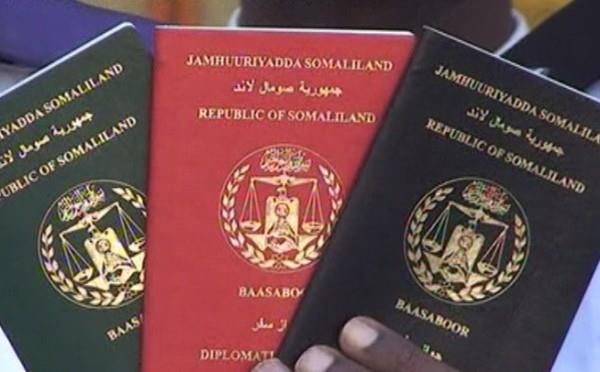
In recent years, there has been increased buzz over the United States becoming the first UN member state to recognize the independence of the self-declared state of Somaliland. In March 2022, Somalilander leaders met with members of Congress and the Biden administration to lobby for American recognition of their aspirational state. Citing growing Chinese influence in the Horn of Africa and the success of Somaliland’s democracy as opposed to Somalia’s failed state, Somalilander has made the case for recognition on the grounds of guaranteeing stability and US influence in the region (Lawler 2022). Although they reached an agreement regarding cooperation on security-related issues, they fell short of recognition, and the issue has taken a more partisan nature, with the Republican Party maintaining a keen interest in Somaliland.
During his visit to the US, Somaliland’s president, Muse Bihi Abdi, spoke at an event held by the Heritage Foundation to argue in favor of American recognition. After this meeting, Congressman Scott Perry (R-PA 10th) and Senator Jim Risch (R-ID) introduced legislation to improve relations with the fledgling state, and although neither bill became law, the latter passed the Senate Foreign Relations Committee with bipartisan support. (Scott 2021; Risch 2021).
Somaliland has once again entered the news cycle following the re-election of Donald Trump, and the intensification of Houthi attacks on shipping in the Red Sea. Recognition of Somaliland is explicitly outlined in Project 2025, a blueprint for the Trump administration created by the Heritage Foundation. The document mentions increased Chinese influence in neighboring Djibouti as reason to recognize the state (Harper 2025). In November 2024, former British Defense Secretary Gavin Williamson predicted imminent recognition of Somaliland under President Trump (Maddox 2024) and in January 2025, the US House Select Committee on the CCP urged the creation of a representative office in Hargeisa, Somaliland’s capital, to counter Chinese influence (Adegoke 2025). Most recently, Somaliland’s president Abdirahman Mohamed Abdullahi claimed that after talks with Trump, the East African state would receive its first diplomatic recognition from the US. Although the US has denied violations of Somalia’s territorial integrity, it would appear that the writing is on the wall for Somaliland’s independence. (Townsend 2025) But what is behind this unprecedented US support for a secessionist movement in Africa, a continent that has only ever seen three countries emerge from the territory of another, and what would be the implications for Africa, the Arab world, and the Somali civil war?
What is Somaliland and why does it want independence?
The Republic of Somaliland is an unrecognized but entirely self-governing state in northern Somalia, bordering Djibouti, Ethiopia and Somalia. The Somali people live across five de facto states, Somalia, Somaliland, Djibouti, Ethiopia and Kenya. In spite of a shared language, religion, and history, Somali society is highly fractured across clan-lines. During the Scramble for Africa, the Somali territories were partitioned by the British, Italians, French, and Ethiopians. The modern-day Republic of Somaliland comprises the former British colony, and is populated by members of the Isaaq clan, one of the four major clans of Somalia. It had briefly existed as an independent state in 1960, gaining recognition from 35 sovereign states, but merged with the former Italian colony to form the Republic of Somalia after five days (Klobucista and Ferragamo 2025). Under the regime of Siad Barre, the government of Somalia promoted pan-Somali nationalism over clan loyalties, but many in the north felt marginalized by his regime. An influx of Ethiopian Somali refugees into Somaliland after the Ogaden War worsened tensions between the central government and Isaaq population. This refugee population numbered over one million, while Somalia’s population was a mere four million, meaning one in four Somalis were refugees. These refugees received preferential treatment from the government, and Ethiopian Somali militias began attacks on Isaaq Somalis. An independence war began in 1981 and was brutally punished in the Isaaq genocide of 1987. An estimated 200,000 civilians were killed by the government and allied militias, fueling the flames of secession. (Einashe and Kennard 2018).
Since the ousting of Siad Barre in 1991, Somaliland has been a de facto independent state. In sharp contrast to the chaos that has engulfed Somalia, Somaliland prides itself in its stability and democracy (Einashe and Kennard 2018). Recently, Somaliland has experienced some of the same clan-related problems its federal opponent is plagued with. Observers have expressed concern over the marginalization of non-Isaaq Somalis in Somaliland, particularly in the region of Las Anod, where a pro-federal government rebellion has taken control of much of the east (Freedom House). These rebels seek unification with Somalia’s Puntland state, but this situation has become more complicated due to new developments in Somalia’s civil war.
What is happening in Somalia and the Horn of Africa?
Somalia’s prolonged civil war has severely weakened the state and led many to label it as a ‘failed state’. The civil war has entered a more intense phase, threatening the existence of the federal government. Al-Shabaab, an Islamist rebel group with ties to Al-Qaeda, has waged an insurgency since an Ethiopian invasion removed a more moderate group known as the Islamic Courts Union from power in 2009. In recent months, Al-Shabaab offensives have resulted in the group taking control of large swathes of territory, surrounding Mogadishu (Jackson 2025).
Beyond its civil war, Somalia’s fragile federal system entered crisis in 2024 when proposals for constitutional reforms that would strengthen the presidency and introduce direct elections instead of clan-based elections were rejected by regional governments in Puntland and Jubaland. (Ali 2024) These regions have acted as de facto independent states, without a formal declaration of independence like Somaliland, taking the fight against al-Shabaab into their own hands (Levy 2025). In the meantime, Ethiopia, a long-time adversary of Somalia, took the opportunity to reach out to Somaliland in hopes of achieving sea access. A memorandum of understanding was signed in early 2024, in which Ethiopia would be granted Red Sea access via the port of Berbera in exchange for recognition. This move was strongly condemned by Somalia, calling it a violation of their sovereignty, expelling Ethiopian peacekeepers and turning to Egypt and Eritrea, Ethiopian rivals, for political and military support (Wafula 2024). All the while, Djibouti, a small, Somali-inhabited nation, has wielded disproportionate power due to its strategic location near the Bab el-Mandeb Strait, linking the Indian Ocean to the Mediterranean Sea. Djibouti is host to several foreign military bases, including the US and China, which have vied for dominance over the small but strategically valuable state (Vines et al. 2024).
What does the United States stand to gain from recognizing Somaliland?
The case for the US recognition of Somaliland is based on several components. Its highly strategic location and maritime significance are a leading argument among proponents for recognition, as it possesses a long coastline along the Gulf of Aden, where Houthi attacks on US shipping have demonstrated the need for an increased naval presence in the area. Somaliland has demonstrated its willingness to cooperate with foreign powers in exchange for recognition, and could act as a cheaper alternative to Djibouti for the US, which has exploited its importance by increasing lease prices on the US base (Ducharme 2025).
The US is not the only regional power that has considered cooperation with Somaliland for security in the Red Sea. The United Arab Emirates and Ethiopia, two close allies, have also expressed a similar interest. The UAE is no stranger to the war in Yemen, having illegally seized the island of Socotra in 2018 (Ardemagni 2023) and are the main backers of a secessionist movement in South Yemen (Al Jazeera 2020). With Emirati support, landlocked Ethiopia has begun the rebuilding of its navy, with sights on becoming a regional power in the Red Sea trade, concurrent with Dubai-based maritime conglomerates pursuing development and investment into the Port of Berbera (Bakir 2024). In the event of American recognition of Somaliland, the US would have no trouble in finding regional partners to follow suit.
A more concerning choice presented to Somaliland is the resettlement of Palestinian refugees from Gaza into the country in exchange for recognition, with similar offers being made to Morocco, Sudan, and Syria in exchange for American support (TOI Staff 2025). It is unlikely that the state would be willing to make such a deal, as the inflow of over 2 million refugees would spell disaster internally and make it a pariah in the Arab and Muslim worlds.
Implications for Africa
Since the decolonization of Africa, only three countries have successfully seceded from another African state: Namibia in 1990 from apartheid South Africa, Eritrea from Ethiopia in 1993, and South Sudan from Sudan in 2013. The prospects of a state successfully seceding in Africa are low. In cases such as Biafra (Nigeria), Azawad (Mali), and Ambazonia (Cameroon), the African Union has cooperated in the prevention of allowing their fellow members to be partitioned into smaller states. As most African states are mutli-ethnic and artificial, they all have a shared fear of secessionist movements, and cooperate to block secession in other countries to avoid a potential domino effect that would bolster their own domestic movements.
As a result, the world’s foremost leading superpower enabling the secession of one region would likely embellish the secessionist movements across the rest of the continent, particularly Somalia’s other rebel states of Puntland and Jubaland. The US leading in its recognition would be unprecedented and would likely damage relations with the AU (Townsend 2025).
Implications for the Arab world and Israel
Although Somaliland has received significant support from the Emirates, other Arab countries are not as keen on the idea, most notably Egypt. Egypt has experienced major pressure from the US in recent years, due to water disputes with Ethiopia and neighboring Israel’s war on Gaza. Egypt has positioned itself as an ally of Somalia after the agreement between Somaliland and Ethiopia, replacing it as Somalia’s main African security partner. (Berman 2025). Egypt views its regional dominance as being threatened by Ethiopian and Emirati ambitions on the Red Sea and Houthi attacks on global shipping. Egypt, already frustrated by a lack of US support on Ethiopia’s Nile river dam, may feel slighted by the US taking its rival’s side once again in recognizing Somaliland. Egypt previously rejected a deal in which it would receive backing on the dam issue in exchange for accepting a Gaza resettlement plan (The New Arab 2025). Egypt finds itself in a rock-and-hard place where its regional dominance is threatened not only by its adversaries, but also by its allies. In the bigger picture, US recognition of Somaliland amidst the war in Gaza would likely stoke controversy and tension in the Arab world. Somalia, an Arab League member, has close political and economic ties to other Arab countries like Saudi Arabia. The US backing a partition of an Arab nation while blocking the independence of Palestine could be perceived as a symbolic insult and act of aggression to the Arab world. (Gulaid 2025).
Implications for Somalia
Relations between the US and Somalia have remained weak in the post-communist period due to a lack of centralized authority in the country. A proposal by the Somali government to offer the US control over a port and airbase in Berbera, a city that it has no control over, was ridiculed by Somaliland’s leadership, dismissing it as a desperate attempt to gain US support in reintegrating Somaliland (Ochieng 2025). The inability of the Somali federal government to combat al-Shabaab and pirates off its coastlines has continually frustrated American security experts. The infamous 1993 battle of Mogadishu, known as the Black Hawk Down Incident, was a major humiliation for the US military, resulting in the highest number of American fatalities since the Vietnam War. The Battle resulted in the withdrawal of UN forces from Somalia, and a reluctance to involve the US in African affairs, dubbed “Somalia syndrome” (Weiss 1995). The US has preferred a hands-off approach to Somalia, offering military support to regional allies without direct engagement. Decades after the disastrous US intervention, Somalia has failed to stabilize itself, only falling into deeper anarchy. If the US were to recognize Somaliland, it would signal the US pulling the plug on its faith in a united Somalia, in favor of cooperation with smaller Somali states. Regional states, frustrated by federal inefficiencies and motivated by clan loyalties, have seen success in combatting terrorism without the assistance of federal forces (Ardemagni 2023). Somaliland receiving a green light for independence could potentially set off a domino effect of secession from Somalia.
Recognition of Somaliland would be an unprecedented move by the US that would stoke tensions across Africa and the Middle East, rearranging power dynamics and triggering other secession movements. This Machiavellian approach to foreign policy risks fueling instability and undermining territorial integrity, potentially inviting greater involvement from other powers.
References
Adegoke, Y. (2025, January 17). US House committee calls for Somaliland office to counter China | Semafor. Semafor.com. https://www.semafor.com/article/01/17/2025/us-house-committee-calls-for-somaliland-office-to-counter-china
Al Jazeera. (2020, April 26). Yemen: What is the Southern Transitional Council? http://Www.aljazeera.com. https://www.aljazeera.com/news/2020/4/26/yemen-what-is-the-southern-transitional-council
Ali, F. (2024, April 5). Fears of violence grow as Somalia scraps power-sharing system. The Guardian. https://www.theguardian.com/global-development/2024/apr/05/fears-violence-somalia-constitution
Ardemagni, E. (2023, December 5). Socotra archipelago: why the Emiratis have set their sights on the Arab world’s Garden of Eden. The Conversation. https://theconversation.com/socotra-archipelago-why-the-emiratis-have-set-their-sights-on-the-arab-worlds-garden-of-eden-218848
Bakir, A. (2024). How Israel, Egypt, and the UAE view Ethiopia’s Red Sea deal. The New Arab. https://www.newarab.com/analysis/how-israel-egypt-and-uae-view-ethiopias-red-sea-deal
BBC. (2017, December 14). Somaliland profile. BBC News. https://www.bbc.com/news/world-africa-14115069
Berman, Z. (2025, January 2). Ignoring Ethiopian Concerns, Egypt Supplies Troops for African Union Mission in Somalia. FDD. https://www.fdd.org/analysis/2025/01/02/ignoring-ethiopian-concerns-egypt-supplies-troops-for-african-union-mission-in-somalia
Ducharme, J. (2025, May 16). Strengthening U.S. Influence: A Base in Somaliland. Orion Policy Institute. https://orionpolicy.org/reinforcing-u-s-power-in-the-horn-of-africa-the-case-for-a-base-in-somaliland/
Einashe, I., & Kennard, M. (2018, October 22). In the Valley of Death: Somaliland’s Forgotten Genocide. The Nation. https://www.thenation.com/article/archive/in-the-valley-of-death-somalilands-forgotten-genocide/
Freedom House (Ed.). (2024). Somaliland: Freedom in the World 2025 Country Report | Freedom House. Freedom House. https://freedomhouse.org/country/somaliland/freedom-world/2025
Gulaid Yusuf Idaan. (2025, March 19). Somaliland’s Diplomatic Gamble: Recognition, Risk, and the Palestinian Question. Modern Diplomacy. https://moderndiplomacy.eu/2025/03/19/somalilands-diplomatic-gamble-recognition-risk-and-the-palestinian-question
Harper, M. (2025, January 16). Why Somalilanders are smitten with Donald Trump. BBC. https://www.bbc.com/news/articles/cp3j1qn0499o
Jackson, A. (2025, June 3). Flailing State: The Resurgence of al-Shabaab in Somalia. War on the Rocks. https://warontherocks.com/2025/06/flailing-state-the-resurgence-of-al-shabaab-in-somalia/
Klobucista, C., & Ferragamo, M. (2025, January 21). Somaliland: The Horn of Africa’s Breakaway State. Council on Foreign Relations. https://www.cfr.org/backgrounder/somaliland-horn-africas-breakaway-state
Lawler, D. (2022, March 22). Democratic, self-governing Somaliland pleads with U.S. to recognize independence. Axios. https://www.axios.com/2022/03/22/somaliland-independence-recognition-us
Levy, I. (2025, April 7). How the small autonomous region of Puntland found success in battling Islamic State in Somalia. The Conversation. https://theconversation.com/how-the-small-autonomous-region-of-puntland-found-success-in-battling-islamic-state-in-somalia-251775
Maddox, D. (2024, November 19). Donald Trump set to recognise African state Somaliland, says ex-Tory minister Gavin Williamson. The Independent. https://www.independent.co.uk/news/uk/politics/trump-somaliland-new-country-gavin-williamson-b2648376.html
Ochieng, A. (2025, March 29). Somaliland hits out over Somalia’s offer to Trump of Berbera airbase and port. BBC. https://www.bbc.com/news/articles/c8d4dzq87rpo
Risch, J. (2021). S.3861 – 117th Congress (2021-2022): Somaliland Partnership Act. Congress.gov. https://www.congress.gov/bill/117th-congress/senate-bill/3861
Scott, P. (2021). H.R.7170 – 117th Congress (2021-2022): Republic of Somaliland Independence Act. Congress.gov. https://www.congress.gov/bill/117th-congress/house-bill/7170?s=1&r=3&stream=world
The New Arab. (2025). Egypt rejects US quid pro quo over Gaza and Ethiopia dam. The New Arab. https://www.newarab.com/news/egypt-rejects-us-quid-pro-quo-over-gaza-and-ethiopia-dam
TOI Staff. (2025). Welcome To Zscaler Directory Authentication. Timesofisrael.com. https://www.timesofisrael.com/reports-morocco-2-disputed-somalia-regions-considered-as-destinations-for-gazans
Townsend, M. (2025, May 30). Exclusive: Somaliland president says recognition of state “on the horizon” following Trump talks. The Guardian; The Guardian. https://www.theguardian.com/global-development/2025/may/30/exclusive-somaliland-president-says-recognition-of-state-on-the-horizon-following-trump-talks
Vines, A., Tugendhat, H., & Van Rij, A. (2024, January 30). Is China Eyeing a Second Military Base in Africa? United States Institute of Peace. https://www.usip.org/publications/2024/01/china-eyeing-second-military-base-africa
Wafula, I. (2024, August 30). Why Ethiopia is so alarmed by an Egypt-Somalia alliance. Bbc.com; BBC News. https://www.bbc.com/news/articles/cvg415vex37o
Weiss, T. G. (1995). Overcoming the Somalia Syndrome— “Operation Rekindle Hope?” Global Governance, 1(2), 171–187. https://www.jstor.org/stable/27800108

 Happy Medium