By Morgan Reed-Davis, Political Theory
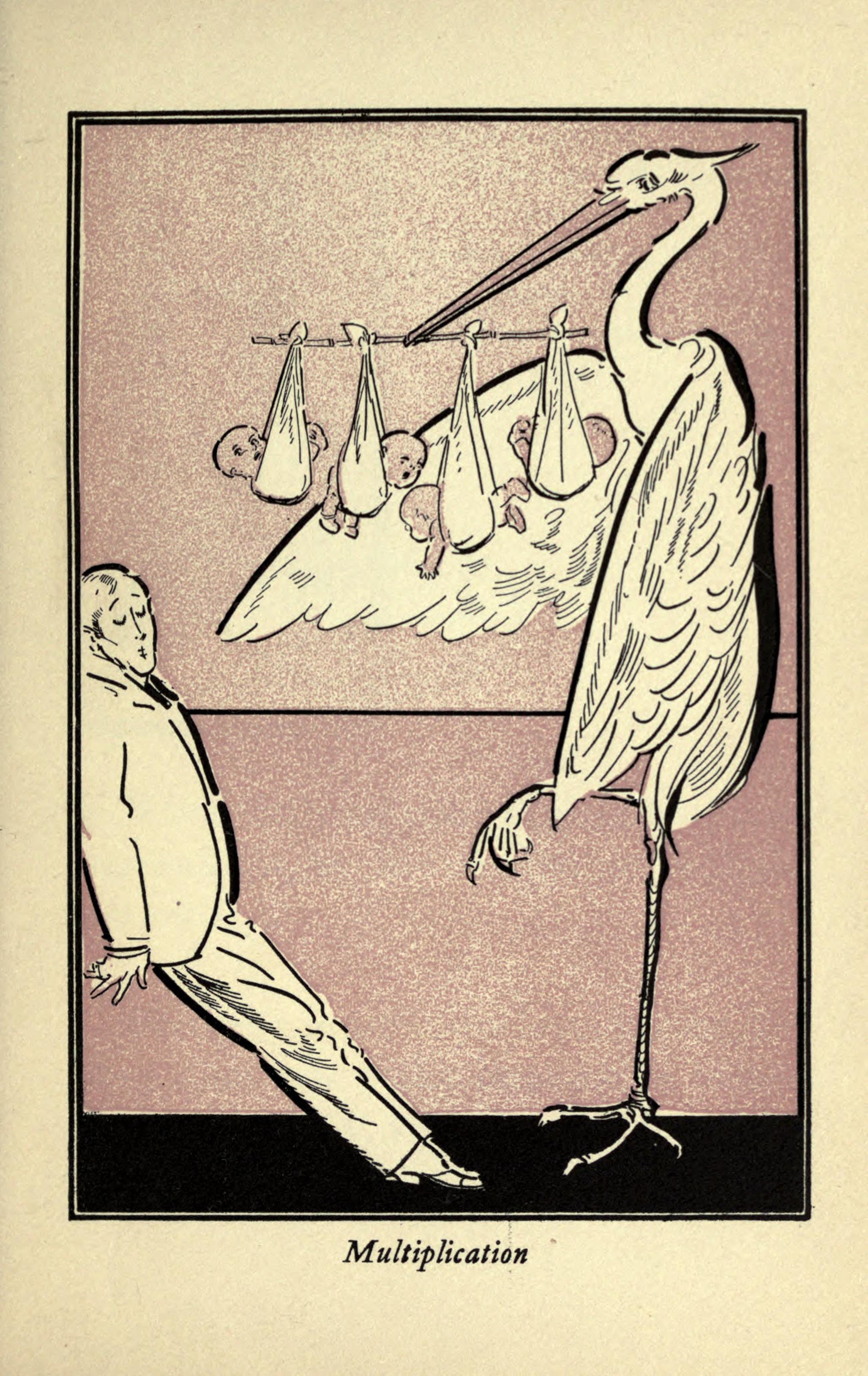
The Trump administration has made it clear: it wants Gen Z to catch baby fever. At an anti-abortion rally in January, VP J.D. Vance said that he wanted “more babies” in America (The Columbus Dispatch 2025). In March, Trump dubbed himself the “fertilization president” and suggested a “national medal of motherhood” for women with six or more children (Stechyson 2025).
This pro-baby agenda comes as the U.S fertility rate hits a historic low of 1.6 children per woman (CDC 2025), which is half a child below the “replacement rate” needed to maintain a stable population. For some Americans, it reflects the skyrocketing cost of living, climate anxieties, and career ambitions that are delaying Millennials’ and Gen Z’s decision to have kids (McBain 2025). Others, including Trump officials, see low fertility as an existential crisis — proof of the loss of traditional values and of a looming economic collapse.
People who see it this way are “pronatalists.” Pronatalism means “pro-birth,” and argues that a stable, growing population is crucial for the economy and traditional family structure. On the surface, it makes sense. Fewer babies means fewer workers, hurting the economy; fewer babies means fewer families, which some consider the foundations of society. However, pronatalism also has a controversial history rooted in eugenics and white supremacy. As ‘pronatalism’ resurfaces in headlines and White House press briefings, it’s important to ask: what is the history of pronatalism? How does the current movement compare to the past? What does it mean for the future of America?
What is the history of pronatalism?
The movement’s rise is often predictable, almost like a math formula. Pronatalists equate declining birthrates, women’s empowerment, and rising immigration with the downfall of society.
The early 20th century saw a surge in pronatalism as immigration skyrocketed and traditional gender roles shifted. After the Industrial Revolution, one in five women entered the workforce, upending the old “rural family” ideal (Lovett 07). Millions of immigrants arrived in the U.S., reshaping U.S. demographics. Stanford sociologist Edward Alsworth Ross called this “race suicide” (Lovett 2007). He claimed that white families were “killing themselves” by not having enough children, letting immigrants destroy the “Anglo-Saxon character of America.” President Theodore Roosevelt agreed; He called motherhood a woman’s “patriotic duty” and condemned those who refused as “race traitors” (Lovett 2007).
Roosevelt’s influence led to significant policy changes. Congress passed restrictive immigration laws in 1907 and 1924, which limited immigration from Southern and Eastern Europe (Smithsonian 2020). In 1929, a law drafted by a white supremacist senator named Coleman Livingston passed, criminalizing Mexicans who crossed the border (Little 2025). These policies reflected the logic of white supremacy and eugenics, which is a pseudoscience that claims society could be “improved” through reproductive control, and had sweeping effects on the country and the globe. Mexicans, Asians, and Southern and Eastern and Southern Europeans were barred from entering the U.S., keeping the U.S. In America, over thirty states passed laws that allowed the forced sterilization of people labeled “unfit” or “feeble-minded,” and targeted poor, disabled, and racial minorities (Lovett 2007). Adolf Hitler later cited these laws as a model for Nazi racial hygiene policies, which led to the mass murder of six million European Jews (U.S. Holocaust Memorial Museum 2020).
At its core, pronatalism has never been just about population growth; it has been about controlling who makes up the population and how to restrict certain people from society.
Pronatalism now
Similar to the 20th century, today’s pronatalist movement rose alongside debates about immigration and LGBTQ+ and women’s rights, which challenge the traditional family structure. The first (and second) Trump administration’s hardlined stance on immigration, the #MeToo movement, Obergefell v. Hodges – the Supreme Court’s decision to legalize gay marriage – all preceded 21st-century pronatalism.
Except today, pronatalism falls into two broad camps: religious traditionalists and technocrats.
According to Lyman Sone, the director of the Institute for Family Studies, the moderate religious traditionalists want to “restructure society in a way that treats family goals as worthy” (Agudelo 2025). Moderates call for the government to prioritize family values and the sanctity of human life (Mosley 2025). They push for child tax cuts, paid maternity leave, a ban on pornography, and restrictions on IVF and birth control (Hagen 2025). To them, having children is not a personal choice but a civil duty, and it’s the government’s role to enforce it.
More extreme traditionalists, often white supremacists, link low fertility to cultural decay, advocating everything from selective breeding to “masculine culture” (Hagen 2025). They often spread far-right views such as the “great replacement theory,” which argues that white nations are being replaced by nonwhite immigrants (Miller 2025). For example, Kevin Dolan, organizer of an annual pronatalist conference called “Natal Con,” aims to “rehabilitate hierarchies of nature” through selective breeding. A woman who writes using the pseudonym Peachy Keenan argued that the movement should exclude parents who “raise children to be gender-neutral furries who want to join antifa one day” (Hagen 2025). Extreme protagonist groups tend to focus on who should have kids, targeting certain people while promoting their idea of the “right” family.
Technocrats, mainly in Silicon Valley, justify pronatalism through economics and genetics. Elon Musk, the CEO of Tesla and former head of the Department of Government Efficiency (DOGE), called the economic fallout from declining birthrates “the greatest threat to humanity” (Coggins, Madeline, and Fox News 2025). Musk has also urged for “smart people” to have children to “seed the earth” with higher intelligence (Mattioli 2025). Malcolm and Simone Collins, the couple at the head of the pronatalist movement, claimed to screen their embryos for intelligence to avoid having children “less privileged in IQ” then they are (Hegarty 2025). Tech-driven pronatalists often avoid race talk, but their language of IQ echoes the 20th-century eugenics’s exclusionary vocabulary; they imply that some people–“intelligent” people–are innately superior and worthier than others.
Several Silicon Valley tech investors have put money into fertility and embryo-screening start-ups. Musk has donated ten million dollars to the Population Wellbeing Initiative in Texas, which researches fertility and population growth (Hegarty 2025). Brian Armstrong, CEO of Coinbase expressed interest in starting an embryo-editing company (Stein 2025). Companies like Orchid, founded by former Peter Thiel fellow Noor Siddiqui, scan embryos for neurodevelopmental disorders, mood disorders, and heart health (Orchid 2025). According to some scientists, embryo scans are a slippery slope; while the technology may prevent life-threatening diseases, there are serious concerns that it could be used to determine who should, and who should not, be born. When gene editing is funded by Silicon Valley elites whose intent may be to engineer a more “capable” population–is it possible to know that the technology will be used responsibly?
Where is it going?
Pronatalism is increasingly influencing law and policy.
Initiatives like the Heritage Foundation’s Project 2025, which calls the well-being of the American family the “true priority of politics” (Vought 2025), and the passage of the One Big Beautiful Bill Act (OBBBA), shows that the movement is becoming institutionalized. As of October 2025, Project 2025 is 48% underway (Heritage Foundation 2025), while OBBB introduced “Trump Accounts,” which give each child born during Trump’s presidency $1,000 (The White House 2025). In October 2025, EMD Serono, a pharmaceutical company, struck a deal with the Trump administration to reduce the cost of IVF, aiming to facilitate more births among families. These moves are a part of the Trump administration’s pro-life agenda, appealing to that supporter base as well as members of his cabinet like JD Vance and Robert F. Kennedy Jr.
However, some critics challenge the idea that Trump is pro-life for everyone. Trump has dismantled DEI (Diversity, Equity, and Inclusion) programs that benefit women, people of color, the LGBTQ+ community, and disabled people in schools and the workplace; it’s a move that, according to UCLA history professor Alexandra Stern, is driven by the logic that “diversity and difference has been prized over excellence and human optimization” (Hagen 2025). Early in his term, Trump also signed executive orders etargeting immigrants and the LGBTQ community (which is known to challenges gender norms) under the slogan Make America Great Again, which mimics Roosevelt’s political strategy in the early 20th century (Executive Orders). To some Americans, these actions call into question Trump’s true intentions, if he, like the past, cares less about children but who has them.
The history of Pronatalism is a dark one. The hope is that history does not repeat itself.

Morgan Reed-Davis is a junior from Carver, MA double-majoring in English Literature & Rhetoric and Philosophy, Politics, and Law (PPL). After graduation, she plans to attend law school and one day fulfill her lifelong dream of having a pet rabbit. As a political theory reporter, Morgan is deeply interested in researching political rhetoric, the attention economy, and LGBTQ theory, among other things. In her free time, she enjoys crocheting/knitting, writing, reading, and hobby jogging.
References
Abby, Diamond. “The 1924 Law That Slammed the Door on Immigrants and the Politicians Who Pushed It Back Open.” Smithsonian Magazine, 19 May 2020, http://www.smithsonianmag.com/history/1924-law-slammed-door-immigrants-and-politicians-who-pushed-it-back-open-180974910/.
Agudelo, Veronica. “Selective Gestation: The Racial Politics of American Pronatalism.” Columbia Political Review, Columbia Political Review, 10 June 2025, http://www.cpreview.org/articles/2025/6/selective-gestation-the-racial-politics-of-american-pronatalism.
Branigin, Anne. “Simone and Malcolm Collins Want to Make America Procreate Again – the Washington Post.” The Couple Who Want to Make America Procreate Again, 4 Feb. 2025, www.washingtonpost.com/style/of-interest/2025/02/01/malcolm-and-simone-collins-pronatalism/.
Coggins, Madeline, and Fox News. “Elon Musk Reveals What Keeps Him up at Night amid Ongoing Doge Mission.” Fox News, FOX News Network, http://www.foxnews.com/media/elon-musk-reveals-what-keeps-him-up-night-amid-ongoing-doge-mission. Accessed 25 Oct. 2025.
The Columbus Dispatch. “Full JD Vance Speech at 2025 March for Life: ‘I Want More Babies in the United States of America.’” YouTube, Jan. 2025, youtu.be/23XJ2SqI8FA?si=PvIsMa2ga7etrUop.
The Editors of Encyclopaedia Britannica. “nuclear family”. Encyclopedia Britannica, 9 Sep. 2025, https://www.britannica.com/topic/nuclear-family. Accessed 27 October 2025.
“Executive Orders.” The White House, The United States Government, http://www.whitehouse.gov/presidential-actions/executive-orders/. Accessed 30 Oct. 2025.
Hagen, Lisa. “Who Are Pronatalists, the People Who Want Women to Start Having a Lot More Babies?” NPR, NPR, 7 Apr. 2025, http://www.npr.org/2025/04/07/nx-s1-5285445/who-are-pronatalists-the-people-who-want-to-women-to-start-having-a-lot-more-babies.
Hegarty, Stephanie. “The Pronatalists Who Believe Trump’s White House Is on Their Side.” BBC News, BBC, 1 Apr. 2025, http://www.bbc.com/news/articles/c5ypdy05jl9o.
Little, Becky. “How Border-Crossing Became a Crime in the United States.” History.Com, A&E Television Networks, 13 Aug. 2025, http://www.history.com/articles/illegal-border-crossing-usa-mexico-section-1325.
Lovett, Laura. “Economy of Sex: Edward A. Ross and Race Suicide.” Conceiving the Future: Pronatalism, Reproduction, and the Family in the United States, 1890-1939, University of North Carolina Press, p. 78.
Lovett, Laura. “Men as Trees Walking: Theodore Roosevelt and the Conservation of the Race.” Conceiving the Future: Pronatalism, Reproduction, and the Family in the United States, 1890-1939, University of North
Mattoili, Dana. “The Tactics Elon Musk Uses to Manage His ‘Legion’ of Babies—And …” Wall Street Journal, Dow Jones & Company Inc, 2025, https://www.wsj.com/politics/elon-musk-children-mothers-ashley-st-clair-grimes-dc7ba05c?msockid=2903d8765da36cba2754cef85c616dd7
Miller, Cassie. “Racist ‘replacement’ Theory Believed by Half of Americans.” Southern Poverty Law Center, 24 Jan. 2025, http://www.splcenter.org/resources/stories/poll-finds-support-great-replacement-hard-right-ideas/
McBain, Liam. “< Why Are People Freaking out about the Birth Rate?” NPR, NPR, 27 June 2025, http://www.npr.org/transcripts/nx-s1-5416788.
Mosley, Tonya. “What’s behind the ‘pronatalist’ Movement to Boost the Birth Rate?” NPR, NPR, 30 Apr. 2025, www.npr.org/2025/04/30/nx-s1-5382208/whats-behind-the-pronatalist-movement-to-boost-the-birth-rate.
“Products – Data Briefs – Number 535 – Month July 2025.” Centers for Disease Control and Prevention, Centers for Disease Control and Prevention, 24 July 2025, www.cdc.gov/nchs/products/databriefs/db535.htm.
“Project 2025 Tracker.” Project 2025 Tracker, The Heritage Foundation, http://www.project2025.observer/en. Accessed 25 Oct. 2025.
“Pronatalism.” Cambridge Dictionary, 2025, dictionary.cambridge.org/dictionary/english/pronatalism.
Stechyson , Natalie. “Trump Wants a Baby Boom. Here’s Why a ‘baby Bonus’ Probably Won’t Help Fertility Rates | CBC News.” CBCnews, CBC/Radio Canada, 2 May 2025, www.cbc.ca/news/world/birth-rate-trump-baby-bonus-1.7523545.
Stein, Rob. “The Quest to Create Gene-Edited Babies Gets a Reboot .” NPR, NPR, 6 Aug. 2025, http://www.npr.org/sections/shots-health-news/2025/08/06/nx-s1-5493448/gene-editing-human-embryos-designer-babies.
“Trump Accounts Give the next Generation a Jump Start on Saving.” The White House, The United States Government, 29 Aug. 2025, http://www.whitehouse.gov/research/2025/08/trump-accounts-give-the-next-generation-a-jump-start-on-saving/.
United States Holocaust Memorial Museum, Washington, DC. “The Biological State: Nazi Racial Hygiene, 1933–1939.” United States Holocaust Memorial Museum, United States Holocaust Memorial Museum, 2020, encyclopedia.ushmm.org/content/en/article/the-biological-state-nazi-racial-hygiene-1933-1939.
Varney, Sarah, and Rachel Wellford. “A Look inside the Pronatalism Movement Encouraging Americans to Have More Children.” PBS, Public Broadcasting Service, 30 July 2025, www.pbs.org/newshour/show/a-look-inside-the-pronatalism-movement-encouraging-americans-to-have-more-children.
Vought, Russell, “Mandate for Leadership: A Product of the Heritage Foundation.” Mandate for Leadership | A Product of The Heritage Foundation, http://www.mandateforleadership.org/. Accessed 25 Oct. 2025.
“Whole Genome Embryo Report.” Orchid, http://www.orchidhealth.com/. Accessed 25 Oct. 2025.

 Happy Medium
You must be logged in to post a comment.