By Jadyn Schoenberg, Political History
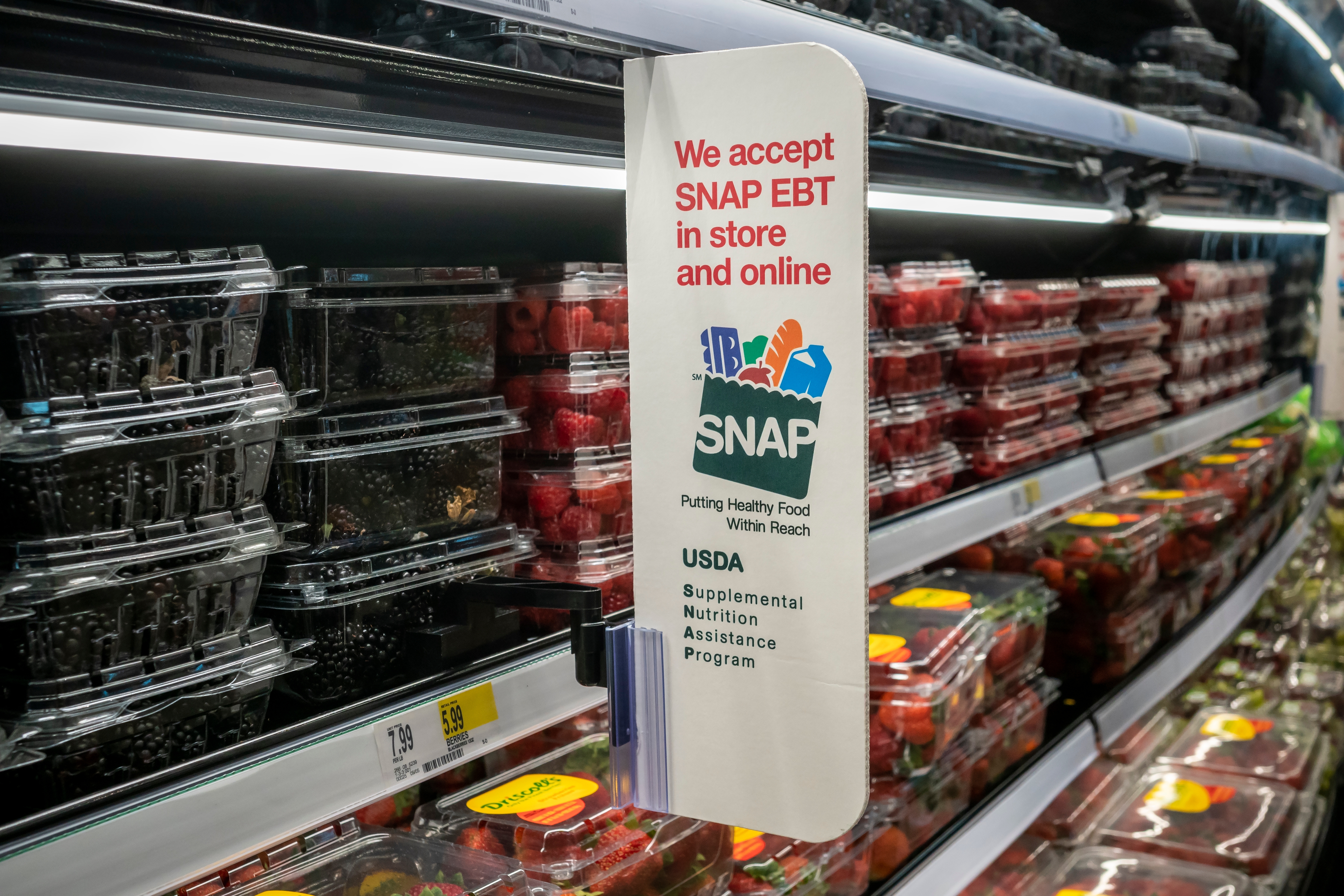
The Supplemental Nutrition Assistance Program (SNAP) is the United States’ largest program aimed at combating hunger. However, it is currently under attack by the Trump administration, and millions of Americans are at risk of their welfare benefits being cut. The government is funding 65% of the SNAP program benefits, claiming that it is all they can afford. In early November 2025, John J. McConnell Jr., a Rhode Island federal judge demanded the government pay 100% of what SNAP recipients are entitled to. The federal government agreed, but then rescinded their promise after states had dealt out the full benefits to their respective recipients. Rhode Island Governor Dan Mckee stated about Trump retracting his claims, “he intentionally created chaos for states across the country playing games with people’s ability to feed their families, weaponizing hunger, and gaslighting the American people. It’s inhumane” (Smith 2025). Trump’s attempts to weaken the SNAP program reflects the most recent transformation to an ever-changing program that has been remodeled by government legislation throughout history.
The History of SNAP Benefits
The first food stamp program in the U.S. was introduced during the Great Depression. In the four year duration of the program, 20 million Americans facing food insecurity were helped, but the program was designed to be temporary and ceased in 1943, when the unemployment epidemic in the U.S. was rectified. A food stamp program would not return until the Pilot Food Stamp Program was introduced in 1961 by President John F. Kennedy. The early food stamp programs were characterized by a purchase requirement, in which participants had to spend their own money on stamps to acquire food at a discounted price. A major expansion of the program occurred following Lyndon Johnson’s passage of the Food Stamp Act in 1964 which outlawed discrimination in food stamp distribution, removed limits on the kind of items people could purchase with food stamps, and made the program a permanent fixture in American society. (A Short History of SNAP 2025). This legislation came in the midst of Johnson’s Great Society policies aimed at combating poverty in the U.S.
Through the 1960s and 1970s, the program continued to grow from a recipient standpoint, and also in terms of the quantity of states providing these benefits. The rapid expansion of the program led to concerns over the price of providing food stamps to so many people, and it facilitated the passage of several pieces of legislation such as the Food Stamp Act Amendment of 1970, which limited the quantity of food people could purchase with subsidies to what constituted a “nutritionally adequate diet.” In addition, to buy food stamps, people had to prove that they were taking initiative to make their own money with proof of employment and spending at least thirty percent of their income on food before the government stepped in to provide assistance (A Short History of SNAP 2025).
Despite the limitations the Food Stamp Act Amendment implemented, the program would continue to grow with the Agriculture and Consumer Protection Act of 1973, which expanded the program to all states and facilitated the program’s nationalization by 1974. The program was made more accessible with the passing of the Food and Agriculture Act of 1977, which eliminated the purchase requirement, meaning people no longer had to pay for food stamps. Restrictions on food stamp collection were further mitigated when the Food Stamp Act of 1985 downgraded the requirements for enrolling in benefits from having a job to solely participating in the Employment and Training Program, which was legally required in all states (A Short History of SNAP 2025).
Access to food stamps was facilitated by the nationwide implementation of Electronic Benefit Programs in 2002 after the passage of the Personal Responsibility and Work Opportunity Reconciliation Act. The EBT programs effectively removed physical food stamps, allowing people to collect their benefits via swiping a government-issued card (A Short History of SNAP 2025).
Food welfare assistance followed a cyclic pattern of expanding and then contracting. Each time the program expanded, laws were passed that restricted the program, and when the program reached lulls, legislation was implemented to increase participation. An example of this is with the Federal Agriculture Improvement and Reform Act of 1996 and the Farm Security and Rural Investment Act of 2002. For example, upon the program expanding in the 1980s, immigrants were barred from receiving the benefits; however, six years later this decision was reversed when immigrants who, after five years of living in the U.S., were permitted to collect food stamps. This reversal came during a period of participation decline in the 1990s (A Short History of SNAP 2025).
In 2008, The Food, Conservation and Energy Act substantially increased funding to these programs by over a billion dollars each year. Per this Act, the program was officially titled the Supplemental Nutritional Assistance Program (SNAP). Following the 2008 recession, the program experienced continuous growth (A Short History of SNAP 2025). However, the program is currently in danger of a serious contraction; but this should not come as a surprise to the American populace, as Republican administrations generally tend to target welfare programs.
Democrats and Republicans on Food Stamps
The political right and left generally have different perspectives regarding the distribution of welfare benefits. Republicans intend to minimize government funding for welfare programs, such as SNAP, and want to decrease the money spent on these programs by decreasing the amount of recipients of these benefits. Republicans want to add more work requirements, making the benefits less attainable for the unemployed. On the other hand, Democrats are proponents of expanding welfare programs, simplifying the process of joining the program and collecting its benefits, and are against tightening the work requirements (Farley 2025). The most recent government shutdown was the result of disagreements between Congressional Democrats and Republicans over government funding for Obamacare subsidies. Due to the shutdown, Congress failed to renew funding for SNAP assistance, leaving millions with the risk of food insecurity.
Although expansions and cuts of welfare programs have occurred during Democrat and Republican administrations, the most notable growths of food-based welfare occur during Democratic presidencies and the most notable cuts during Republican leadership. For example, the food stamp program became permanent in American society under Democrat President Lyndon B. Johnson, and the purchase requirement for food stamps was eliminated, which ultimately made food stamps easier to obtain in 1977 under Democrat President Jimmy Carter. In contrast, the legislation that restricted food stamp purchases to only the items that constituted a “nutritionally adequate diet” occurred under the Nixon administration. Lastly, the Food, Conservation and Energy Act of 2008 that sought to increase funding for these programs was initially vetoed by Republican President George W. Bush, and it only passed because the veto was overridden by a Democrat-dominated Congress.
The recent threats to welfare programs place the food security of many Americans in jeopardy, but they are evidence of a longstanding pattern in American society of Republican leaders reducing government spending on welfare benefits.

Jadyn Schoenberg is a sophomore majoring in Philosophy, Politics and Law from Commack, NY. She is an Associate Political History Reporter, who plans to attend law school in the future. Her political interests include democratic backsliding, international law and legal history. Aside from writing, she enjoys playing ultimate frisbee and spending time outdoors.
References
“A Short History of SNAP.” Food and Nutrition Service U.S. Department of Agriculture, August 29, 2025. https://www.fns.usda.gov/snap/history.
Farley, Robert. “Democrats and Republicans Clash Over SNAP Contingency Funds.” FactCheck.org, October 31, 2025. https://www.factcheck.org/2025/10/democrats-and-republicans-clash-over-snap-contingency-funds/.Smith, Tovia, Chandelis Duster, and Jennifer Ludden. “Trump Administration Again Asks Supreme Court Intervene on Order for Full SNAP Benefits.” NPR, November 10, 2025. https://www.npr.org/2025/11/09/nx-s1-5603417/full-snap-benefits-trump-states-order.

 Happy Medium
You must be logged in to post a comment.