Tension and Technology: The Connection Between Politics and Science

It can be easy to divide technology and politics into two distinct categories, viewing their distinctions as black and white. This being said, it is important to not overlook the relationship the two of them share. Politics and science most definitely impact each other and the relationship between the two can take on different forms.

The Swinging 60s: Cultural Revolutions and Legislative Reactions in Britain

In an April 1966 edition of Time Magazine, the sociocultural landscape of Britain was vividly described as being “in the midst of a bloodless revolution” (“Time Magazine” 1966). The rejection of the elite-dominated status quo ushered in the creation of a new social order– a society in which people wore “suspiciously bright cloth[ing],” listened to catchy beat music, and talked openly about sex. 

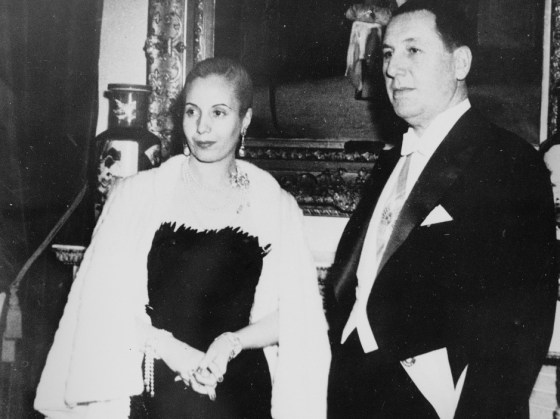
How Perón Rescued and Failed Argentina

In the recent Argentine presidential election of November 2023, a surprising wave of young adult voters (almost 70% percent of the under 30’s) cast their votes for the libertarian, extremist candidate Javier Milei, instead of Sergio Massa, the candidate for the Peronist party in government. However, young voters weren’t just rejecting the current Peronist government, but rejecting the Peronists who have dominated Argentine politics for the last 80 years. 

German Socialist and Liberal Policies, and Their Influence on Art in the 1960s

As the Berlin Wall divided a nation, the artistic landscape of modern art in the 1960s is represented by a contrast between the German Democratic Republic, or GDR, i.e. East Germany, and the Federal Republic of Germany, or FRG, i.e. West Germany. In the ostensibly free and culturally vibrant Federal Republic of Germany in the 1960s, celebrated as a hub of artistic expression, a perplexing reality emerged.

Roe’s Legacy: Feminism Within the 1970s Abortion Movement 

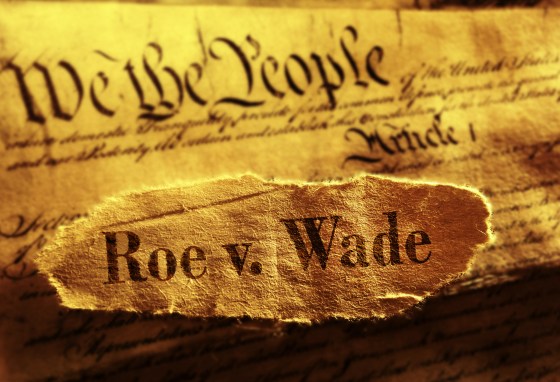
The 1970s—a decade notably defined in the United States by disco beats, bell bottoms, and of course, significant political turbulence. Marked by the legal milestone of Roe v. Wade (1973) that legalized abortion across the nation, the 1970s represents a time of cultural shifts that challenged norms of female reproductive freedom, gender, and sexual liberation.

The Time of Monsters – Russia’s Failed Experiment With Democracy

As thick black smoke billows into the sky, the president’s forces stormed the Parliament to the sound of more gunfire. The political change is palpable; Russian democracy is dead, and while no one knows it yet, the path has been laid for a new unknown political actor named Vladimir Putin to take and hold power. We know how this story ends, but where does it begin and when did things go so terribly wrong?

The War on Terror and its Impact on the Trust of Politicians in the 2000s

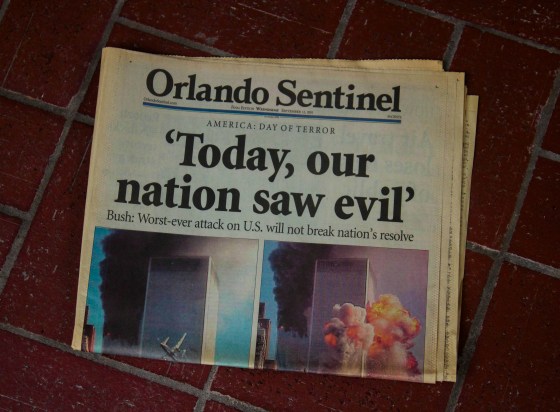
The extreme turbulence of the early 2000s along with the missteps of leadership by politicians created a larger problem – an overall loss of faith in government by some. The 2000s can be pinpointed as a shift in view for many Americans, splitting the American political sphere into various factions that have only continued to grow to this day.

The GSEU and Beyond: How Graduate Student Labor Action Reflects a Solution to a Wide-Spread Crisis

After months of petitions, rallies, and writing campaigns, the GSEU and Binghamton University settled on increases in pay for some graduate workers set to be implemented in the Fall of 2023. But this is not the happy ending it might seem to be. It’s only the start of a larger struggle for better conditions.

The Problem  is Black and White: Drastic Disparities Between Low-Income and Affluent Communities Throughout New York State

I was born and raised in the Bronx, the daughter of two Trinidadian immigrants. Throughout middle and high school, I went to a predominantly white, all-girls private school on a scholarship in the affluent city of Greenwich, Connecticut. For eight years, I traveled daily between these two cities, observing the differences between the two communities—and there were many.

What is the Presidential Records Act?

Congress enacted the Presidential Records Act (PRA) in 1978 initially as a reaction to the Richard Nixon Watergate scandal and a dispute over his presidential records. The new legislation essentially changed the legal ownership of presidential records from private to public; the records belonged to the United States government rather than the President himself. It also laid out the process of filing records and what happens after a President’s term comes to an end.

Climate Change as a Priority in Future Global Elections

In last year’s 117th Congress, 139 out of 535 elected officials (~25%) refused to acknowledge the existence of climate change. It is important to note that these 139 representatives have collectively received $61 million in lifetime contributions from the coal, oil, and gas industries.

Choosing How to Choose: Alternative Electoral Systems

While there is likely no single reform that could solve all the problems with American politics, it could be good to look at some alternative voting systems that could be implemented in the United States. The majoritarian electoral system used in the US is not the only type that is used across the world, after all.