Third Parties and Strategic Voting

Elections in the United States are dominated by a two-party system with Democrats on the centre-left and Republicans on the centre-right. Although there are other parties, they receive negligible amounts of support and often fail to win any significant elections. For voters who support third parties, elections can be frustrating, as it seems like there is no good outcome when casting a vote.

Commitments and Contradictions: Issues Underlying the Trump Administration’s Health Policy 

The United States’ current health policy has undergone significant changes since President Trump took office. The Trump administration’s approach to health policy is marked by a mix of ambitious reforms and internal contradictions. Central to this dynamic is the tense debate surrounding the administration’s approach to vaccinations, coupled with Trump’s seemingly contradictory mission to Make American Healthy Again (MAHA).

Implications of U.S. Recognition of Somaliland

In recent years, there has been increased buzz over the United States becoming the first UN member state to recognize the independence of the self-declared state of Somaliland. In March 2022, Somalilander leaders met with members of Congress and the Biden administration to lobby for American recognition of their aspirational state. Citing growing Chinese influence in the Horn of Africa and the success of Somaliland’s democracy as opposed to Somalia’s failed state, Somalilander has made the case for recognition on the grounds of guaranteeing stability and US influence in the region

“Oh Snap” Elections: A Guide to Canada’s Electoral Procedure and Party System

Canadians, originally not due for new elections until October 20 of this year, will go to the polls on April 28, 2025, in a snap election called for by new Canadian Prime Minister (PM) and Liberal Party leader Mark Carney. Carney will face Conservative Party leader and member of parliament (MP) Pierre Poilievre, who, until recently, had successfully campaigned against the incumbent Liberal government to achieve a significant lead in the polls.

The War on Terror and its Impact on the Trust of Politicians in the 2000s

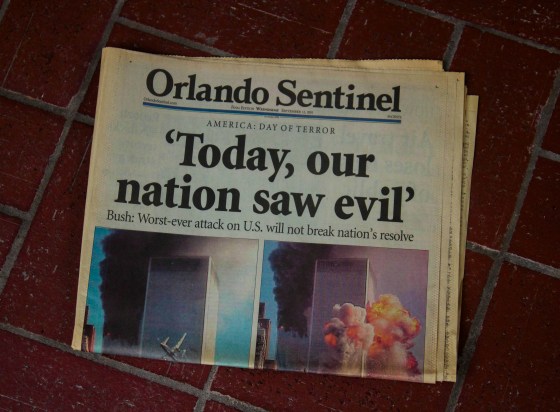
The extreme turbulence of the early 2000s along with the missteps of leadership by politicians created a larger problem – an overall loss of faith in government by some. The 2000s can be pinpointed as a shift in view for many Americans, splitting the American political sphere into various factions that have only continued to grow to this day.

The GSEU and Beyond: How Graduate Student Labor Action Reflects a Solution to a Wide-Spread Crisis

After months of petitions, rallies, and writing campaigns, the GSEU and Binghamton University settled on increases in pay for some graduate workers set to be implemented in the Fall of 2023. But this is not the happy ending it might seem to be. It’s only the start of a larger struggle for better conditions.

What is the Presidential Records Act?

Congress enacted the Presidential Records Act (PRA) in 1978 initially as a reaction to the Richard Nixon Watergate scandal and a dispute over his presidential records. The new legislation essentially changed the legal ownership of presidential records from private to public; the records belonged to the United States government rather than the President himself. It also laid out the process of filing records and what happens after a President’s term comes to an end.

Climate Change as a Priority in Future Global Elections

In last year’s 117th Congress, 139 out of 535 elected officials (~25%) refused to acknowledge the existence of climate change. It is important to note that these 139 representatives have collectively received $61 million in lifetime contributions from the coal, oil, and gas industries.

Choosing How to Choose: Alternative Electoral Systems

While there is likely no single reform that could solve all the problems with American politics, it could be good to look at some alternative voting systems that could be implemented in the United States. The majoritarian electoral system used in the US is not the only type that is used across the world, after all.