Flatten the Hierarchy, Flatten the Emissions – A Horizontal Approach to Climate Change

Climate change is a pretty simple problem, at its core. 

We cut down all the trees, drained all the swamps, dammed all the rivers, and then started burning oil. We cut out the earth’s lungs and got addicted to smoking.

Since the problem is seen as quite complicated, it should first be discussed why the problem is simple.
Follow the Money: Campaign Financing in the NYC Mayoral Election 

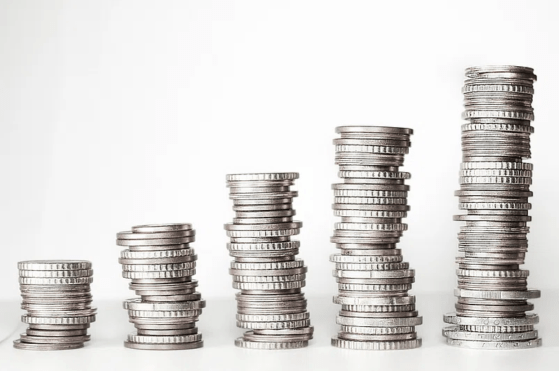
Voters in New York City are set to go to the polls on November 4th to elect a new mayor. In the months leading up to the election, the race has been jam packed. Currently, the four main candidates in the race are Zohran Mamdani (Democrat), Eric Adams (Independent), Andrew Cuomo (Independent), and Curtis Sliwa (Republican).

The One Big Beautiful Bill: Outcomes for Noncitizen Healthcare and New York’s Response

On July 4th, 2025, President Trump signed into law the One Big Beautiful Bill Act (OBBA). At the end of June, as the bill ricocheted between the House and the Senate, our timelines were barraged by political pundits analyzing its far-reaching effects. However, the subject that garnered the most bipartisan attention was changes in federally funded health insurance programs.

What Has the Recent Rise in Campaign Spending Meant for Policy?

The influence of moneyed interest in elections has become increasingly relevant in American politics over the past twenty years. This influence has reached new levels of concern in the second Trump Administration; over thirty different wealthy campaign donors, who collectively contributed hundreds of millions to Donald Trump’s 2024 presidential election campaign, have been appointed to key positions in his Cabinet.

Randy Caparoso, CC BY-SA 4.0 , via Wikimedia Commons

Tariff, Tariffs, Tariffs: Who Really Pays?

We’ve all heard the word surface again and again in the news recently, from Trump’s policy agenda to numerous countries responding with reciprocal tariffs. Their effects span from countries, rates, and goods. The question is, just how impactful is this oft-wielded economic policy, and what kind of impact will it wield on us, the American consumers?

Green Colonialism and Environmental Racism: A Case Study in the Democratic Republic of Congo

Nothing in this world is free. The effort toward global decarbonization that has become a critical priority for much of the international community comes with its immediately obvious hurdles. The large-scale rollout of renewable energy production, the mass electrification of oil- and gas-powered sectors, and the scaling down of animal agriculture are all wide-scale and far from easy.

Hochul vs. Trump: Congestion Pricing

Gridlock is a term that was coined in New York City, referring to the traffic congestion preventing the efficient functioning of the city’s network of intersections, particularly in Manhattan. The term has existed since the emergence of America’s car culture in the 1900s when New York officials believed that a toll system would be the best solution to the traffic problem in Manhattan. However, New York officials have recently developed an ambitious experiment to resolve traffic control: congestion tolling.

The Science of Spying: A Quick Glance into a Changing Field

Many of us conjure up a similar image of a stereotypical spy when we think of espionage. Disguises, black sunglasses, a jack of all trades, a guy who builds their gadgets, hacking on a black screen with green code; the list goes on. Having such stereotypes has made the world of spies and espionage seem like a fantastical one—one that is far removed from our real world.

A Change in Regime

On December 8th, 2024, the Syrian Ba’athist Party and the Assad political dynasty were exhumed from the Syrian administration after a grueling decade of civil war. Since the start of the Arab Spring in 2011, the president of Syria, Bashar al-Assad, waged an all-out war on the country’s political insurgents. The Arab Spring was a chain of protests across North Africa and the Middle East that demanded civic freedoms from their authoritarian governments, attempting to loosen autocratic regimes’ grip over their people.

How Much Should We Care About the National Debt?

The United States Government is around $36,220,000,000,000 in debt as of April 2025, according to figures calculated by the US Treasury. The figure is immense, exceeding America’s 2023 gross domestic product by trillions. The sheer scale of the debt informs why reducing it has been one of the current Trump Administration’s largest stated goals in their policy agendas so far.

Who let the DOGE out? Will the Courts be able to muzzle Musk?

Vandalized Teslas, hundreds of protests, stormed dealerships, and scared owners—what’s going on here? The target is Elon Musk, owner of Tesla, and appointed “head” of Trump’s new Department of Government Efficiency (DOGE). The motive? A widespread belief that Musk has used his wealth to meddle in politics to the detriment of our democracy.

“Oh Snap” Elections: A Guide to Canada’s Electoral Procedure and Party System

Canadians, originally not due for new elections until October 20 of this year, will go to the polls on April 28, 2025, in a snap election called for by new Canadian Prime Minister (PM) and Liberal Party leader Mark Carney. Carney will face Conservative Party leader and member of parliament (MP) Pierre Poilievre, who, until recently, had successfully campaigned against the incumbent Liberal government to achieve a significant lead in the polls.

A Temporary Rapprochement for Israel and Palestine

Although the peace created by the ceasefire has been unstable, with some noting it to be only temporary- it has put a pause on the hostilities that have enveloped millions of people for the last 15 months. As the new year begins, the world must remain hopeful that a lasting peace can be achieved through multilateralism and faith in our international institutions.

How the GOP Has Changed After the Rise of Donald Trump

The evolution of GOP policies from the Reagan era to the Trump era is complex and influenced by numerous political, economic, and social factors. While this essay provides a broad comparison, it does not capture the full scope of nuanced policy shifts, ideological debates, and external influences that have shaped the party over time.

Declining Leaders and An Ascendant Political Right in Germany and Canada

German and Canadian voters will go to the polls this year in national elections. At the latest, Canadian voters will vote in October, while a German snap election will be held on February 23. Both elections will take place in the context of ongoing political and economic turmoil in both countries and backlash directed at incumbent political parties observed in elections globally in 2024.