-
Binghamton Students and Local Democrats Host Reproductive Rights Rallies on Same Day, Showing that Abortion is on the Ballot

By Devon Nicholson and Trevor Fornara
Photos: Aidan Emery and HM StaffOn Saturday, October 8, two reproductive rights rallies were held in the Binghamton area: one held on the Binghamton University campus and the other in front of the Broome County Courthouse in downtown Binghamton.
Background
On June 24, 2022, the Supreme Court of the United States issued its opinion in Dobbs v. Jackson Women’s Health. The case was brought to the Court through a challenge to a Mississippi law banning abortions after 15 weeks. The Court not only upheld the law but more drastically overturned two landmark abortion rights cases, Roe v. Wade and Planned Parenthood v. Casey. This decision delegated abortion regulations to states individually, rather than following a federal standard, and allowed for already in place trigger laws to take effect immediately.
Off-Campus Rally

A large sign reads “WOMENS RIGHTS = HUMAN RIGHTS” on the steps of the Broome County Courthouse. On Saturday, many gathered to promote the protection of reproductive rights at the Defend Reproductive Rights Rally in Downtown Binghamton, hosted by the local progressive group Indivisible Binghamton. Co-sponsors of the event included the Binghamton University chapter of College Democrats, Citizen Action of the Southern Tier, Young Democrats of Broome County, and the Democratic Women of Broome County. The audience at the rally was filled with those eager to stand in solidarity for reproductive rights, including students, community members, and political candidates.
A series of guest speakers emphasized women’s rights as human rights through personal statements and calls to action. Many urged attendees to vote Democratic in the upcoming November election.
Chance Fiorisi, president of BU College Democrats, told Happy Medium, “I want everyone to know how important this truly means for all of us, we will not let anyone decide who can criminalize love, not in my America.” He also spoke at the rally, emphasizing the implications of the Dobbs decision on LGBTQ+ rights. Fiorisi ended his speech with a strong message to pro-life supporters. “If you think nothing will happen, if you think the people will just forget to vote on Election Day, and if you think you can continue to strip our rights away, you have another thing coming. Some of us are not willing to give up our rights without a fight.”
Happy Medium Managing Editor Briana Lopez-Patino has a primary academic interest in medical ethics and was asked to speak at the rally to share this perspective. Her speech focused on the restriction of bodily autonomy caused by the Dobbs decision and encouraged the audience, mainly the targeted women of color, to use the power of advocacy to take back the autonomy that is rightfully theirs. “Overturning Roe v. Wade creates multiple unethical outcomes—people seeking dangerous and harmful ways to get what they need… Some people don’t have the means to support another life, or their physical body cannot handle the hard process of having a baby. Where is the autonomy?”
Priya Pindiprolu, one of the guest speakers and former president of BU College Democrats, reflected on the event in a statement to Happy Medium: “It was exciting to see students there in addition to the community members. I really hope that people take what they heard today and apply it to their daily lives and continue to fight for the reproductive rights of everyone.”
On-Campus Rally

Raissa Bellucci’s speech “discussed how black women are disproportionately affected by abortion bans” and what a post-Roe future may hold. Credit: Aidan Emery The rally on campus was hosted by the Binghamton University chapter of Planned Parenthood Generation Binghamton. According to chapter president Sophia Panos, this is their first year as a chartered SA organization, having started informally a few years ago. The rally has become an annual event, starting with student speakers at the Peace Quad before mobilizing for a march around campus. This year’s rally was co-sponsored by the Thurgood Marshall Pre-law Society, Binghamton Pro-choice Coalition, and the Binghamton University chapters of the American Medical Women’s Association (AMWA), American Medical Student Association (AMSA), American Red Cross, and New York Public Interest Research Group (NYPIRG).
“We’re fighting for reproductive rights for all people with uteruses, not just women,” Panos explained. The rally’s goals were to raise awareness and money for abortion clinics in states where trigger laws banning abortion are going into effect.
One such speaker, Raissa Belluci, is a member of the Thurgood Marshall Pre-Law Society and Binghamton NYPIRG. Bellucci’s speech “discussed how black women are disproportionately affected by abortion bans” and what a post-Roe future may hold. In a statement to Happy Medium, she stressed the importance of normalizing abortion as a regular medical procedure, referencing a 2017 study that found that around one in four women in the US will have an abortion by age 45 (Jones and Jerman).
Jackie, a first-year student in attendance, said that she heard about the rally in a Women, Gender, and Sexuality Studies course. “We were talking [in class] about how period tracker apps could be used against you in court if you get an illegal abortion, and that’s terrifying. I’m literally terrified.”
Ryan, a first-year student, added, “Roe is fundamentally linked to privacy, and is the bottom of the Jenga tower in relation to all of the cases built upon its precedent. If you pull out the bottom of the Jenga tower, everything built on it becomes shaky.”

Devon Nicholson is a business administration major from Queens, NY. She’s a consultant at Binghamton University’s Speaking Center, a member of Women in Business, and a member of the KKG sorority board. She loves listening to music in her free time! Devon is also a dual-Irish citizen.

Trevor Fornara is a senior from Mystic, Connecticut, majoring in philosophy, politics, and law. Trevor has served as Editor in Chief of Happy Medium since founding the publication in December 2021. Last summer, Trevor was a participant in the Summer Scholars and Artists Program, through which he received funding to create the first print edition of Happy Medium Magazine. He now works as the Communications and Outreach Coordinator at the Binghamton University Undergraduate Research Center.
References
Jones, Rachel K. and Jenna Jerman. 2017. “Population Group Abortion Rates and Lifetime Incidence of Abortion: United States, 2008–2014.” American Journal of Public Health, October 19. https://www.guttmacher.org/article/2017/10/population-group-abortion-rates-and-lifetime-incidence-abortion-united-states-2008.
-
What Special Congressional Elections Tell Us About the Midterms

By Bryan Goodman, Political Director
Photo: A lawn sign in opposition to an August 2 referendum on banning abortion in Kansas. The vote did not pass, an upset for pro-life advocates.The battle on both sides of the abortion rights fight has intensified since the Supreme Court of the United States’ ruling in Dobbs v. Jackson Women’s Health which overturned the long-standing legal precedents established in both Roe v. Wade 410 U.S. 113 (1973) and Planned Parenthood v. Casey 5050 U.S. 833 (1992). Many states across the US saw their trigger laws go into effect once this ruling was official—though many believed it was likely to occur once the leak of the draft majority opinion came out. Mass protests ensued nationwide and even stretched around the globe in opposition to the decision, whereas for the pro-life movement, it was seen as a major victory.
The overturning of Roe v. Wade will be a driving force for young people and women to vote in the 2022 midterms, which is critical if the Democrats hope to hold or even expand their majorities in both chambers of Congress. With items such as the Inflation Reduction Act becoming law and partial student debt cancellation, amongst other policy victories for the White House in the month of August, Democrats are becoming hopeful that they can hold both chambers of Congress.
This hope represents their rising popularity among the American electorate. Historically, Democrats have positioned themselves as “not Republicans” rather than developing an identity. But in a twist that took many by surprise, Democrats began to revive what was perceived as hopeless legislation. In a swift change of pace for Senate Democrats, the Inflation Reduction Act passed, providing much-needed funding to combat climate change, changes to the tax code to decrease the deficit and increase revenue, and healthcare spending and policy changes including allowing Medicare to negotiate prices for certain drugs. This last piece, Medicare price negotiation, has been a part of the Democrats’ campaign promises since the mid- 2000s, and they just now made true on their word. They also implemented a cap on insulin costs for Medicare recipients at $35, while an amendment to make this applicable to everyone failed 57-43, with seven Republican senators voting in support of the amendment. This amendment failed because of Senate rules regarding amendments to bills which require a three-fifths majority (60+ votes) to pass.
While legislation and executive action, such as the student debt cancellation we saw from the President, will likely motivate certain bases of voters to turn out in November, these are still not the greatest influencers of the upcoming election. Immediately following the Dobbs decision, many media outlets began reporting that abortion would not be a major issue in the midterm elections. They could not have been more wrong (so far). There are two notable articles in which the writers make clear that Dobbs/abortion will not be a major issue of the midterms. They come from Byron York, the Chief Political Correspondent of the Washington Examiner, and Rich Lowry, the Editor in Chief of the National Review.
The House of Representatives
It does not have to be November 9 for us to realize the impact that the Dobbs decision has had on this midterm cycle so far. We can simply examine various special congressional elections across the country and the Kansas abortion referendum. There were five special Congressional races—elections held to fill a vacancy due to death, retirement, or resignation. FiveThirtyEight has collected data pertaining to these pre and post-Dobbs special elections and compiled averages for the margins and the swings for them. Appendix A contains the graphic from the article (Rakich 2022). In a pre-Dobbs world, the swing margin in the sample of races was Republican +2, meaning that the Republican Party was outperforming expectations by two percentage points. However, the average partisan lean of this group of races was Democrat +12, yielding a vote margin result of Democrat +10.
Conversely, in the post-Dobbs special elections, there was an average partisan lean of Republican +13 and an average vote margin of Republican +2, resulting in an 11 point swing in Democrats’ favor. This swing has turned the tides in the buildup to the November midterms. While FiveThirtyEight still forecasts that the GOP wins control of the House 69 out of 100 times, compared to Democrats’ 31 out of 100, these odds have certainly shifted since before the Dobbs decision. Since the Supreme Court’s decision to overturn Roe v. Wade and Planned Parenthood v. Casey, two landmark abortion cases in the U.S. legal world, Democrats’ odds to hold the majority in the House have more than doubled. On June 24, the day the Dobbs decision was officially released, the odds were 88 out of 100 for Republicans and a mere 12 out of 100 for Democrats (FiveThirtyEight). There are several key House races that FiveThirtyEight has identified that have a large influence on who controls the House. There are several in California, including the 22nd and 27th districts which are vitally important if Democrats want to maintain their majority.
Alaska Special Congressional Election
In what might be the most shocking result of all of the special elections so far, Alaska elected a Democrat to represent them in the House for the first time since Richard Nixon was President in 1973. In this race, Democrat Mary Peltola came out on top in a race between her, Sarah Palin, and Nick Begich. However, thanks to Alaska’s ranked-choice voting system and the split of Republican votes between Palin and Begich, Peltola came out victorious. This could be viewed by some as a one-off election due to the disapproval of a candidate such as Palin, but there was a viable second candidate in Begich, who was not able to compete with both of them. Some prominent politicians, such as Senator Tom Cotton of Arkansas, believe that ranked-choice voting is “…a scam to rig elections” (Cotton 2022a) and that “60% of Alaska voters voted for a Republican, but thanks to a convoluted process and ballot exhaustion—which disenfranchises voters—a Democrat ‘won’” (Cotton 2022b). Cotton’s claim that ranked-choice voting is a scam is a perpetuation of former President Trump’s false claims of fraudulent elections. While Cotton’s pointed out that 60% of Alaskans voted Republican, the two Republican candidates were inevitably going to split the vote. If there were no ranked-choice system in place, the Republicans still would still have lost since Peltola won a plurality of the vote after the first round of rankings were tallied (elections.alaska.gov). In Alaska, Democrats performed with a swing of +18, turning a typical R+15 district into a D+3 district. As of October 6, 2022, Pelota has been dominating recent polling, holding leads in the +20 range, increasing Democratic hopes for victories in November.
The Senate
On the day that the Dobbs decision was released, Republicans held a slight edge over Democrats, 53 to 47 out of 100, according to FiveThirtyEight data. Since then, Democrats have begun to run away with it in FiveThirtyEight’s forecast, with odds being at 67-33 in Democrats’ favor as of October 6, 2022 (FiveThirtyEight). The growing understanding that Dems will hold or expand their majority in the Senate is due in part to the nature of the Senate map this cycle favoring Dems, along with low-quality candidates running on the Republican ticket (Kapur and Thorpe V 2022). The Democrats have a favorable map this cycle as compared to what they will face in 2024, so it is critical for them to build the foundations of a future majority now and look to further expand on it in 2024. However, unfortunately for Democrats, there are many seats in key swing states and generally Republican-favored states that will be up for re-election during the presidential election year including Montana, Arizona, Nevada, Wisconsin, Michigan, Ohio, Pennsylvania, West Virginia, and Maine.
I want to focus on the 2022 Senate map though. This cycle, Democrats have to defend seats in Nevada, Arizona, New Hampshire, and Georgia, while looking for pickups in Pennsylvania and Wisconsin, with even the possibility of flipping seats in Ohio, North Carolina, and Florida if everything goes perfectly for them. Democrats’ best bets are in both Pennsylvania and Wisconsin with two current Lieutenant Governors running for the Senate seats as Democrats. John Fetterman of Pennsylvania and Mandela Barnes of Wisconsin are both hoping to yet again win a state-wide election that would propel them to the United States Senate with the hopes of overtaking Joe Manchin and Kyrsten Sinema as the 49th and 50th votes that are needed for a majority in the chamber. Both Fetterman and Barnes have previously been elected Lieutenant Governor of their respective states. Fetterman has been performing incredibly well according to all polling data so far, and Barnes is beginning to pick up steam in his race against two-term incumbent Ron Johnson.
Kansas Abortion Ballot Initiative
On August 2, 2022, voters in the state of Kansas went to the polls to cast their ballot in the state’s primary election. Several statewide offices were on the ballot during this primary cycle, but that did not prove to be the main takeaway of the night. There was a direct ballot initiative—also known as a referendum—in which voters statewide had the option of choosing either “Yes” or “No” on a specific question posed to them. It is the purest form of direct democracy and has been previously used in Oregon to decriminalize the possession of small amounts of drugs and instead make it a civil violation, passing with over 58% support (Templeton 2020).
In Kansas, voters had the chance to decide if the state constitution would continue to protect abortion rights, representing the first time voters anywhere in the country have had this opportunity. The framing of the question on the ballot has been quite controversial and had the potential to mislead voters when selecting whether to vote yes or no. The wording was as follows:
Because Kansans value both women and children, the constitution of the state of Kansas does not require government funding of abortion and does not create or secure a right to abortion. To the extent permitted by the constitution of the United States, the people, through their elected state representatives and state senators, may pass laws regarding abortion, including, but not limited to, laws that account for circumstances of pregnancy resulting from rape or incest, or circumstances of necessity to save the life of the mother. (Kansas No State Constitutional Right to Abortion and Legislative Power to Regulate Abortion Amendment, August 2022)
Following this explanation are the bubbles for yes and no options. This statement is exactly that – a statement, which those in favor seek to confuse voters with and get them to vote for their preferred outcome. Rather than posing an unambiguous question to the voters, those in support of stripping abortion rights wanted to make it more difficult for voters to comprehend what they are voting on in the hopes that they would simply vote yes and call it a day. This in and of itself is yet another example of voter suppression tactics. To achieve a specific political goal, confusing wording like this can be used to mislead voters and trick them into voting directly against what they believe.
On Monday, August 1st, many residents throughout Kansas began receiving text messages about the referendum vote saying, “‘Women in KS are losing their choice on reproductive rights, voting YES on the Amendment will give women a choice. Vote YES to protect women’s health’”(Stanley-Becker 2022). This is another example of strategies employed by anti-choice groups and individuals who are attempting to thwart the protections granted to Kansans by their state constitution.
Once voters made it to the polls the following day, it was clear from almost the beginning that the amendment would fail thus keeping the protections for abortion in place in Kansas. As of the morning of August 4, with estimates of over 95% of the total votes counted, the referendum is expected to fail, with “No” prevailing by a margin of over 17%. This victory for pro-choice Americans is just the beginning of what we may see in the fall during the midterm elections. Many predicted that abortion would be a non-issue in upcoming elections, and the results of the election in Kansas have shown the country that is far from true.
It is important to take a realistic approach to the polling we have seen so far. Historically, polling has proven to underrepresent Republican support; however, in recent months it has been doing this for Democrats. Appendix A further supports this claim and has proven that despite large partisan leanings, Democrats have been able to overcome such roadblocks to either run competitive elections or outright win them. It will be an extremely difficult task for Democrats if they want to maintain their majorities in both chambers of Congress. While history says it is extremely unlikely, it is not impossible for them. These indications from the special congressional elections and the Kansas referendum vote on abortion have shown us that there are countless single-issue voters throughout the country that have the potential to turn the tides of the “red wave” that was predicted to happen in the 2022 midterms. Only time will tell, but as the elections grow closer, the gap for the Democratic Party is shrinking and bringing both the Senate and even the House of Representatives within striking distance of retention.
Appendix A

This graphic was retrieved from the FiveThirtyEight article by Nathaniel Rakich (see references). 
Bryan Goodman is currently the Political Director for Happy Medium. In this role, he consults with both writers and the editing team about specific pieces that could potentially be hot-button issues. He is a graduate student from Valhalla, Westchester County, NY. He attended Westchester Community College for two years before transferring to Binghamton University to complete his undergraduate studies in political science. Bryan is currently enrolled in the 4+1 Master of Public Administration program. Bryan is also passionate about judicial politics and a variety of social/economic issues. His future plans hope to include either law school or a public policy program to further his studies in the field. Bryan hopes to one day be fortunate enough to positively impact as many lives as possible.
References
Cotton, Tom. 2022a. Via Twitter. August 31. https://twitter.com/TomCottonAR/status/1565139540834222080?s=20&t=BCt3Ld-02GP1GA5lsuaGig.
Cotton, Tom. 2022b. Via Twitter. August 31. https://twitter.com/TomCottonAR/status/1565139542000246784?s=20&t=BCt3Ld-02GP1GA5lsuaGig.
Kapur, Sahil and Thorpe V, Frank. 2022. “McConnell says Republicans may not win Senate control, citing ‘candidate quality.’” NBCNews August 18. https://www.nbcnews.com/politics/2022-election/mcconnell-says-republicans-may-not-win-senate-control-citing-candidate-rcna43777.
Rakich, Nathaniel. 2022. “What Democrats’ win in Alaska tells us about November.” FiveThirtyEight, September 1. https://fivethirtyeight.com/features/what-democrats-win-in-alaska-tells-us-about-november/.
Stanley-Becker, Isaac. 2022. “Misleading Kansas abortion texts linked to Republican-aligned firm.” The Washington Post, August 2. https://www.washingtonpost.com/politics/2022/08/02/kansas-abortion-texts/.
“State of Alaska 2022 Special Election.” State of Alaska. https://www.elections.alaska.gov/results/22SSPG/RcvDetailedReport.pdf.
Templeton, Amelia. 2020. “Oregon becomes 1st state in the US to decriminalize drug possession.” OPB, November 3. https://www.opb.org/article/2020/11/04/oregon-measure-110-decriminalize-drugs/.
“2022 House Forecast.” FiveThirtyEight. https://projects.fivethirtyeight.com/2022-election-forecast/house/?cid=rrpromo.“
2022 Senate Forecast.” FiveThirtyEight.https://projects.fivethirtyeight.com/2022-election-forecast/senate/?cid=rrpromo.
-
Referendums and Initiatives Can Hurt Democracy, Unless We Rethink How We Use Them

Opinion by Samuel Marks
Internationally, democratic satisfaction is on the decline—especially in well-established and long-standing democracies (LeDuc et al. 2002). This is to be expected after a period of global democratization. It is partly due to the increasing rise of “audience democracy,” in which parliament, parties, and the media are on the decline in the face of a disinterested public, leaving all involved malcontented (Urbaniti 2019). Citizens believe periodically sparse elections that elect increasingly unresponsive representatives are insufficient. In Europe, this phenomenon is further amplified, with the European Union creating a feeling of a democratic deficit as individual governments are losing power and sovereignty to a centralized and purportedly uncaring technocracy (LeDuc et al. 2002). The international plan to increase democracy has seemingly been the introduction of direct democratic items, such as referendums and initiatives, especially in cases of contentious policies or fundamental political changes (LeDuc et al. 2002). Some believe that by combining aspects of direct and representative democracy, democracy as a whole improves. However, direct democratic components can be dangerous to democracy in all but a few cases.
Prior to delineating the potential dangers of direct democratic concepts such as referendums and initiatives, it is pertinent to define them. Although broadly used to describe all direct democratic measures, referendums are specifically a vote put forth by a governing party to the people, which might be binding, and, if so, authorized. Initiatives are votes facilitated through citizen petitions, which is why they are sometimes referred to as “citizen-initiated referendums” (LeDuc et al. 2002). The use of direct democratic items varies wildly internationally, with some using them extensively (such as Switzerland or Italy), others moderately/specifically (such as Brazil and Canada), a few subnationally (such as the United States, where individual states like California use them), and some not at all (such as Germany or India) (LeDuc et al. 2002).
The first issue with referendums and initiatives is their general complexity compared to “regular” democratic tasks and/or requirements of the “average” citizen. To most “average” citizens, voting in a yearly election is all they believe is asked of them to keep democracies afloat. Although this is normatively incorrect, it is the consensus of most people. The issue here rests on the concept that the “average” citizen, which constitutes a majority of people, is relatively uninformed in politics and policy. This issue tends to be circumvented by the fact that political parties act as informational shortcuts or cues for voters to allow for ease in elections (LeDuc et al. 2002). For example, in an election, a voter may not know the actual candidates but is familiar with the candidate’s party, thus voting with greater confidence. The problem with this system is that there are no informational shortcuts or cues on a referendum or initiative ballot, as neither parties nor candidates are present. Therefore, on what could be an extremely complex issue, there is no indication of what the “right” or “good” thing to do is for the individual voter. Even in cases with highly partisan matters, the lack of party cues leaves voters extremely confused (Hobolt 2006; LeDuc et al. 2002). California presents a possible solution, offering a condensed legislative debate on each direct democratic issue (for and against, with detailed arguments and analysis for both) for voters to review before casting their ballot (Bucy 2018). One issue with this system is that it forces the voters to become more well-informed without shortcuts or cues, which is a challenge on its own.
The lack of parties’ informational shortcuts and cues for the uninformed voter increases the importance of the subject’s publicity campaign. The problem with this added emphasis on the campaign is that there are no means of accountability, as there are in representative elections. For example, in an electoral campaign, if the promises the candidate/party makes are not actuated, they can be removed from office electorally in the next election, i.e. held accountable (Isiksel 2016). In direct democratic measures such as referendums and initiatives, however, once passed (even if not necessarily binding), it is seemingly irrevocable and can facilitate unforeseen issues. During the British referendum on whether or not to leave the European Union (known as Brexit), the campaign was full of disinformation and inflammatory remarks, which helped lead to the success of the “leave” vote. Since the campaign organizers of the “leave” vote knew no one could envision what leaving would look like, they could openly lie and spread misinformation to actuate their desires and then walk them back after the referendum passed (which is exactly what they did) (Bucy 2018).
Furthermore, these campaigns can, and tend to be, dominated by populists—a danger in itself. Populism is defined as a “thin-centered ideology that considers society to be ultimately separated into two homogenous and antagonistic groups: ‘the pure people’ and ‘the corrupt elite,’ and argues that politics should be an expression of the general will of the people” (Mudde 2015). The dangers of populism in a referendum is that it can mobilize an uniformed mass to make a decision that may be normatively lamentable, for both society and democracy, without truly comprehending the damage they are inflicting. This is why the political class tends to be skeptical and challenge the democratic efficacy of referendums and initiatives (Schuck and de Vreese 2015). Furthermore, stealth democrats who distrust the political elites and have no interest in politics at all are typically supportive of direct democratic measures. Stealth democrats often directly support populists who they view as political outsiders to create “unfiltered” political results (Schuck and de Vreese 2015). This is compounded by the fact that referendums and initiatives are heavily influenced by short-term variables, such as the campaign itself, but also the current state of the economy, scandal, etc. (LeDuc et al. 2002).
As aforementioned, another issue with direct democratic measures such as referendums and initiatives is their inflexibility. Referendums and initiatives have no means of specifying alternatives, weighing reasons, ranking preferences, and/or indicating the costs of trade-offs (and finding those that are tolerable) (Isiksel 2016). In contrast, elected representatives have to be flexible when deciding policy and weigh the costs and benefits while adjusting accordingly. This allows for maneuverability in power and accountability in the future, neither of which exist in direct democratic concepts. Therefore, referendums and initiatives break the feedback loop that ensure true democratic strength (Isiksel 2016).
The final issue with direct democratic items such as referendums and initiatives is their treatment as “second-order” elections. The reason they are referred to as “second-order” elections is because their voter turnout tends to be far lower than that of a regular election. The results are less of a reliable measure of the general public’s actual desires, with possibly only a minority of citizens voting on a matter that controls the majority (LeDuc et al. 2002).
Potentially Beneficial Referendums
Despite these dangers and possible failures of referendums and initiatives, there are a few specific cases where they might be beneficial. When a majority or governing party is internally divided on a relatively low-scale issue, having the public decide helps to save face (Robin Best, personal communication, May 2022). This tends to be true of issues such as the legalization of cannabis for recreational use. Referendums can help settle this issue and do not require parties to endorse the measure, as there is still some taboo around cannabis legalization (Robin Best, personal communication, May 2022).
Another potentially beneficial use for referendums is in determining whether to enfranchise long-term, non-citizen residents in local elections. By holding a local referendum (city-wide, county-wide, etc.), the people of a small area can determine if they desire to allow non-citizen residents to have the ability to affect low-scale politics. Tangential to elections, a referendum could be used to enact a compulsory voting rule as a type of election reform. In such a referendum, citizens would determine whether or not they feel their fellow citizens should or should not be forced to be politically involved.
Another possible but far less preferable case would be to use a referendum when there is gridlock over an extremely partisan issue, thus leaving the public to decide. However, since the matter is already clearly partisan and the parties have a clear position on it, the selection of a representative to deliberate on such matters should already be enough (Robin Best, personal communication, May 2022).
Direct democratic components like referendums and initiatives can be harmful and/or dangerous to democracy, except in rare cases. Their complexity, inflexibility, lack of accountability, possibilities for populism, and relative indifference illustrated by the population, put direct democratic components below representative democracy in the toolbox for democratic governance. In the case that a direct democratic measure is utilized, the outcome should be non-binding and act as recommendations to elected representatives to prevent the aforementioned pitfalls.

Samuel Marks is a senior political science major from Poughkeepsie, NY. He is planning to get his Master’s in Public Administration and a Juris Doctor degree. Sam has previously written on politics in the past and has had papers published. He likes to run, watch the Mets and Jets, and anime. Sam also has a unique upbringing, as he grew up in Asia for 13 years, which gives him a unique insight into the global political sphere.
References
Bucy, Erik P. 2018. “The Brexit mess shows how the UK’s referendum process could learn from California’s ballot initiatives.” LSE Blog, December 6. https://blogs.lse.ac.uk/usappblog/2018/12/06/the-brexit-mess-shows-how-the-uks-referendum-process-could-learn-from-californias-ballot-initiatives/.
Hobolt, Sara B. 2006. “How Parties Affect Vote Choice in European Integration Referendums.” Party Politics, 12(5): 623-47.
Isiksel, Turkuler. 2016. “The British people have spoken. But what exactly did they say? The Monkey Cage.” The Washington Post, July 1. https://www.washingtonpost.com/news/monkey-cage/wp/2016/07/01/the-british-people-have-spoken-but-what-exactly-did-they-say/.
LeDuc, Lawrence, Richard G. Niemi and Pippa Norris. 2002. Comparing Democracies 2: New Challenges in the Study of Elections and Voting, 2nd ed. London, UK; Thousand Oaks, CA: Sage.
Mudde, Cas. 2015. Transformations of Populism in Europe and the Americas: History and Recent Trends. London, UK: Bloomsbury Publishing.
Schuck, Andreas R.T. and Claes H. de Vreese. 2015. “Public support for referendums in Europe: A cross-national comparison in 21 countries.” Electoral Studies, 38: 149-158.Urbinati, Nadia. 2019. Me the People: How Populism Transforms Democracy. Cambridge, MA: Harvard University Press.
-
SCOTUS Reform: Historical Attempts
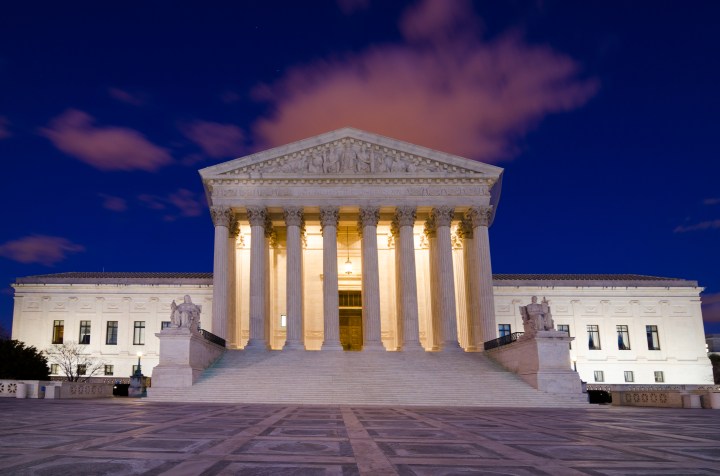
By Tim Martinson, HM Summer Political Journalism InternIn recent years the US Supreme Court has become a subject of great controversy amongst lawmakers on both sides of the aisle, as well as amongst activists. With the recent Dobbs v. Jackson decision that overturned the previous abortion rulings in Roe v. Wade and Planned Parenthood v. Casey, calls for reform have only increased. Particularly controversial for some was the contrast of the nominations of Merrick Garland and Amy Coney Barrett by Presidents Barack Obama and Donald Trump, respectively.
In early 2016, conservative Justice Antonin Scalia passed away. Then-President Obama nominated Judge Merrick Garland to replace him on the high court. However, at the time, Republican Senate Majority Leader Mitch McConnell never scheduled confirmation hearings in the Senate for Garland. After Donald Trump was elected president he nominated Neil Gorsuch to replace Justice Scalia, who was then confirmed in 2017. Over four years after the death of Scalia, Justice Ruth Bader Ginsburg passed away. This left another seat for Trump to fill, in which he chose Amy Coney Barrett. In a swift process, the Republican majority in the Senate confirmed Barrett eight days before the 2020 elections (Feiner and Mangan 2022).
For various reasons, a large portion of the American population appears to have lost much of its confidence and support for the United States Supreme Court. According to a February 2022 report by Pew Research, before the announcement of former Associate Justice Stephen Breyer’s retirement, the American public had become more unfavorable in opinion toward the Supreme Court. The study found that favorability of the Court decreased by 15% amongst adults since prior numbers in August 2020 and 19% amongst those who identified as Democrats. Favorability also decreased among Republicans, dropping slightly in percentage points since August 2019 and then stabilizing in early 2021 at around two-thirds favorability. In the same study, data showed that around 84% of respondents believed that the justices on the Supreme Court should not bring their personal political views into their deliberations, while only 16% stated they believed the Court’s justices were already doing just that (Pew Research Center 2022). In a Gallup poll done in June 2022, the public confidence in the Supreme Court had dropped 11% in the previous 12-month period (Jones 2022). These results indicate that the American public at large has lost much of its faith in the most powerful court in the land, leading to some calling for various reforms to be carried out in the Supreme Court.
Perhaps the most well-known of these potential reforms is “court-packing,” or expanding the number of justices on the Supreme Court in order to allow the current president to nominate jurists of a similar ideological stance (Merriam-Webster). In order to get his New Deal initiatives passed and deemed constitutional by the Supreme Court, President Franklin D. Roosevelt made up a plan to pack the Court. This nearly came to pass with the Judicial Procedures Reform Bill of 1937, which would have allowed Roosevelt to appoint a new justice for every incumbent justice over the age of 70 years old, which at the time would have meant six new justices. However, Roosevelt’s court-packing plan was thwarted by Congress, particularly when the bill came to a halt in the Senate Judiciary Committee following a letter by then-Chief Justice Charles Evans Hughes describing the need for an independent judiciary. Swing justice Owen Roberts started voting closer with the more liberal justices at the time to support the New Deal legislation. At the same time, one of the conservative justices retired. This allowed Roosevelt to nominate a more supportive jurist, thus rendering the intent behind the court-packing plan moot at the end (National Constitution Center 2022).
This was not the only type of judicial reform considered in the past by Congress. In order to reduce the workload of the Supreme Court, the so-called Judges’ Act of 1925 was passed, with direction from Chief Justice William Howard Taft. It created the modern certiorari system by which the Supreme Court decides which cases it hears each term, rather than getting cases automatically from appellate courts. Only certain cases received the prior automatic appeal to the Supreme Court under this legislation, which had previously become overwhelmed by lawsuits following World War I and the enactment of alcohol prohibition (Federal Judicial Center). A similar bill was the Supreme Court Case Selections Act of 1988, which further limited automatic appeals to the Supreme Court, in this case from high state courts relating to state or federal statutes. In turn, this continued to give the Supreme Court more control over what cases they desired to hear (Cockle Legal Briefs 2017).
Returning to the present day, following his election in 2020, President Joe Biden set up a presidential commission of legal experts in April 2021 to identify possible reform proposals for the Supreme Court after the controversial appointment of Justice Amy Coney Barrett. In their final report released at the end of that year, the commission went over several possibilities including the expansion of the Court, term limits for justices, and other actions such as Congress overriding judicial decisions or implementing a supermajority requirement for cases. The commission did not come to a consensus affirming or disapproving any of the reforms. The commission’s final report also covered court procedures, arguing that greater transparency in the Supreme Court might be beneficial, suggesting the release of legal reasoning for emergency rulings or an advisory ethics code for justices (Erskine 2021).
Currently, several bills have been introduced in Congress addressing the Supreme Court. This includes bills that would expand the number of seats on the Court, provide ethics codes for justices, and create a system for “senior status” on the Court to establish term limits (“H.R.2584” 2021; “H.R.7706” 2022; “H.R.5140” 2021). It is hard to say if such reforms might ever come to pass, but what can be said for certain is that this debate will not end anytime soon. The history of the Supreme Court is far from simple, and it is clear that the future will remain as such.

Tim Martinson is a political science major from Merrick, New York, on Long Island. After finishing his undergraduate degree, he plans on continuing to graduate school for a Master’s degree. Tim volunteered for State Senator John Brooks’ re-election campaign in 2018. He is currently a member of the Binghamton College Democrats and is a public affairs show host at WHRW. Tim was an intern political journalist at Happy Medium in the summer of 2022. Tim has an interest in political history and likes to play video games and learn new things in his free time.
References
“Court-packing.” Merriam-Webster.com Dictionary, Merriam-Webster. https://www.merriam-webster.com/dictionary/court-packing.
Erskine, Ella. 2021. “Presidential court commission approves final report, identifying disagreement on expansion.” SCOTUSblog, December 8. https://www.scotusblog.com/2021/12/presidential-court-commission-approves-final-report-identifying-disagreement-on-expansion/.
Feiner, Lauren and Dan Mangan. 2022. “Trump takes credit for end of Roe v. Wade after his 3 Supreme Court justice picks vote to void abortion right.” CNBC, June 24. https://www.cnbc.com/2022/06/24/roe-v-wade-decision-trump-takes-credit-for-supreme-court-abortion-ruling.html.
“How FDR lost his brief war on the Supreme Court.” 2022. National Constitution Center, February 5. https://constitutioncenter.org/blog/how-fdr-lost-his-brief-war-on-the-supreme-court-2.
“H.R.2584 – 117th Congress (2021-2022): Judiciary Act of 2021.” 2021. Congress.gov, October 19. http://www.congress.gov/bill/117th-congress/house-bill/2584.
“H.R.5140 – 117th Congress (2021-2022): Supreme Court Term Limits and Regular Appointments Act of 2021.” 2021 Congress.gov, August 31. http://www.congress.gov/bill/117th-congress/house-bill/5140.
“H.R.7706 – 117th Congress (2021-2022): Judicial Ethics and Anti-Corruption Act of 2022.” 2022. Congress.gov, May 19. http://www.congress.gov/bill/117th-congress/house-bill/7706.
Jones, Jeffrey M. 2022. “Confidence in U.S. Institutions Down; Average at New Low.” Gallup, July 5. https://news.gallup.com/poll/394283/confidence-institutions-down-average-new-low.aspx.
“Landmark Legislation: The Judges’ Bill.” Federal Judicial Center. https://www.fjc.gov/history/legislation/landmark-legislation-judges-bill-0.
“Public’s View of Supreme Court Turned More Negative Before News of Breyer’s Retirement.” 2022. Pew Research Center, February 2. https://www.pewresearch.org/politics/2022/02/02/publics-views-of-supreme-court-turned-more-negative-before-news-of-breyers-retirement/.
“Today in Supreme Court History.” 2017. Cockle Legal Briefs, June 27. https://www.cocklelegalbriefs.com/blog/supreme-court/today-in-supreme-court-history-2/.
-
A Marxist Explanation: Historical Fascism vs. Right Populism
Opinion by Colin Mangan, HM Summer Political Journalism Intern
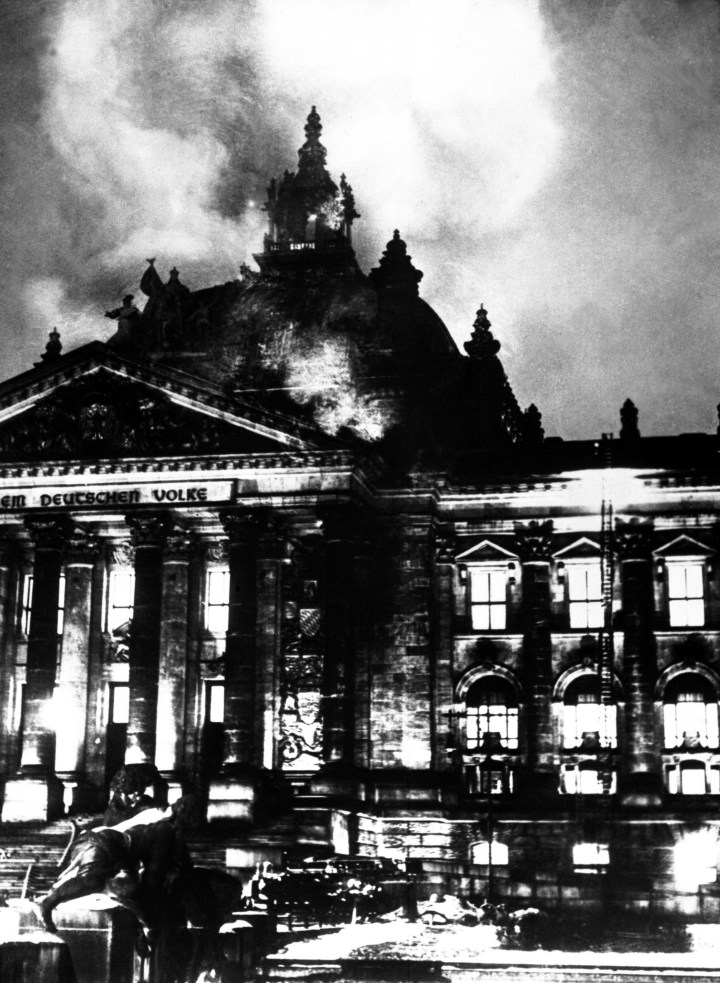
Photo: The Reichstag fireThis is the first installment of Colin’s column “A Marxist Explanation,” in which he illustrates modern political concepts through a lens of Marxist theory.
Today, fascism is remembered as one of the most atrocious historical developments in recent memory. The all-prevailing fear of fascism within American political life has hardly translated to significant critical examination of the essence of fascism, even by those in the political establishment who warn of an imminent fascist threat in the form of right-populist leaders such as Donald Trump (e.g. Albright 2019). Generally speaking, “right-populism” refers to a nationalist, conservative response to the increasingly visible political and socio-economic discontent of the 21st century. To be sure, right-populism (in the U.S. embodied by the base of the Republican Party) constitutes reactionary politics, and right-populists present themselves in opposition to the political class. But to consider right-populism as a political economy on par with fascism, especially in terms of their respective destructive capabilities, is a misguided comparison at best.
Superficially, one can almost be forgiven for making such a comparison. If historical events really do appear to us as tragedy and farce, as Marx once claimed, then the rise of right-populism ought to be considered as much a farce as twentieth-century fascism was a tragedy. Right-populists (both American and European) and fascists “[cultivate] the appearance of popular politics and a revolutionary aura…while serving the same old moneyed interests,” embodied by a political language appealing to the ‘silent majority’ and the scapegoating of others for the supposed decline of the nation (Parenti 1997). In doing so, fascists work to cultivate a base among the petty bourgeoisie through exploiting that base’s fear of the prospect of being proletarianized, thus presenting themselves as being subversive to ruling class interests. In reality, the rise of fascist movements represents the growing anxiety of the power base in the face of accumulation and stagnation crises, which themselves open up possibilities for authentic popular and/or counter-hegemonic action.
Likewise, both historical fascism and right-populism developed as reactions to capitalist crises in distinctive and substantial ways. In Europe, fascism was born out of “the inability of German and Italian national capital to outcompete the national capitals of other European powers in the imperialist conquests at the turn of the 19th century” (Robinson 2018). The political development of fascist movements in the twentieth century was thus intimately bound to the historical development of the world market as it existed at the time, in which nations like Germany, Italy, Japan, and so on, risked being marginalized.
In contrast to twentieth-century fascism as the reaction of national capital, right-populism is the reaction of transnational capital in the face of neoliberalism’s political and economic discontents. It’s no secret that capitalism is prone to periodic crises, or “boom and bust” cycles, as economists call them. As Robinson discusses, these crises necessitate structural fixes in order to restabilize and reproduce the system. Of course, these “fixes” eventually pave the way for new contradictions to emerge within the system, and so the booms and busts of historical capitalism continue on.
The most recent of these structural adjustments came in the 1970s, with the advent of neoliberalism—the near total “dismantling [of] state intervention in the market and the liberation of capital from state controls” whilst state apparatuses are mobilized in order to repress political discontent and ensure new opportunities for accumulation, either in the form of deregulation and regressive taxation domestically or through imperial expansion (notably in the Middle East). Structurally, neoliberalism’s array of strategies for accumulation includes deregulation, privatization, austerity, financial speculation, militarism, and the criminalization of marginalized communities (Robinson 2018). Neoliberalism has allowed for the upper 1% to grow fat off the profits of plunder, resulting in a historic transfer of wealth from the bottom to the top.
In practice, right-populism provides two mechanisms in which the ruling class works to reassert its hegemonic authority in the political sphere. The first, as we have previously mentioned, is that right-populists seek to win over petty bourgeois and even semi/proletarian voters by appealing to their sense of political alienation whilst supporting the very status quo behind their alienation. The second, and more cynical, is that (at least, in the context of American politics), the vulgarities of right-populist politics allow for the existing neoliberal power bloc (in our case, the Democratic Party) to assert themselves as the only alternative to the right-populist reaction, when in fact, the opposition (i.e. the Democrats) are every bit as reactionary as right-populists.
It is within the context of neoliberalism’s nascent discontents that right-populism has emerged, exploiting the fears of America’s racialized petty bourgeoisie, who fear being next in the race to the bottom. But it would be a serious mistake to think that right-populism presents any real subversion of the neoliberal order. Rather, right-populists are every bit as loyal to the status quo as their supposed counterparts in the “political class.” If there is any distinction to be made between the two is that right-populists work to capitalize on political discontent whereas the so-called “political class” ignores such discontent entirely.
But there is an even more important contradistinction to be made between fascism and right-populism. Namely, that fascism represents “a substitution for one State form of class domination of the bourgeoisie” for another i.e. the abandonment of any pretense of democratic governance in favor of “open terrorist dictatorship” (Dimitrov 1935).
It is very difficult, if not impossible, to define “fascism-as-such” since the development of fascist movements assumes different structural characteristics according to the conditions within a given nation at a particular juncture. Historically, fascist movements may develop either from above or below. In Japan and Spain for example, the fascist movement was nursed by reactionary factions of military officers and state bureaucrats; whereas, in Germany and Italy, fascist parties worked to build a base among the petty bourgeoisie and project the façade of mass politics. But regardless of these political specificities, the class character and political function of fascism remain the same.
In practice, historical fascism represents “the open terrorist dictatorship of the most reactionary, most chauvinistic and most imperialist elements of finance capital” (Dimitrov 1935), and in the socioeconomic realm, is characterized by the suppression of the working class and those “undesirable” groups whom fascists scapegoat for the nation’s misfortunes; and imperial annexationism as means of resolving the crisis of capital production and accumulation within the nation’s borders.
It would be a mistake to consider fascism synonymous with corporatist autocracy, as fascism refers to a specific historical form of political economy. Specifically, historical fascism emerged in the imperial core (with the exception of Japan), and once in power, fascists pursued a foreign policy of territorial conquest with the purpose of capital penetration and surplus extraction of conquered nations. It therefore becomes necessary to draw some distinction between fascist nations like Germany (1933-45) and Japan (c. 1926-45), and the autocratic regimes which existed in countries such as Greece (1967-74), Chile (1973-90), and South Korea (c. 1948-87). Although all of these regimes openly worked to maintain the interests of capital, and suppress countervailing forces, the distinction to be made is that the latter regimes all existed in the semi/periphery of the world market, and thus lacked the resources to serve as imperialists in their own right (instead the aforementioned regimes, and others like them, served as foot soldiers for Western imperial interests). Nonetheless, the politico-economic similarities these regimes share with fascist ones are worth remembering.
When scholars refer to fascism as the “dictatorship of finance capital,” they do not mean to denote anything conspiratorial. It is not as if the bankers and captains of industry conspire together in a dark room and declare among themselves “democracy no longer serves our interests, let us now initiate a fascist takeover!” Rather, historical fascism was made possible by the historical conditions it developed in, and was characterized by a degree of political spontaneity in the face of hegemonic decline.
In Germany, for example, the fascist movement originated from below as the Nazi Party recruited from disaffected and reactionary subsections of the lumpenproletariat, petty bourgeoisie, and peasantry, and, at first used elections to legitimize themselves and build a political base (or at least project the façade of one). In the wake of the Great Depression, “most of the [German] tycoons had concluded that the Weimar Republic [i.e. the German government 1918-33] no longer served their needs and was too accommodating to the working class” and substantially increased their donations to the Nazis. Likewise, the Nazi Sturmabteilung (aka the SA, brownshirts, and stormtroopers) was “used mostly as an antilabor paramilitary force whose function was to terrorize workers and farm laborers” (Parenti 1997).
In socialist circles, there’s an old adage; in the face of capitalist crisis, the masses and ruling class alike face the choice between socialism or barbarism. The German bourgeoisie of the 1930s had little difficulty in this decision. During the December 1932 German election, the conservatives and social democrats alike stood behind the incumbent President Paul von Hindenburg, despite Hindenburg’s passivity towards the Nazis and his willingness to cooperate with them as means of containing the German Communist Party and maintaining conservative influence on the government. The tragedy of the twentieth century shows that the ruling class, in any given nation, will always choose barbarism so long as it suits their interests. The fascist ascendancy to power was thus ultimately made possible by the passivity of the ruling body politik.
Historically, the passivity and fecklessness of the ruling class are mediated through a crisis, which either real or manufactured, is exploited by the fascists as a pretense for the takeover of state power. In 1933 for example, a fire broke out in the Reichstag (German parliament) building, and the Nazi leadership immediately exploited the incident for political gain (claiming the attack as part of a larger communist conspiracy). Following the fire, Hitler convinced President Hindenberg to suspend most civil liberties, and the Nazis used further coercive measures to pass the Enabling Acts, giving the German Cabinet (and by extension Hitler himself) dictatorial powers.
It seems fitting to conclude with the classic rhetorical question posed by Sinclair Lewis: can it happen here? Of course, the question itself is somewhat misleading, as it seeks to transpose a 20th century phenomenon (made possible by very specific developments within the world market) into the 21st century, in a time where the power of national capital has been usurped by that of transnational capital. It seems unlikely that a band of armed blackshirts will be taking the reins of state power anytime soon. Nonetheless, late capitalism’s increasingly visible tendency towards militarized accumulation, and the complicity of both neoliberal technocrats and right-populists in enforcing said tendency, makes the possibility of an increasingly autocratic and repressive politics all too real. Capitalist stagnation in the 21st century may well provide opportunities for such hypothetical regimes to emerge, and if they do, the world must again choose between socialism or barbarism, whatever form either may take.

Colin Mangan is a senior sociology and philosophy major and is currently enrolled in the philosophy 4+1 program, on track to graduate in Spring 2023 with a BA and an MA. He is currently the host of Straight Talk on WHRW Binghamton on Thursdays at 5:30. His wide array of interests includes the study of capitalism as a world-ecology, and he is also a passionate student of Marxist, Leninist, and anti-imperialist theory. After his master’s degree, Colin aspires to pursue a PhD in sociology, focused around historical capitalism and the world-ecology conversation. Colin also has dual Irish citizenship.
References
Albright, Madeleine. 2019. Fascism: A Warning. London, UK: HarperCollins UK.
Dimitrov, Georgi. 1935. Working Class Unity-Bulwark against Fascism: The Fascist Offensive and the Tasks of the Communist International in the Fight for the Unity of the Working Class against Fascism. New York, NY: Workers Library Publishers.
Parenti, Michael. 1997. Blackshirts and Reds: Rational Fascism and the Overthrow of Communism. San Francisco, CA: City Lights Books.
Robinson, William I. 2019. “Global Capitalist Crisis and Twenty-First Century Fascism: Beyond the Trump Hype.” Science & Society, 83(2), 155–183. doi.org/10.1521/siso.2019.83.2.155.
-
SCOTUS: a new normal?
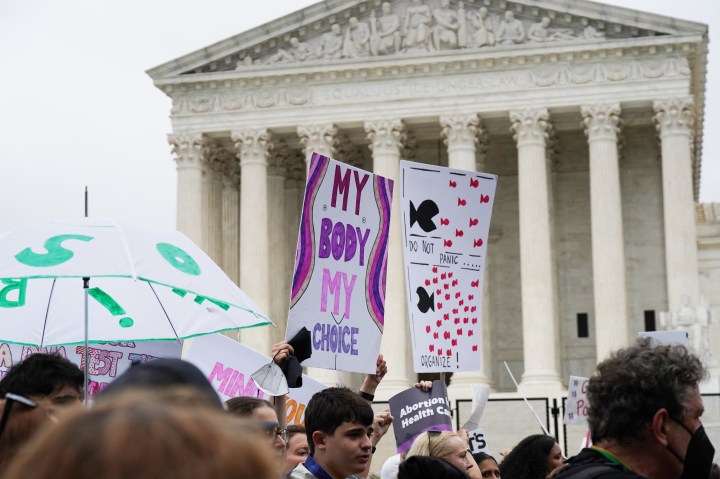
By Bryan Goodman, Political Director
Read this article and more in our first print edition, on campus now.
Quick Overview
Dobbs v. Jackson Women’s Health
In this decision, the Court overturned long-standing precedents from both Roe v. Wade 410 U.S. 113 (1973) and Planned Parenthood v. Casey 505 U.S. 833 (1992). These decisions pertained to abortion rights, which the Court in 1973 believed to stem from the Fourteenth Amendment Due Process Clause and the right to privacy. While voting with the other conservatives, Chief Justice John Roberts authored his own concurrence with the judgment and did not sign onto Justice Alito’s opinion of the Court. All four of the cases summarized here were decided by a 6-3 vote along ideological lines.NY State Pistol & Rifle Association v. Bruen
This decision struck down a New York State law regulating the issuance of concealed carry handgun permits. The Court found that the regulation “violates the Fourteenth Amendment by preventing law-abiding citizens with ordinary self-defense needs from exercising their Second Amendment right to keep and bear arms in public for self-defense.”WV v. EPA
In this case, the Court limited the EPA’s ability to regulate carbon dioxide emissions from power plants. The Court relied on the “major questions doctrine” which “directs courts to presume that Congress does not intend to vest agencies with policymaking authority over questions of great economic and political significance.”Vega v. Tekoh
In Vega v. Tekoh, the Court held that “a violation of Miranda rules does not provide a basis for a §1983 claim,” meaning that an individual cannot file suit if they are not read their Miranda rights upon arrest.
The Supreme Court of the United States is facing its toughest legitimacy crisis since Bush v. Gore 531 U.S. 98 (2000). The Court is now dominated by a right-wing supermajority that no longer needs the vote of Chief Justice John Roberts, who is arguably the most liberal of the six conservatives. As a result, some have proclaimed that the Court no longer belongs to Roberts, but rather to Justice Samuel Alito (Jong-Fast 2022).
In recent months, the Supreme Court handed down rulings on laws and precedents that many thought would never be revisited. The Court issued 66 opinions relating to a variety of cases in its most recent term. This follows the downward trend in the quantity of issued opinions and cases heard. As a result, each decision has greater significance.
Dobbs v. Jackson Women’s Health Organization
The first opinion released by the Court this year was Dobbs v. Jackson Women’s Health Organization, in which the Court overturned the legal precedents set by the cases Roe v. Wade 410 U.S. 113 (1973) and Planned Parenthood v. Casey 505 U.S. 833 (1992). The ruling came in a 6-3 decision split along ideological lines—the six conservative justices in the majority and the three liberal justices dissenting.
Justices Neil Gorsuch and Brett Kavanaugh had previously affirmed the precedent set by Roe v. Wade during their Senate confirmation hearings. Gorsuch said, “A good judge will consider [Roe v. Wade] as precedent of the United States Supreme Court worthy as treatment of precedent like any other” (NBC News 2022). Kavanaugh said “It’s settled as a precedent of the Supreme Court entitled the respect under principles of stare decisis” and “has been reaffirmed many times over the past 45 years” (NBC News 2022).
The majority opinion, written by Alito, is nearly identical to the leaked draft. It mentioned multiple times that the right to abortion was not deeply rooted in the tradition and history of the nation and that the original ruling in Roe was a mistake. Roberts issued a concurring opinion in which he stated, “I would take a more measured approach. I agree with the Court that the viability line established by Roe and Casey should be discarded under a straightforward stare decisis analysis. That line never made any sense” (Dobbs v. Jackson Women’s Health Organization).
Roberts still sided with the majority concerning the original Mississippi 15-week ban that brought this question to the Court. He did not, however, sign onto the Alito opinion. The implication of overturning a due process case such as Roe is that it then opens the door in the future to overturning other such due process decisions made by the Court. Justice Clarence Thomas argued in his concurrence that “‘substantive due process’ is an oxymoron that ‘lack[s] any basis in the Constitution’” (Dobbs v. Jackson Women’s Health Organization). He continues with a task for the new Court:
[R]econsider all of this Court’s substantive due process precedents, including Griswold, Lawrence, and Obergefell. Because any substantive due process decision is ‘demonstrably erroneous…’ we have a duty to ‘correct that error’ established in those precedents… After overruling these demonstrably erroneous decisions, the question would remain whether other constitutional provisions guarantee the myriad rights that our substantive due process cases have generated. (Dobbs v. Jackson Women’s Health Organization)
Thomas opens the door for the overturning of several landmark decisions by the Court. He explicitly names Obergefell, which provided the right to same-sex marriage; Griswold, which prevents states from making the use of contraception by married couples illegal; and lastly, Lawrence, which provides the right to engage in private, consensual sexual acts.
Vega v. Tekoh
Vega v. Tekoh is a case about whether or not using un-Mirandized statements against a defendant is sufficient grounds for a §1983 claim. The decision prevents the possibility for individuals to file suit if they are not read their Miranda rights upon arrest. This case made its way to the Supreme Court, and, in a 6-3 decision, they found that “a violation of Miranda rules does not provide a basis for a §1983 claim” (Vega v. Tekoh). Elie Mystal, in an article for The Nation, explained that, “if cops trick or coerce or threaten or brutalize people into giving up their constitutional rights without telling them they have a right to make the intimidation stop, there’s no way to sue the government for the failure to inform victims of their rights” (Mystal 2022). By the logic and language of the decision, one of two things must be true: a violation of Miranda rules would not be grounds for suit under §1983, meaning Miranda rights are not constitutionally protected, or §1983 claims do not give citizens a cause of action for suit following deprivation of their Constitutional rights. There could also be a combination of the two. This decision was a blow to criminal justice advocates who have been working to enforce the implementation of Miranda rules into police procedure and practice.
New York Rifle & Pistol v. Bruen
In the state of New York, there had been a law on the books for over a century that restricted the issuance of licenses for the concealed carry of pistols and revolvers outside of the home. The law required applicants for the license to prove that “‘proper cause exists’” (New York Rifle & Pistol v. Bruen) and a suit was filed challenging the constitutionality of the law.
Thomas writes in this opinion “Because the State of New York issues public-carry licenses only when an applicant demonstrates a special need for self-defense, we conclude that the State’s licensing regime violates the Constitution” (New York Rifle & Pistol v. Bruen). As a result of this decision, anyone who goes through a standard process for applying for a concealed carry license will be allowed to so long as the ordinary requirements are met excluding the proper-cause requirement that was in the original law.
WV v. EPA
“In 2015, the Environmental Protection Agency (EPA) promulgated the Clean Power Plan rule, which addressed carbon dioxide emissions from existing coal- and natural-gas-fired power plants. For authority, the Agency cited Section 111 of the Clean Air Act…” (WV v. EPA). In this case, the Court held that “Congress did not grant the EPA in Section 111(d) of the Clean Air Act the authority to devise emissions caps based on the generation shifting approach the Agency took in the Clean Power Plan” (WV v. EPA).
As a result of this ruling, “The Supreme Court limited the Environmental Protection Agency’s (EPA) authority to regulate carbon dioxide emissions from power plants” (Zoldan 2022). The decision relied on the “major questions doctrine” which “directs courts to presume that Congress does not intend to vest agencies with policymaking authority over questions of great economic and political significance” (Zoldan 2022). This doctrine allows for courts to employ an extremely strict textual interpretation of the law in question. This decision will also pose a threat to other administrative/executive branch agencies’ ability to function. In a political climate with an ever-increasingly gridlocked Congress, it will become evermore difficult for administrators to avoid the invocation of the major questions doctrine on any of their actions.
What’s Next?
These cases were just some of the 66 on which the Court issued opinions. There is also the “shadow docket”—the Court’s emergency appeal process. It is used frequently in death penalty cases and is intended to be used in case of grave overreach or mistakes by states and lower courts. The shadow docket allows the conservative supermajority to make sudden and unexpected reforms. It has been used in recent years to uphold the ban on abortion in Texas and maintain an executive order barring immigration from certain Muslim countries (Mystal 2021).
The upcoming Supreme Court term this October already has several important cases on the docket, including Moore v. Harper, 303 Creative LLC v. Elenis (a web designer says they should not have to create websites for same-sex weddings under state law), an affirmative action case (about race in college admissions) and Merrill v. Milligan (about congressional redistricting in Alabama) (Gonzalez, 2022).
Moore v. Harper
This upcoming case concerns gerrymandering and voting districts (Tangalakis-Lippert 2022). However, ingrained in this case is a concept known as independent state legislature theory. “The independent state legislature theory is a reading of the Constitution…that would give state legislatures wide authority to gerrymander electoral maps and pass voter suppression laws. It has even been used as political cover to try to overturn elections” (Herenstein & Wolf 2022). “Should the Court rule in North Carolina’s favor, the ruling would reduce voter oversight on state legislatures and likely impact the outcome of various statewide political races – as well as the 2024 presidential election” (Tangalakis-Lippert 2022). This could set the groundwork for a legal coup to occur during a presidential election. If states are allowed to completely disregard the will of the voters in a popular election and appoint slates of electors to the Electoral College who would willfully ignore the voters, there would never be another nationwide democratic election.
The future of Supreme Court precedent and the nature of some of their recent decisions cast a shadow on various rights established by previous Courts. This Court has shown no fear of overturning long-standing precedent that previous decisions had been thought to reinforce.
Bryan Goodman is currently the Political Director for Happy Medium. In this role, he consults with both writers and the editing team about specific pieces that could potentially be hot button issues. He is a graduate student from Valhalla, Westchester County, NY. He attended Westchester Community College for two years before transferring to Binghamton University to complete his undergraduate studies in political science. Bryan is currently enrolled in the 4+1 Master of Public Administration program. Bryan is also passionate about judicial politics and a variety of social/economic issues. His future plans hope to include either law school or a public policy program to further his studies in the field. Bryan hopes to one day be fortunate enough to positively impact as many lives as possible.
References
Gonzalez, Oriana. 2022. “Supreme Court’s next term could be just as contentious.” AXIOS, July 1. www.axios.com/2022/07/01/supreme-court-cases-2022.
Herenstein, Ethan and Thomas Wolf. 2022. “The ‘Independent State Legislature Theory,’ Explained.” Brennan Center for Justice, June 30. www.brennancenter.org/our-work/research-reports/independent-state-legislature-theory-explained.
Jong-Fast, Molly. 2022. “It’s Mask Off for the Supreme Court.” The Atlantic, May 12. newsletters.theatlantic.com/wait-what/627d0d9366d6b500218d7450/supreme-court-partisanship-roe-v-wade/.
Mystal, Elie. 2021. “The Brutal Efficiency of the Supreme Court’s Shadow Docket.” Balls and Strikes, September 15. ballsandstrikes.org/court-reform/shadow-docket-brutal-efficiency/.
Mystal, Elie. 2022. “The Supreme Court Strips Us of Miranda Warnings.” The Nation, June 23. www.thenation.com/article/society/supreme-court-miranda-rights/.
NBC News. 2022. “WATCH: What Conservative Justices Said About Roe v. Wade During Their Supreme Court Confirmations.” Youtube.com, June 24. www.youtube.com/watch?v=ks1skEKwlrk.
Tangalakis-Lippert, Katherine. 2022. “What is Moore v. Harper? Experts say the next big Supreme Court case ‘could provide the path for election subversion.’” Business Insider, July 3. www.businessinsider.com/what-is-moore-v-harper-supreme-court-case-voting-rights-2022-7.
Zoldan, Evan C. 2022. “The fragility of state regulation after West Virginia v. EPA.” The Hill, July 2. thehill.com/opinion/energy-environment/3544301-the-fragility-of-state-regulation-after-west-virginia-v-epa.
-
New Yorkers Who Held Power and Made History in Congress
By Tim Martinson, HM Summer Political Journalism Intern
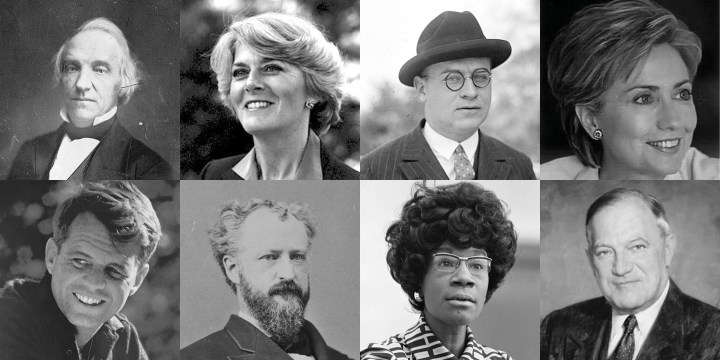
Photo: Top from left: Daniel S. Dickinson (Library of Congress), Geraldine Ferraro (United States Congress), Emanuel Celler (Library of Congress), Hillary Clinton (United States Congress)
Bottom: Robert F. Kennedy (Library of Congress), Roscoe Conkling (National Portrait Gallery), Shirley Chisholm (Library of Congress), Robert F. Wagner (United States Congress)Read this article and more in our first print edition, on campus now.
For the upcoming midterm elections this November, New Yorkers will go to the polls to elect 26 representatives to the House and one Senator to be sent to Washington, D.C. to represent us. With this in mind, it could help to reflect on men and women elected by New Yorkers in the past who have displayed leadership in the legislature. The Empire State has been quite influential in American history, particularly thanks to hosting the most populous city in the country. Many of the members of Congress elected by New Yorkers to serve on Capitol Hill have held powerful positions and left lasting legacies on the state and nation. New York has been the birthplace of 5 presidents, 11 vice presidents, 3 Supreme Court chief justices, and 15 associate justices (Moore 2021; “Vice President” 2021; “Justices 1789”). While these executive and judicial leaders are themselves notable, this article will focus specifically on legislative leaders. Incumbent Senator Chuck Schumer, currently serving as the first Senate Majority Leader from New York, is one that may come to mind for many. However, New York has been the home of many famous politicians throughout American history. The stories of some have been compiled here.
The two houses of Congress each have presiding officers that are chosen by the bodies to oversee proceedings. The House of Representatives is presided over by the Speaker, who is elected at the beginning of each two-year Congress. The Senate is technically presided over by the Vice President, but the President pro tempore is chosen to preside in their place (“About”). The President pro tempore is traditionally the longest continuously serving member of the majority party. However, agenda-setting power in the Senate is vested in the Senate Majority Leader (“The Legislative Process”). Two New Yorkers have been elected Speaker of the House. John W. Taylor served as Speaker during the 16th and 19th Congresses in the early nineteenth century, while Theodore M. Pomeroy served a unique one-day term as Speaker at the very end of the 40th Congress on March 3, 1869 (“List of Speakers”). Only one US Senator from New York served as President pro tempore of the Senate, Federalist John Laurance for part of the 5th Congress in December 1798 (“About”).
Perhaps two of the most noteworthy legislators from the Empire State were Democratic Senators Robert F. Kennedy and Hillary Clinton. Both ran for United States President during their terms in office: Kennedy in 1968, before his assassination (“Robert Kennedy” 2009) and Clinton in 2008 until losing the primary election to Barack Obama. Clinton, who had the additional distinction of being a former First Lady, later won the Democratic nomination in 2016, only to lose to fellow New Yorker Donald J. Trump (Caroli 1998).
Sen. Robert F. Wagner served for over twenty years during the Great Depression. A strong ally of President Franklin D. Roosevelt, Wagner helped write and sponsor several important pieces of legislation for the New Deal programs (“Robert F. Wagner” 2022). Perhaps chief among his bills was the Social Security Act, which created the Social Security system and unemployment insurance. He also helped write the National Labor Relations Act, later called the “Wagner Act” that codified workers’ rights. Mr. Wagner’s efforts led to what could be described as some of the most impactful reforms in American history (“Robert F. Wagner” 2022).
In the House, Rep. Emanuel Celler left his own enduring legacy through his work on American immigration policy and his support for the Civil Rights Movement. During nearly fifty years in office, Mr. Celler lobbied for immigration reform in the United States, influenced in part by his Jewish immigrant roots and the Holocaust (“Celler”). He sponsored the Hart-Celler Act of 1965, which removed national origins from consideration in immigration (Sussman 2019). Mr. Celler, as chairman of the House Judiciary Committee, also pushed for civil rights legislation, helping write the 1957 and 1964 Civil Rights Acts and the 1965 Voting Rights Act (Lyons 1981).
Some landmarks in the advancement of women in US politics were achieved by New Yorkers. Shirley A. Chisholm, the first African American woman in Congress, was elected in 1968 to represent part of Brooklyn. She helped found the Congressional Black Caucus and the Congressional Women’s Caucus in her tenure. Ms. Chisholm continued making history with her 1972 presidential campaign, when she became the first African American woman to run for the nomination of a major modern party (“Chisholm”).
Rep. Geraldine A. Ferraro became the first woman nominated for Vice President by a major party, appearing on the 1984 Democratic ticket with Walter Mondale. The Mondale-Ferraro ticket suffered a crushing defeat at the hands of incumbent President Ronald Reagan, who won the electoral vote 525-13 (“United States” 2015). Ms. Ferraro has a strong legacy in her own right, outside the ‘84 election. She was the first woman elected to Congress from Queens and served in Democratic Party leadership as Secretary of the Democratic Caucus—a position also held by Shirley Chisholm (“Ferraro”).
At one point in time, New York was home to one of the most powerful Republican Party bosses. In the late nineteenth century, Sen. Roscoe Conkling garnered power within the Republican Party as a leader of the Radical Republicans and later the Stalwart faction after the Civil War. He was known for forming rivalries with other politicians, particularly within his own party. Mr. Conkling favored the central bureaucracy’s system of political patronage and rejected civil service reforms pushed by other members of his party. He served as a strong ally of Republican presidents Abraham Lincoln, Ulysses S. Grant, and his “political acolyte” Chester A. Arthur (Gephardt 2013). During his time in the House and Senate, Conkling helped write and support the 14th Amendment to the Constitution. He also opposed the racially discriminant Black Codes, which had spread across the South undoing post-war reconstruction efforts (Gephardt). One of Mr. Conkling’s political rivals was Republican President Rutherford B. Hayes, whose support for civil service reforms went against Conkling’s political machine and preferred bureaucratic system of patronage. His relationship with Hayes’s successor, James A. Garfield, was similarly sour, going so far as to resign from the Senate in protest after failing to block one of Garfield’s appointments. Although he tried running for re-election, his political momentum had ceased and he never made it back to Congress (Mitchell 2022).
One final New York politician worth mentioning was Sen. Daniel S. Dickinson. A Democrat in the time of the Civil War, he broke from the party and supported the Union as a politician, becoming known as a “War Democrat.” Before joining the Senate, Mr. Dickinson served as the first president of the City of Binghamton (“Daniel S. Dickinson”). He supported the idea of popular sovereignty (allowing each state to decide whether to be a free or slave state) and helped pass the Compromise of 1850, which delayed the Civil War and prolonged slavery in the US. Abraham Lincoln considered him as a running mate in the 1864 presidential election, though he would be passed up for fellow Democrat Andrew Johnson of Tennessee (Smith 2020).
It is clear that New York has left its mark on the United States in the past and continues to do so. Between politicians reaching historical landmarks and authoring legislation with long-lasting effects felt to this day, New York seems to have developed a reputation for electing powerful leaders in political history. This fall, New Yorkers will have another chance to uphold this reputation and elect worthy legislators to the upcoming 118th Congress.
Tim Martinson is a political science major from Merrick, New York on Long Island. After finishing his undergraduate, he plans on continuing to graduate school for a Master’s degree. Tim volunteered for State Senator John Brooks’ re-election campaign in 2018. He is currently a member of the Binghamton College Democrats and is a public affairs show host at WHRW. He also participated in a Happy Medium summer internship in the summer of 2022. Tim has an interest in political history and likes to play video games and learn new things in his free time.
References
“About the President Pro Tempore.” United States Senate. https://www.senate.gov/about/officers-staff/president-pro-tempore.htm.
Caroli, Betty Boyd. 2021. “Hillary Clinton.” Encyclopaedia Britannica, October 11. https://www.britannica.com/biography/Hillary-Clinton.
“Celler, Emanuel.” United States House of Representatives. https://history.house.gov/People/Detail/10788.
“Chisholm, Shirley Anita.” United States House of Representatives. https://history.house.gov/People/Detail/10918.
“Ferraro, Geraldine Anne.” United States House of Representatives. https://history.house.gov/People/Detail/13081.
Gephardt, Alan. 2013. “The Remarkable Roscoe: Friend and Nemesis of Presidents (Part I).” National Park Service, June. https://www.nps.gov/articles/000/the-remarkable-roscoe-friend-and-nemesis-of-presidents-part-i.htm.
“Justices 1789 to Present.” United States Supreme Court. https://www.supremecourt.gov/about/members_text.aspx.
“The Legislative Process.” The White House. https://www.whitehouse.gov/about-the-white-house/our-government/the-legislative-branch/.
“List of Speakers of the House.” United States House of Representatives. https://history.house.gov/People/Office/Speakers-List/.
Lyons, Richard L. 1981. “Former Rep. Emanuel Celler Dies.” The Washington Post, January 16. https://www.washingtonpost.com/archive/local/1981/01/16/former-rep-emanuel-celler-dies/330902c8-30df-4ada-a150-09f2ab58bc3e/.
Mitchell, Robert. 2022. “The senator who said no to a seat on the Supreme Court – twice.” The Washington Post, February 27. https://www.washingtonpost.com/history/2022/02/27/roscoe-conkling-supreme-court/.
Moore, Derick. 2021. “Presidential Birth States and Places With Names of Presidents.” United States Census Bureau, February 10. https://www.census.gov/library/stories/2021/02/presidential-birth-states-and-places-with-names-of-presidents.html.
“Robert F. Wagner.” 2022. Encyclopaedia Britannica, June 4. https://www.britannica.com/biography/Robert-F-Wagner-United-States-senator.
“Robert Kennedy.” 2009. History.com, November 9. https://www.history.com/topics/1960s/robert-f-kennedy.
Sussman, Lance J. 2019. “Rep. Emanuel Celler – an unsung hero.” The Jerusalem Post, May 3. https://www.jpost.com/american-politics/rep-emanuel-celler-an-unsung-hero-588614.
“United States presidential election of 1984.” 2015. Encyclopaedia Britannica. https://www.britannica.com/event/United-States-presidential-election-of-1984.
“Vice President of the United States of America.” 2021. Encyclopaedia Britannica. https://www.britannica.com/topic/vice-president-of-the-United-States-of-America.
-
Before Redistricting Commissions Put an End to Gerrymandering, They Have to Actually Work
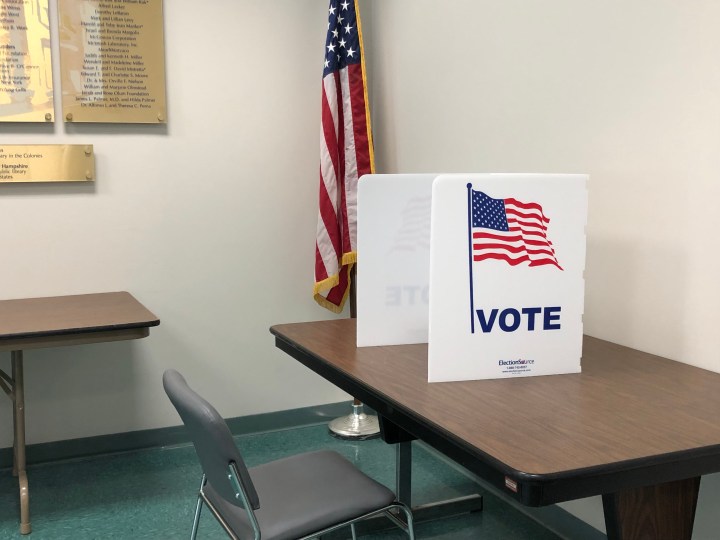
By Trevor Fornara, Editor in Chief
Photo: HM Staff — a vacant voting booth at a Broome County polling location during the first set of New York primary electionsRead this article in our first print edition, located in distribution stands around campus now!
The US Constitution requires all states to redraw their congressional and legislative district lines every ten years following the census (U.S. Const. art. I, § 2). Redistricting was originally the responsibility of state legislatures; however, a recent trend has seen states delegating this responsibility to a commission of citizens in an attempt to reduce the harmful effects of partisan gerrymandering (“Independent”). These commissions are meant to be independent, taking politics out of the redistricting process. The general assumption is that citizens are more likely to create fair district maps than the career politicians in the state legislature. However, the politics surrounding redistricting can be intense and muddled in court procedure unfamiliar to most citizens. Four states that have made the switch to commissions are New York, California, Michigan, and Colorado, all of which have uniquely structured commissions (“Redistricting Commissions”). By analyzing the political effectiveness of these commissions and identifying their positive characteristics we can speculate on what might be their optimal design. The political effectiveness of these commissions will be determined by looking at each commission’s ability to successfully implement district maps. A commission would be deemed politically ineffective if it were unable to both approve and implement a set of new district maps within its original time frame due to internal gridlock, excessive legal challenges, or some other political challenge.
New York
On election day 2014, the ballots in New York included a referendum about a proposed amendment to the state constitution that would create the Independent Redistricting Commission (IRC) (Roberts 2014). The commission of 10 citizens would be tasked with drawing the new congressional and legislative lines instead of the state legislature. Proposal 1 was the outcome of a political compromise from 2011 between rookie Democratic governor Andrew Cuomo and Republicans, who controlled the state Senate. Governor Cuomo would support the Republican-drawn Senate lines following the 2010 census, and the Republicans would support his commission.
The plan for the IRC was not well received. New York Supreme Court Justice Patrick McGrath ordered that the Board of Elections remove the word “independent” from the proposal (Seiler 2014). Justice McGrath wrote that, “legislative semantics do not change the reality that the commission’s plan is little more than a recommendation to the Legislature, which can reject it for unstated reasons and draw its own lines” (2014). He further explained that the commission “cannot be described as ‘independent’ when eight out of the ten members are the handpicked appointees of the legislative leaders” (2014). According to the proposal, the majority and minority leaders in the Assembly and state Senate would appoint two commissioners each. These eight commissioners would then appoint two more commissioners to serve as the chair and vice-chair, neither of whom can be a registered Democrat or Republican.
Blaire Horner, executive director of NYPIRG, wrote the following statement in support of Justice McGrawth’s order:
“NYPIRG applauds the decision by New York State Supreme Court Justice McGrath striking the word ‘independent’ from the language of Proposal 1. The judge is right: The proposed redistricting Commission is as ‘independent’ as a puppet. The redistricting Commission is appointed by the Legislature, its plan must be approved by the Legislature, and if its plan is rejected, the Legislature ultimately draws its own lines…
“New Yorkers should reject Proposal 1. It is not reform. It is merely the status quo masquerading as reform. New Yorkers deserve neutral language when they step up to vote about whether to revise our fundamental charter, the State Constitution. This language ain’t it.” (2014)
Regardless of these concerns, Proposal 1 passed with 57.7% of the votes (“New York”).
The commission began to meet in 2021, following the release of the 2020 census data. Having been granted $4 million from the state budget, the commission hired staff, built a website, and began hosting hearings around the state where citizens could express their concerns about redistricting (Lisa). However, faced with a September 15 deadline for a proposed set of maps, the commission began to have difficulty making decisions. The 10 commissioners split 5-5 down ideological lines, causing the two sides to draw separate maps. At this point, all bipartisan spirit had been lost. On the 15th, the commission released two plans for redistricting—one drawn by the Republicans and the other by the Democrats (“Plans”). The state legislature was unhappy with this outcome, and ordered the commission to decide on one map by January 15th, 2022. Still divided, the commission again released two sets of maps—the aptly-named “Democratic commissioners’ proposal” and “Republican commissioners’ proposal” (“Plans”). Doomed to fail from the start, the Independent Redistricting Commission could not decide on one set. The legislature rejected both plans and assumed responsibility for drawing the maps. Democrats controlled the process and produced gerrymandered maps that were struck down by the NY Court of Appeals on April 21. (Fandos 2022) The new maps were drawn by a court-appointed special master, and were approved on May 20, and the primaries were moved from June to August. New York’s Independent Redistricting Commission was not an effective solution to the question of redistricting in New York following the 2020 census, as they were unable to effectively implement new maps.
California
The California Citizens Redistricting Commission (CCRC) was created through a referendum to amend the state constitution in 2008 (“California Redistricting”). The 14-member commission of citizens must contain 5 Democrats, 5 Republicans, and 4 commissioners unaffiliated with either major party. Legislative leaders vetted applicants down to a list of 35 (“Application”). The first 8 commissioners were chosen at random from this list by the California State Auditor. These 8 commissioners then select 6 more applicants off the approved list. The process for drawing legislative lines is simplified in California in that each Senate district must consist of exactly two adjacent House districts (“Redistricting in”). Maps must be approved by at least 9 commissioners, including 3 Democrats, 3 Republicans, and 3 unaffiliated.
The commission unanimously approved a redistricting plan on December 20, 2021, and it was approved by the Secretary of State on December 26 (“Redistricting in”). No lawsuits were filed during the 45-day window for complaints. Even with the loss of one congressional seat through reapportionment, the commission managed to draw a permissible set of maps (“The partisan breakdown”). One-third of the new congressional districts are Hispanic-majority, an increase of three districts from the previous map. These facts considered, the CCRC proved to be a politically effective solution to the question of redistricting in California.
Michigan
The Michigan Independent Citizens Redistricting Commission (MICRC) is a 13-member, non-politician commission that is in charge of drawing the state’s congressional and legislative lines. The MICRC was created through a 2018 referendum to amend the state constitution (“Michigan” All About Redistricting). The amendment up for vote in Proposal 18-2, titled “Voters Not Politicians,” required approved redistricting plans to have the support of at least two Democratic, two Republican, and two unaffiliated commissioners. The commissioners would be chosen at random by a computer program out of a list of approved applicants. Amazingly, the commission created 26 congressional district maps before finally voting 8-5 in favor of the “Chestnut” proposal on December 28, 2021. In the same session, the commission approved the “Linden” proposal for state Senate districts and the “Hickory” proposal for the House districts.
The new maps have had several legal challenges. In early January, state lawmakers challenged the new congressional map for having no minority-Black districts in Detroit despite the possibility of two; however, the case was dismissed by the Michigan Supreme Court a month later after the plaintiffs failed to provide sufficient evidence of the commission’s discretion (Hendrickson and Boucher 2022). A federal case was filed requesting a preliminary injunction on the new maps, claiming they violated the Equal Protection Clause of the 14th Amendment (“Michigan” All About Redistricting). This request was denied on April 1st, 2022.
On March 23rd, a group of Black voters filed another federal case claiming that the new legislative lines violated the Michigan State Constitution and Section 2 of the Voting Rights Act, which prohibits racially discriminant voting practices (“Agee v. Benson”; “Section 2”). There is a basis for this claim; the “Hickory” plan reduced the number of Black-majority House districts in Detroit from 10 to 6 (Witjes 2022). The plaintiffs will attempt to prove via an “expert report” that the commission used race as a predominant factor in determining the district lines and that the reduction of Black-majority districts in Detroit was not a result of demographic-blind drawing (Witjes 2022). This case is still pending, which has caused confusion surrounding the 2022 elections. State legislative candidates are wary of spending campaign funds for fear they are redrawn into new districts (“Michigan” FiveThirtyEight). Due to the number of legal challenges the MICRC’s maps have faced, the commission cannot be said to have been a politically effective solution to Michigan’s redistricting following the 2020 census.
Colorado
Colorado’s system is unique in that they have two separate commissions for congressional and legislative redistricting. The Colorado Independent Redistricting Commissions were created by amendments Y and Z to the state constitution in 2018 (“Colorado Independent”). Commissioners were chosen by first compiling a list of 1050 qualified applicants randomly selected from the qualified applicant pool (“Colorado”). A panel of judges then drew names in two rounds, resulting in 6 randomly selected commissioners for each commission. Legislative leaders then proposed names out of the original applicant pool. From this list, the panel randomly selected another 6 commissioners for each panel. The two twelve-person panels then worked separately to produce the new maps.
The congressional commission approved a plan on October 1, 2021, and the legislative commission approved the House and state Senate plans on October 15. There was some opposition to the congressional maps; Hispanic voters held a plurality in none of the eight districts, despite Hispanic communities making up 25% of the state’s population (Riccardi 2021). However, after hearing oral arguments, the Colorado Supreme Court voted to approve the maps on November 15th (“Colorado”). The legislative redistricting plan was generally agreed to be a good faith effort (Vo 2021). In a joint statement, Republican leaders wrote, “while the final plans are not perfect, and are not the maps Colorado Republicans would have drawn, they are a result of a faithful application of the agreed-upon constitutional criteria for redistricting” (qtd. Vo 2021). The Colorado Latino Leadership, Advocacy and Research Organization also supported the plan, writing in a statement that “the proposed House and Senate maps reflect that effort and, although not perfect, are a satisfactory outcome of the process Colorado voters overwhelmingly established in Amendment Z” (qtd. Vo 2021). The Colorado Independent Redistricting Commissions proved themselves to be a politically effective solution to the question of Colorado redistricting in 2021.
Conclusions
Of the four states under review, California and Colorado’s commissions proved to be politically effective, while New York and Michigan’s were politically ineffective. New York’s IRC failed due to inherent structural issues that were brought up but ignored in 2014 (McGrath 2014; Horner 2014). Political gridlock was inevitable; not only would there be an even number of commissioners, but 8 of the 10 commissioners were handpicked by legislative leaders (McGrath 2014). Allowing politicians to have such control over the selection of the commissioners defeated the goal of making redistricting an apolitical process. Even if the commission had successfully approved one set of maps, the legislature still could have rejected it for unnamed reasons and drawn their own (McGrath 2014). In practice, New York’s IRC is an advisory body, with all the power over redistricting retained by the legislature. The MICRC’s failure was a result of their inability to create a set of maps that fairly redistricted the city of Detroit in the eyes of the public (Witjes 2022). The ongoing legal challenges against the new maps indicate the commission’s political ineffectiveness in redistricting Michigan.
On the other hand, the California Citizens Redistricting Commission was successful in approving and implementing new congressional and legislative maps. The requirement of support from 3 Democrats, 3 Republicans, and 3 unaffiliated commissioners forced the commissioners to create bipartisan plans (“Redistricting in”). This measure ensures that the committee doesn’t fall into the same trap as New York’s IRC because maps supported by only one party are completely unviable. Additionally, California’s system for selecting commissioners ensures the independent spirit of the commission by limiting the degree of influence politicians have over who serves (“Application”). The Colorado Independent Redistricting Commissions also proved to be a politically effective solution to redistricting. The congressional commission saw some pushback due to the approved plan’s lack of districts featuring a Hispanic voter plurality but no major legal challenges (Riccardi 2021). The legislative commission’s plan was generally well-received. Both commissions approved maps in October 2021, and the court gave its final approval in November.
From these outcomes, we can speculate as to the ideal structure for redistricting commissions. New York’s IRC demonstrated the inefficiency of a commission with an even number of members. The ideal commission has an odd number of commissioners to avoid political gridlock. The litigation of the Michigan commission’s plan demonstrates the responsibility of commissions to ensure the creation of majority-minority districts when possible. Both Michigan and California have rules in place that ensure all approved plans receive bipartisan support by requiring a plan to receive support from a certain number of Democratic, Republican, and unaffiliated commissioners. Additionally, Michigan, California, and Colorado have a degree of randomness in the commissioner-selection process. The court or the legislative leaders provide a list of approved applicants, and then either all or some of the commissioners are chosen from this list at random. This system allows politicians to ensure the quality of the applicants while not allowing them to directly influence who serves. From these points, we can speculate that the ideal commission has an odd number of commissioners between 11 and 15, a rule in place requiring bipartisan support for all approved plans, commissioners selected through a semi-random process, and will create majority-minority districts when possible.

Trevor Fornara, a philosophy, politics, and law major from Mystic, Connecticut, started Happy Medium in December 2021 and serves as the publication’s editor in chief. Trevor is a research fellow with the Undergraduate Research Center’s Summer Scholars and Artists Program and works as a communications intern on the Leslie Danks Burke for State Senate campaign. During his first year at Binghamton, Trevor participated in the Source Project where he researched the affects of the university’s presence on the city’s housing market. Trevor also wrote for the Jewish Leader, a regional Jewish newspaper in CT, for 3 years.
References
“Agee v. Benson.” 2022. All About Redistricting, March 23. https://redistricting.lls.edu/case/agee-v-benson/.
“All of the proposed maps currently under consideration in New York.” FiveThirtyEight. https://projects.fivethirtyeight.com/redistricting-2022-maps/new-york/.
“Application and Selection Process.” WeDrawTheLines.ca.gov. https://wedrawthelines.ca.gov/selection/.
“California Redistricting.” Office of the Secretary of State of New York. https://www.sos.ca.gov/elections/california-redistricting.
“Colorado.” 2022. All About Redistricting. https://redistricting.lls.edu/state/colorado/.
“Colorado Independent Redistricting Commissions.” Colorado Independent Redistricting Commissions. https://redistricting.colorado.gov/.
Fandos, Nicholas. 2022. “Democrats Lose Control of N.Y. Election Maps, as Top Court Rejects Appeal.” The New York Times, April 27. https://www.nytimes.com/2022/04/27/nyregion/redistricting-congress-gerrymander-ny.html.
“FAQ.” Michigan Independent Citizens Redistricting Commission. https://www.michigan.gov/micrc/about/faq.
Hendrickson, Clara and Dave Boucher. 2022. “Lawsuit against redistricting commission alleges state House map unfair to Democrats.” Detroit Free Press, February 1. https://www.freep.com/story/news/local/michigan/detroit/2022/02/01/redistricting-commission-michigan-democrats-map-lawsuit/9238288002/.
Horner, Blaire. 2014. “The Court Strikes the Word ‘Independent’ from Prop 1.” NYPIRG, September 22. https://www.nypirg.org/capitolperspective/the-court-strikes-the-word-independent-from-prop-1/#more-1149.
“Independent Redistricting Commissions.” Campaign Legal Center. https://campaignlegal.org/democracyu/accountability/independent-redistricting-commissions.
Lisa, Kate. 2021. “Budget funds $4M to Redistricting Commission.” HudsonValley360, April 26. https://www.hudsonvalley360.com/news/nystate/budget-funds-4m-to-redistricting-commission/article_9c7034a9-176f-5753-b936-fc56cf6e1db4.html.
McGrath, Patrick. 2014. “Leib v. Walsh.” Supreme Court of New York.
“Michigan.” 2022. All About Redistricting. https://redistricting.lls.edu/state/michigan/.
“Michigan.” 2022. FiveThirtyEight. https://projects.fivethirtyeight.com/redistricting-2022-maps/michigan/.
“New York Redistricting Commission Amendment, Proposal 1 (2014).” Ballotpedia. https://ballotpedia.org/New_York_Redistricting_Commission_Amendment,_Proposal_1_(2014).
“The partisan breakdown of California’s new map.” 2022. FiveThirtyEight. https://projects.fivethirtyeight.com/redistricting-2022-maps/california/.
“Plans.” New York State Independent Redistricting Commission. https://www.nyirc.gov/plans.
“Redistricting Commissions.” Ballotpedia. https://ballotpedia.org/Redistricting_commissions.
“Redistricting in California.” Ballotpedia. https://ballotpedia.org/Redistricting_in_California.
Riccardi, Nicholas. 2021. “Groups say Colorado weakens Latino votes for Congress.” AP News, October 8. https://apnews.com/article/entertainment-denver-colorado-redistricting-race-and-ethnicity-f70b53cc580c16c3ab3014ece268a22b.
Roberts, Sam. 2014. “Ballot Item Would Reform Redistricting, at Least in Theory.” The New York Times, October 12. https://www.nytimes.com/2014/10/13/nyregion/ballot-item-would-reform-redistricting-at-least-in-theory.html.
“Section 2 of the Voting Rights Act.” 2021. US Department of Justice, November 8. https://www.justice.gov/crt/section-2-voting-rights-act.
Seiler, Casey. 2014. “Judge tosses ‘independent’ from redistricting amendment language.” Times Union, September 17. https://blog.timesunion.com/capitol/archives/220704/judge-tosses-independent-from-redistricting-amendment-language/.
Vo, Thy. 2021. “Here are the legal challenges to Colorado’s new legislative maps.” The Colorado Sun, October 22. https://coloradosun.com/2021/10/22/colorado-legislative-maps-legal-challenges/.
Witjes, Dustin. 2022. “First Amended Complaint For Declaratory Relief.” United States District Court, Western District of Michigan Southern Division. https://vhdshf2oms2wcnsvk7sdv3so.blob.core.windows.net/thearp-media/documents/1st_Am._Complaint_4.13.22.pdf.
-
Colombia Elects its First Leftist President: Gustavo Petro

By Tim Martinson, HM Summer Political Journalism Intern
Situated in the northwestern portion of South America, the Republic of Colombia is a Latin American country with a population of over fifty million people (Garavito et al. 2022). As a presidential republic, the country recently held an election for its new chief executive. The first round of the Colombian presidential election was on May 29 (Moss 2022). Since none of the original candidates reached the necessary fifty percent threshold, a runoff election was held between the top two candidates on June 19. The runoff itself was between longtime Colombian Senator and former guerilla rebel Gustavo Petro and the more conservative and populist businessman Rodolfo Hernández (Jackson and Watson 2022).
In a historic win, Mr. Petro won the runoff election to become the first leftist president of the Republic of Colombia. His vice presidential running mate, Francia Márquez, an environmental activist, was also elected, becoming the first black vice president of Colombia (Turkewitz 2022a). The opposing ticket for the runoff consisted of Mr. Hernández, and his own running mate, Dr. Marelen Castillo, who herself would have become Colombia’s first black vice president had their ticket won. Unlike Ms. Márquez’s platform focusing on “social justice and inclusion” (Glatsky 2022), Dr. Castillo focused her own platform on public education and greater economic opportunities.
Regardless, both Mr. Petro and Mr. Hernández had fashioned themselves as anti-establishment figures against the traditional elite figures, albeit with very different visions for the future of Colombia’s politics. One aspect of Colombian history that is important to note in the context of this election, however, is its past of violence between the government and a leftist insurgent group called the Revolutionary Armed Forces of Colombia, abbreviated as FARC. Having engaged in armed conflict with the Colombian government for decades, FARC only ended its violence after a peace deal was signed in 2016 (Turkewitz 2022b). However, this was not the first peace deal of its kind. As previously mentioned, Mr. Petro was a former guerilla rebel; he served with the April 19th movement, often abbreviated to M-19. After being arrested in the 1980s for his role in M-19, Mr. Petro entered politics, becoming a Colombian congressman and senator and later the mayor of the country’s capital city: Bogotá. The insurgent group he was associated with decades ago had tried to sign their peace deal with the Colombian government over 30 years ago. This was not the end of the violence, however, as right-wing paramilitary groups continued campaigns against left-wing insurgents like FARC, going so far as to assassinate ex-combatants who attempted to enter the political realm. With the first-time election of a leftist to the Colombian presidency, there could be further change. While the 2016 peace deal did not become fully implemented under outgoing President Iván Duque, Mr. Petro desires to see the FARC peace deal finished and undergo negotiations with the insurgent group National Liberation Army, abbreviated ELN (Gilbert 2022).
As for the rest of Mr. Petro’s platform, he plans to take a less-punitive approach to some of Colombia’s hottest social issues, such as drug trafficking and longtime political violence. His plans to work towards further peace with insurgent groups could potentially cool down longtime political tensions. His administration plans to end the extradition of drug lords and legalize marijuana and cocaine (Gilbert 2022).
Should Mr. Petro’s preferred policies go into effect, however, it could be a drastic change in US-Colombia relations. For decades, there has been a strong alliance between the two countries, with some long-standing policies including the extradition of drug lords to the United States and a “forced eradication of coca, the base ingredient of cocaine” (Rodriguez 2022). These previous agreements could be discarded in favor of Mr. Petro’s more reconciliatory drug policies.
However, the Biden administration has not taken a hard stance on whether the new Colombian president should be embraced or shunned, instead taking a wait-and-see approach. Mr. Biden has previously supported the FARC peace deal and with a more environmentally-conscious administration in Colombia, there seems to be room for agreements between the two countries moving forward.
On the other hand, Mr. Petro has spoken out in favor of normalizing relations between the Republic of Colombia and the Venezuelan government led by Nicolás Maduro, who has not been recognized as the nation’s legitimate president by many countries, including the United States (Rodriguez).
In addition, some of Mr. Petro’s other proposals seem to go further against the established traditions between Colombia and the United States. For example, as Mr. Biden calls for greater global production of oil, Mr. Petro has spoken against oil exploration. Additionally, the policy of crop eradication pushed by the United States in Colombia could come to an end, as Mr. Petro intends to create economic incentives for poor farmers to steer them away from illicitly producing coca.
With the potential re-establishment of Colombia-Venezuela relations, another policy of deporting Venezuelan migrants from the southern US border to Colombia could come to a halt. The election of Mr. Petro serves as a potential turning point in these long-established bilateral agreements, particularly in the face of inequality and violence in Colombia that could be grounds for change (Franco 2022).
In terms of governing, the incoming president faces the potential for obstruction and a necessity to compromise on some of his more radical proposals in the legislative process. According to preliminary results from the March 2022 elections for Colombia’s Congress, Mr. Petro’s political party, Historic Pact, won the largest number of seats in the Senate but not an outright majority. Without a majority in either the Senate or the lower house of the legislature, the president will certainly face difficulties implementing his ambitious platform. However, the ever-political Mr. Petro has made an agreement with the Liberal Party, which holds a large number of seats. While this is a win for the new administration, the agreement may lead to some platform items being modified to fit a more moderate palate (Bristow 2022).
Another boon to Mr. Petro’s legislative prospects was the agreement with members of the Conservative Party to come into a coalition, getting closer to a majority. However, this agreement will also surely require some platform concessions. The Democratic Center Party, the party of the outgoing President Duque, stated they would act in opposition to Mr. Petro, though (Medina 2022). In the Colombian Senate, the results include 20 seats for the Historic Pact, 14 seats for the Liberal Party, 15 seats for the Conservative Party, and 13 seats for the Democratic Center. In the Colombian House of Representatives, the results include 27 seats for the Historic Pact, 32 seats for the Liberal Party, 25 seats for the Conservative Party, and 16 seats for the Democratic Center. Other parties received the remaining seats in each chamber (“Así quedó conformado” 2022).
Outside of the legislature, Mr. Petro’s left-wing policies were not exactly welcomed by everyone, with “Colombian stocks, bonds, and currency tumbl[ing] after” (Medina 2022) the presidential election. Investors in the Colombian economy are especially interested to see if Mr. Petro’s tax reforms will affect the wealthy or land ownership (Medina 2022).
The election of Gustavo Petro as Colombia’s first leftist president could be a major turning point for the country and international relations in Latin America. Mr. Petro’s victory could be indicative of a gradual shift in the politics of the region. If the new president can garner enough legislative support, there would be a clear path to overturn decades of policies set by the country’s conservative political establishment, including relations with the United States.
Tim Martinson is a political science major from Merrick, New York, on Long Island. After finishing his undergraduate degree, he plans on continuing to graduate school for a Master’s degree. Tim volunteered for State Senator John Brooks’ re-election campaign in 2018. He is currently a member of the Binghamton College Democrats and is a public affairs show host at WHRW. Tim was an intern political journalist at Happy Medium in the summer of 2022. Tim has an interest in political history and likes to play video games and learn new things in his free time.
References
“Así quedó conformado el Congreso de Colombia para el periodo 2022-2026.” 2022. CNN Español, July 19. https://cnnespanol.cnn.com/2022/07/19/conformacion-congreso-colombia-2022-2026-orix/.
Bristow, Matthew. 2022. “Petro Forms Alliance With Powerful Colombian Party Leader.” Bloomberg, June 23. www.bloomberg.com/news/articles/2022-06-23/petro-makes-a-deal-with-one-of-colombia-s-most-powerful-parties.
Franco, Marina E. 2022. “What Colombia’s swing left means for the U.S.” Axios, June 21. www.axios.com/2022/06/21/colombia-leftist-petro-biden-relations.
Garavito et al. 2022. “Colombia.” Encyclopedia Britannica, June 28. www.britannica.com/place/Colombia.
Gilbert, Danielle. 2022. “Can a former left-wing guerrilla salvage Colombia’s peace plan?” The Washington Post, June 29. www.washingtonpost.com/politics/2022/06/29/petro-colombia-marquez-election-farc-peace-environment/.
Glatsky, Genevieve. 2022. “Marelan Castillo sought to become Colombia’s first Black female vice president.” The New York Times. www.nytimes.com/live/2022/06/19/world/colombia-election-results#will-marelen-castillo-become-colombias-first-black-female-vice-president.
Jackson, Patrick, and Katy Watson. 2022. “Colombia election: surprise run-off beckons.” BBC News, May 30. www.bbc.com/news/world-latin-america-61628589.
Medina, Oscar. 2022. “Colombian Conservative Party to Back Petro’s Congress Agenda.” Bloomberg, June 26. www.bloomberg.com/news/articles/2022-06-26/colombian-conservative-party-to-back-petro-s-congress-agenda.
Moss, Loren. 2022. “Colombia 2022 National Elections: Key Dates.” Finance Colombia, March 3. www.financecolombia.com/colombia-2022-national-elections-key-dates/.
Turkewitz, Julie. 2022a. “Francia Márquez — a former housekeeper and activist — is Colombia’s first Black vice president.” The New York Times, June 19. www.nytimes.com/live/2022/06/19/world/colombia-election-results#francia-marquez-vice-president-colombia.
Turkewitz, Julie. 2022b. “Gustavo Petro wins the Colombian election, becoming the country’s first leftist president.” The New York Times, June 19. www.nytimes.com/live/2022/06/19/world/colombia-election-results#gustavo-petro-colombia-election.
Rodriquez, Sabrina. 2022. “Biden’s new Latin America juggling act: How to handle Colombia’s new president.” Politico, June 23. www.politico.com/news/2022/06/23/joe-biden-gustavo-petro-colombia-00041963.
-
The Illegal Brazilian Wood Trade is Hurting the Amazon and its Indigenous Inhabitants—Here’s Why

By Rachael Ali, HM Summer Political Journalism Intern
Read this article and more in our first print edition, on campus now.“The timber [supply] chain in Brazil today is full of fraud,” (qtd. de Abreu et al. 2022) according to Laura Waisbich, a senior researcher at the Igarapé Institute in Rio de Janeiro. This illegal industry is more lucrative than ever, and the environmental stakes have never been higher. Who is upholding this illegal trade network which is hurting the environment and undermining Indigeneous communities?
Jair Bolsonaro, known globally as the “Trump of the Tropics” (“Jair Bolsonaro” 2018), was elected president of Brazil in October 2018. He is a “right-wing nationalist” (Wallenfeldt 2022) who has infamously expressed disdain for the disabled population and women, as well as the LBGTQ+ community and the Indigeneous peoples of Brazil (Wallenfeldt 2022; Roth 2022).
A large part of Bolsonaro’s 2018 campaign advocated for the deforestation of the Amazon. This was unpopular among the public, but made him extremely favorable to business sectors that profit from the exploitation of the rainforest (Wallenfeldt 2022). Despite being a law-and-order advocate, Bolsonaro pledged to weaken environmental law enforcement, effectively making way for criminal networks to increase deforestation and violence (Wallenfeldt 2022). Furthermore, Bolsonaro took measures to reduce the enforcement abilities of Brazilian environmental agencies such as the Brazilian Institute of Environment and Renewable Natural Resources (IBAMA).
IBAMA is losing to the network of organized crime that runs the logging industry, nicknamed the “Amazon mafia” by Brazilian media. Their federal funding has been cut severely and over half the staff laid off (Van Zeller 2022). This is detrimental, as illegal loggers have confessed that they feared being caught by IBAMA, but not regional law enforcement. Local officers get paid off by powerful government officials who profit from black market trade (Van Zeller 2022). Additionally, Bolsonaro’s government has promoted bills that provide amnesty for land invasions, facilitate environmental licensing, and open Indigenous territories to invasive projects such as mining (Roth 2022).
So far during Bolsonaro’s presidency, the average number of fines for deforestation in the Amazon was 93% lower than those paid in the previous five years (Roth 2022). The impact of Bolsonaro’s policies is an increase in deforestation, which hit a fifteen-year high last year (Van Zeller 2022). Researchers have estimated that 10-15 trees are cut down every single day under Bolsonaro’s administration; as of this year, 20% of the Amazon has been deforested (Van Zeller 2022). This percentage may seem small and many Brazilian lawmakers argue that the Amazon is large enough to withstand such devastation. However, in 2020, an area almost the size of New Jersey (8,700 sq. miles) was wiped out, and up to 94% of this deforestation was illegal (Van Zeller 2022). This deforestation has resulted in forced relocation of Indigeneous families, mercury pollution in rivers, and an indeterminable number of deaths.
All too often, activists who openly protest and investigate this illegal deforestation are murdered by organized crime. This past June, British journalist Dom Phillips and Indigenous advocate Bruno Pereira were found dead in the Amazon (Downie 2022). Phillips was writing a book about sustainable development in the area, and Pereira had spent years studying the roughly 235 Indigenous tribes that live in the rainforest. They were murdered after catching some men fishing protected species of turtles and pirarucu—one of the world’s largest freshwater fish. Phillips’ and Pereira’s story is not unique; the murder of American nun and environmental activist Dorothy Stang sparked international controversy as early as 2005 (“About Sister” 2021). As many as 1,700 people have died in land conflicts in Brazil since 2000, yet corruption in the government has resulted in a meager 10% conviction rate (Van Zeller 2022).
Contrary to popular belief, Brazilians working at these illegal sites are not committing these murders. In fact, the powerful people who benefit from this system hire assassins to kill these activists. Illegal wood operations hire local workers in areas where work is scarce. One anonymous worker stated, “If you shut down the timber, we starve. We don’t know how to do anything else and there is no other way to make a living.” (qtd. Van Zeller 2022). These on-site workers face extremely dangerous conditions with little to no protective gear, and it is not uncommon for laborers to die on the job. These makeshift worksites are also fertile breeding grounds for fatal diseases like malaria. To make matters worse, these impoverished laborers are exposed to mercury on a near daily basis which can cause a myriad of life-changing symptoms, such as nerve loss, memory problems, and difficulties in hearing/speech.
The Climate Action Tracker, which provides independent scientific analysis, found that Brazil’s 2020 climate plan was “highly insufficient” and unlikely to meet the Paris Agreement’s goal of limiting global warming to 1.5°C above pre-industrial levels (Roth 2022).
If deforestation of the Amazon rainforest continues at this rate, it may cause large sections of the rainforest to turn into dry savannah, and this would release billions of tons of stored carbon (Roth 2022). Deforestation in the Amazon could have grave environmental consequences for the entire planet, given that about 30% of the world’s biodiversity is located in Brazil (Van Zeller 2022).
In order to educate their worldwide audience, the United Nations has continued to release reports regarding destruction in the Amazon, its adverse effects on Indigenous populations, and future impacts on climate change (Bhérer-Magnan 2022). The UN also has several legal declarations regarding Indigneous rights, but the Brazilian government has ignored these articles time and time again without repercussions (Bhérer-Magnan 2022).
As previously mentioned, there are around 235 Indigenous tribes living in the Amazon today. These communities, such as the Munduruku tribe, currently have the lowest deforestation rates in the Amazon due to their traditional, non-industrial way of life (Van Zeller 2022). Tribes like the Munduruku operate small, sustainable farms and try to protect/replant trees. Indigenous Amazonians have reported environmental crimes to the corrupt authorities for decades to no avail (Van Zeller 2022). To make matters worse, the act of reporting illegal activity can put a target on an individual’s back, resulting in even more violence. Despite this risk, groups of the Munduruku tribe go on frequent patrol of different regions of the Amazon to try to catch logging operations in the act. The Amazon rainforest is their sacred, ancestral homeland, and they are fighting to protect it for future generations.
Brazilian President Bolsonaro is doing nothing to stop this injustice, and his policies are actively encouraging this violence and environmental destruction. This practice of systematically destroying the Amazon benefits only those at the top, while Indigenous Brazilians, poor laborers, and the ecosystem continue to suffer.

Rachael Ali is a third-year undergraduate student at Binghamton University. She is originally from the Bronx and is majoring in political science with a double-minor in Spanish and French. Rachael is considering a career in immigration law or refugee social services. Depending on which career path she takes, she is considering completing a 4+1 program at Binghamton or attending graduate school in New York City. Topics that Rachael is passionate about include immigration, reproductive rights, indigenous communities, gun laws, and environmental justice.
References
“About Sister Dorothy Stang.” 2021. Sisters of Notre Dame De Namur. https://www.sndohio.org/sister-dorothy.
Bhérer-Magnan, Félix. 2022. “The Amazon Rainforest Is Disappearing Quickly—and Threatening Indigenous People Who Live There.” The Conversation, June 19. https://theconversation.com/the-amazon-rainforest-is-disappearing-quickly-and-threatening-indigenous-people-who-live-there-185085.
de Abreu, Allan, et al. 2022. “How Endangered Brazilian Timber Ends up in the US.” OCCRP, OCCRP and Piauí, February 4. https://www.occrp.org/en/investigations/how-endangered-brazilian-timber-ends-up-in-the-us.
Downie, Andrew. 2022. “Hope amid Tragedy: Will Slain Journalist’s Death Spark Change in Amazon?” The Christian Science Monitor, The Christian Science Monitor, June 21, https://www.csmonitor.com/World/Americas/2022/0621/Hope-amid-tragedy-Will-slain-journalist-s-death-spark-change-in-Amazon.
“Jair Bolsonaro: Brazil’s Firebrand Leader Dubbed the Trump of the Tropics.” 2018. BBC News, December 31. https://www.bbc.com/news/world-latin-america-45746013.
Roth, Kenneth. 2022. “World Report 2022: Rights Trends in Brazil.” Human Rights Watch, January 13. https://www.hrw.org/world-report/2022/country-chapters/brazil#2c9b66.
Van Zeller, Mariana. 2022. “Trafficked: Amazon Mafia S2: Ep9.” National Geographic, ABC, January 26. https://abc.com/tv/shows/trafficked-with-mariana-van-zeller/episode-guide/season-02/episode-09-amazon-mafia/vdka25932941.
Wallenfeldt, Jeff. 2022. “Jair Bolsonaro.” Encyclopaedia Britannica, March 17. https://www.britannica.com/biography/Jair-Bolsonaro.
-
Subscribe
Subscribed
Already have a WordPress.com account? Log in now.
 Happy Medium
You must be logged in to post a comment.