-
A Sit-down with Former Congressional Candidate Mikayla Ridley
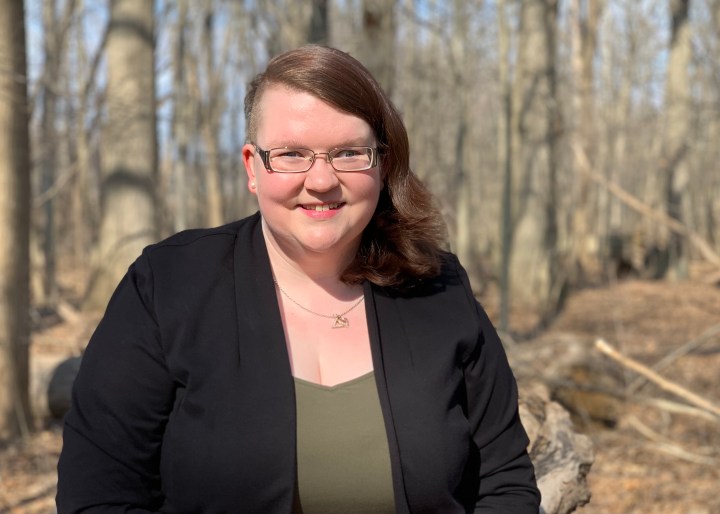
Interview by Trevor Fornara, Editor in Chief
Photos: Ridley for CongressThe following is an interview with Mikayla Ridley conducted on February 11th, eight days after she dropped out of the NY-22 congressional race. Ms. Ridley ran for the Democratic nomination before the state’s redistricting placed Binghamton and her hometown of Endicott in NY-19. Not wishing to run against incumbent Democrat Antonio Delgado in this election cycle, Ms. Ridley dropped out. If elected, Ms. Ridley would’ve been the youngest woman to ever serve in Congress, although she chose not to use this as a talking point during her campaign.
Ms. Ridley works as an admissions counselor at Binghamton University. She felt that the House of Representatives should consist of regular people eager to represent their constituents’ best interests, not career politicians. Ms. Ridley had never held political office before. I asked her why she chose Congress as a starting place and other questions about herself and her campaign. I recorded the audio of our conversation and created this transcript afterward. We talked for 40 minutes, so this is a select cut of what we discussed. The answers are mostly direct quotations from our conversation with minimal paraphrasing.
Can you describe the main points of your platform?
I’d say that the big things on it are healthcare reform, education reform, and protecting our planet. Those are definitely the three biggest passions of mine, and all of those have a socioeconomic justice component to them. These platform items are the building blocks. We can’t keep having a society without them. We need to put a lot more money into education; we’ve been gradually defunding it for decades.
For healthcare reform, switching to a single-payer system would be so much more cost-efficient for the whole country. The current proposal for healthcare reform is Medicare For All. While it wouldn’t necessarily have to be Medicare For All, I would fight for a single-payer system. While not truly a free market system, the multi-payer system is designed to operate as a free market system. People think that’s good because we’ve been trained to see free markets as the best possible way to run any system, but free markets work terribly for healthcare. That’s because free-market systems operate on supply and demand, but when people’s lives are on the line due to medical issues, they are willing to pay any price for treatment. Prices are bound to skyrocket in any free-market healthcare system. We need a single-payer system to stabilize prices. That’s why virtually every other wealthy nation in the world has a single-payer system.
For environmental protection, we need to reduce our pollution and find greener forms of energy that are actually affordable to Americans. I think that’s one of the biggest issues we’re facing right now with environmental policy—I can’t afford to buy an electric car or solar panels for my house, and neither can most Americans. It’s about making those options more affordable so that people can actually utilize green energy. I’m definitely an advocate for the green new deal. The bill has a lot of parts to it, but the most important are the infrastructure changes that will allow Americans to get jobs in renewable energy. This is good for the planet and our economy.
In your Ballotpedia survey response, you said that “the most important role of government is to respond to and alleviate systemic problems.” However, systemic problems are often caused and perpetuated by the government. How would you have used your influence to combat systemic issues in an institution riddled with them?
One of the purposes of government is to alleviate systemic problems, but government fails in that mission a lot. They perpetuate problems more often than they fix problems. That’s one of the main forces that drove me to politics; we need to fix these problems, they need to be fixed by government, and the people currently in government don’t have a great incentive to fix them. In their eyes we just need a few tweaks, because the current system has treated them well. We need more people in Congress who have experienced massive government failures. We need more people like me who have been dealing with the crushing weight of student debt for their entire adult lives. We need people who know what it’s like to avoid or delay healthcare because they can’t afford it. We don’t really have people in Congress who have had these experiences, so they don’t understand the gravity of these problems.
This also comes from how we elect Congress. One of my goals as a Congresswoman would be democratic reforms. We need better ways to select our leaders to be more representative of the people. We need the federal government to fully fund elections. Dramatic reforms to campaign finance are necessary so that elections are won by the stronger candidate, not the wealthier candidate. We also should use instant runoff or ranked voting so that elections more accurately represent the people’s will.
Are you still paying off your student debt?
I am. I graduated college with $95,000 in student debt. I’m down to about $60,000 at this point, but I’ve paid off about $60,000 already. I’ve paid tens of thousands in interest, and I have another ten years at best before they’re paid off.
I am definitely in favor of student debt forgiveness because it would be so beneficial to the economy. I spend about $700 a month paying off loans that go to an off-shore bank account for the CEO of Sallie Mae. The money doesn’t go into the economy; it’s not helping the working or middle classes. If we cancel student debt, that money would actually go into local economies. While it’s unlikely that we’d get the political support to cancel private student debt, it would be as easy as Biden signing an executive order to cancel all federal student debt. It’s the same way we’ve been freezing federal student debt for the last two years.
However, student debt forgiveness would have to come with increased education funding to ensure that we wouldn’t need to forgive debt again ten years later. Some are worried that people will go into more debt for college because they’re betting on the government forgiving it. We need to make sure that every student can go to four years of college for free, the same way it was free for K-12. This would likely start with getting associate’s degrees fully funded and then expanding to bachelor’s degrees. We could even take it further to high degrees. I think the economic benefit will be obvious as soon as we start funding higher education, and we will see that it’s a worthy investment.
Why did you choose Congress as your introduction to political life?
I went back and forth a lot because I believe that state and local governments have a lot of power and can get more done without political gridlock. However, I know that all of the problems I am most passionate about, know the most about, and know the most about how to fix, are at the national level. Things like fixing the healthcare system and education reform—the federal government has the resources to take real action on these issues. I felt it would be disingenuous to use local or state government as a stepping stone to Congress. We see career politicians do that all the time, and that’s not fair to local and state governments. There are many people who are passionate about local issues, and those government positions should be filled by them. It was a tough decision, but it felt like the most honest choice.
If you had been elected, on which congressional committees would you have wanted to serve?
The Education and Labor Committee and the Select Committee on the Climate Crisis would be good fits considering my platform. I’d also be interested in serving on the Ethics Committee and the Select Committee on the Modernization of Congress. These two committees focus on making government work better.
You said that “in our current system both parties are skewed far-right” and that “the middle ground between the two parties is not the middle ground between the two sides. If you had been elected, how would you have navigated the disparity between engaging with an unfair and unrepresentative system and staying true to your beliefs?
That is one of the biggest challenges running for office. As we started the campaign, we learned that the system is so broken, and it’s designed to stay that way. We had to ask how we could work within the system to get a seat at the table while simultaneously working to fix the system. The approach we had throughout the campaign is educating the public about the issues we are actually facing, and it’s the same approach I’d take if I were to run again. People are justifiably angry at the government because they know that politicians aren’t doing their jobs. However, most people don’t have a good understanding of why that is. We tried to explain the reforms that could help them in their lives.
Did you run into any unexpected challenges running as a liberal candidate?
I had mentally prepared myself for the opposition. I hadn’t expected the number of people who totally agreed with me on all my policy issues but wouldn’t vote for me because they didn’t think I could win. I knew that there would be some of that, but we saw it in the extreme during our campaign. People don’t vote for what they want; they vote for what they believe is viable. However, if everyone voted for what they wanted, we would unlock a whole new array of viable possibilities. This is why we added instant runoff voting to our platform; it allows for people to vote for who they believe in without wasting their vote if that person doesn’t make the cut.
How has being a member of the LGBTQ+ community impacted your campaign?
I actually think being a woman has had more of an impact on my campaign than being a member of the LGBTQ+ community, but I’ve gotten backlash over both. We had a Facebook advertisement running that had a photo of me, and one person commented, “I know everything I need to know about you based on your goofy-ass haircut.” I look like a queer woman; it’s a clear part of my identity. I’ve had people be dismissive of me because of that. Like I said, being a woman—especially a young woman—was the bigger challenge. When we first got into the race, there was an article written about me for Syracuse.com, and the same article was written for my opponent. His article was about his experience and accomplishments and that he was entering the race. Mine was “Tenney challenger wants to be the youngest woman elected to Congress,” which I never said in the interview. The tone of the two articles made the underlying sexism and age discrimination apparent. The system is very much skewed toward older folks, wealthier folks, men, straight folks, and Christians.
Can you see yourself running again in the future, and if so, for which position?
I definitely see myself running for office again. I’m leaning more toward Congress, or at least something on the federal level. For me, it’s never been about attention or being famous or things like that, so I may choose not to run for office again. Instead, I might work for a representative behind the scenes or take another job in Washington. I certainly haven’t ruled out state or local positions, and I’ve been contacted about the possibility of running for some of those since dropping from the congressional race. As I live in the area longer and learn more about local issues, then that might be the better fit for me in the future. However, I’ve lived in America for 27 years and Endicott for only 3 of those. Is it my place to make decisions about local issues when I haven’t lived here that long? I’ve been an American citizen my whole life and feel as though I have a good understanding of many of our systemic issues.
On behalf of the Happy Medium team, I’d like to offer a huge thanks to Mikayla Ridley for joining me for this interview.


Trevor Fornara is a senior from Mystic, Connecticut, majoring in philosophy, politics, and law. Trevor is a research fellow with the Undergraduate Research Center’s Summer Scholars and Artists Program, and works as a communications intern on the Leslie Danks Burke for State Senate campaign. He served as treasurer on the founding e-board of the Interdisciplinary Research Club last year, before leaving to focus on Happy Medium. During his first year at Binghamton, Trevor participated in the Source Project where he researched the affects of the university on the city’s housing market. Trevor also wrote for the Jewish Leader, a regional Jewish newspaper in CT, for 3 years.
-
A Nihilistic State of the Union Drinking Game
Satire by Zach Aleba
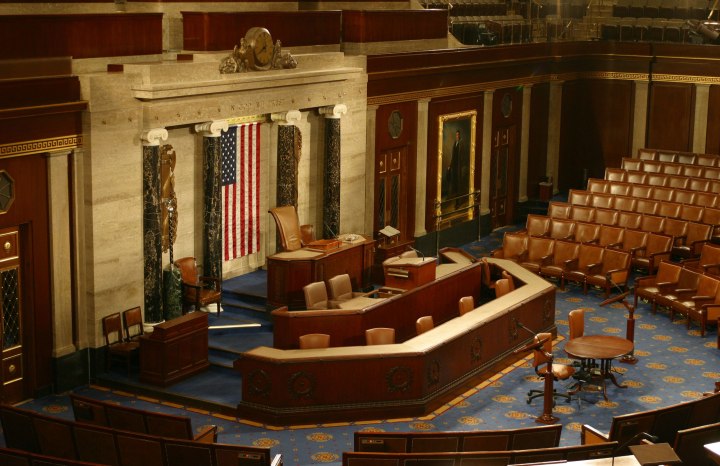
Photo: Office of the Clerk, U.S. House of RepresentativesEditor’s note: Happy Medium does not condone or encourage underage drinking. This is a satire piece and should not be played as a real drinking game.
President Joe Biden ran on a platform where the main talking points were essentially him eating an ice cream cone and the sentiment of “at least I’m not that other guy.” Unless you’re an irrational optimist (believe me, I envy you), his campaign left much to be desired in terms of actual actionable legislation proposals that seemed even slightly possible in today’s political climate.
We’re now nearly two years on, and even those who had measured expectations for this administration can’t help but feel disappointed and frustrated with the direction that his governing style has taken. The idea that anyone could swoop in and save this sinking ship is now, in hindsight, such a foolishly misguided proposition that you have no choice but to laugh lest you start crying.
The annual State of the Union Address is slated to be held on March 1st in the nation’s Capital. It’s an opportunity for pundits and citizens alike to have a chance at hearing the current administration’s plan for moving forward and to at least consider the possibility that this mess can be improved. However, I have little hope that the SOTU address will be anything other than further posturing, empty promises, and a continuation of the blame game that plagues American politics as a whole.
With my admittedly nihilistic beliefs at the forefront, I’d like to make a proposition that will be universally well-received: if we’re all going to sit through this, we may as well have a couple of drinks so that it doesn’t feel so damn miserable. This guiding principle led me to put together a drinking game of sorts, although drinking during the SOTU is less of a fun, quirky activity and more of an act of self-preservation.
Take a drink whenever Biden mentions inflation.
The inflation crisis has been a point of emphasis for every cable news network and talking head for months now, and with good reason. The inflation rate rose 7% in 2021, which marks the highest rate increase in twelve months since June 1982 (Pickert 2022). Whether this blame falls squarely on Biden’s shoulders is doubtful. Unfettered capitalism has led to businesses such as Procter & Gamble, a major conglomerate that sells everyday household items and owns the Dawn and Tide brands, talking out of both sides of their mouths. P&G spent their time enacting wholly unethical price hikes under the guise of necessity due to “inflation” while raking in record profits (Nguyen 2022). This is just one example of a parasitic business practice, and, regardless of whether or not Biden even has the resources to remedy this inflation, you can bet he’ll pontificate in a way as to quell everyone’s fears. The truth is that the inflation crisis only affects the average everyday American, while businesses and their shareholders make off with a bag full of cash every time.
Take a drink whenever the President uses a ‘Bidenism.’
At this point, the most memorable moments Biden has had as President are of the meme variety. These moments, such as having ‘folks’ as a prominent part of his vernacular and having the courage to tell Donald Trump to shut up at a debate in September of 2020, were part of what endeared him to a large swath of the Democratic Party voting base as well as many swing voters. Biden and his administration carefully curated this image of him as America’s grandfather, the calm and confident savior who would be more than happy to give a Republican legislator a noogie if they dared to stand in the way of his campaign promises. Of course, this act starts to lose its charm when the only time you hear “folks” lately is when it’s tacked onto the end of the sentence “I didn’t anticipate this level of Republican opposition.” Other words and phrases that count toward taking a drink may include: Biden imploring ‘both sides’ to find a solution for whatever issue he happens to be discussing, as well as a probable mention of ‘optimism’ and ‘hope.’ During the SOTU, you can bet he’ll still be using these same old cliches and patterns of speech that, to be fair, often infect the vocabulary of every sitting President.
Take a drink whenever President Biden mentions the Russia/Ukraine situation; take two if he says a Russian invasion of Ukraine is ‘imminent.’
If Biden is anything, he is the perfect mouthpiece for the military-industrial complex and a proponent of the ‘savior’ role for the rest of the world upon which the United States has traditionally felt compelled to act. For weeks, the administration has remained adamant that a Russian invasion of Ukraine is imminent (Ott 2022). Their insistence of an imminent attack despite no invasion leads one to question their usage of the word. In a recent article for Happy Medium titled “A Case Against Intervention in Ukraine: The Prospect of War in Light of our Past Endeavors,” my colleague Desmond Keuper posits that the United States insistence on the narrative that a Russian invasion of Ukraine is a cut-and-dry case of if, not when, potentially has nothing to do with an actual interest in the preservation of Ukraine’s sovereignty. He argues further whether the US realistically has the right to intervene in the situation (Keuper 2022).
Finish your drink when President Biden mentions his accomplishments in office.
If nothing else, the SOTU address presents the sitting President with an opportunity to speak on all the supposed accomplishments achieved by the administration within the past twelve months. Essentially, Biden will have the ability to spout off about what the administration has accomplished without the inconvenience of proving his claims. Both Democratic and Republican incumbents practice this tactic; this dishonesty is present within all American politics irrespective of the side of the aisle on which a politician resides. Expect Biden to mention two accomplishments in particular: a $1.9 trillion economic relief package aimed at repairing some of the harm caused by the COVID pandemic and a $1.2 trillion infrastructure bill (White House 2021). You can be sure that these pieces of legislation, while certainly important and impactful for many Americans, will be mentioned ad-nauseam to juice out any droplets of goodwill, of which this administration is currently in short supply.
When considering the possible directions the SOTU address could go that evening, it becomes difficult to see how Biden will leave the stage having inspired any confidence in the American people. The truth is that, while he is undoubtedly a flawed politician and not blameless in the current condition of our economy, Biden has dealt with a lot of bad faith criticism. With cable news outlets and tabloid magazines hyper-focused on every indiscretion, it’s a wonder anybody would ever aspire to be in his current position.
Giving our elected leaders the benefit of the doubt is an integral part of democracy itself. If we immediately dismiss every idea or politician that we don’t personally like, it becomes hard to find hope that the future can be better. Leading up to his SOTU address, we should hope for the best, brace for the worst, and better understand our place in the issues facing our nation.

Zach Aleba is a senior at Binghamton University, majoring in English. Prior to attending BU, he earned an A.A. degree in Liberal Arts from Borough of Manhattan Community College. He hails from Whitney Point, a small town about twenty minutes north of Binghamton. Zach has previously had work published on Parents.com, where he contributed to a young adult advice column. Aside from writing, he enjoys watching Mixed Martial Arts and training Brazilian Jiu-Jitsu, and spending as much time outdoors as possible.
References
“American Rescue Plan.” 2021. The White House. https://www.whitehouse.gov/american-rescue-plan/ (February 21, 2022).
Keuper, Desmond. 2022. “A Case Against Intervention in Ukraine: The Prospect of War in Light of our Past Endeavors.” Happy Medium, February 17. https://happymediummag.com/2022/02/17/a-case-against-intervention-in-ukraine-the-prospect-of-war-in-light-of-our-past-endeavors/ (February 18, 2022).
Nguyen, Janet. 2022. “Why are company profits rising despite inflation.” Marketplace, January 20. https://www.marketplace.org/2022/01/20/why-are-company-profits-rising-despite-inflation/ (February 18, 2022).
Ott, Halley. 2022. “U.S. says Russia moving toward “imminent invasion” of Ukraine amid “false-flag” concerns over shelling claims in Donbas.” CBS News, February 17. https://www.cbsnews.com/news/russia-ukraine-news-donbas-rebels-shelling-putin-response-us-proposals/ (February 18, 2022).
Pickert, Reade. 2022. “U.S. Inflation Hits 39-Year High of 7%, Sets Stage for Fed Hike.” Bloomberg, January 12. https://www.bloomberg.com/news/articles/2022-01-12/inflation-in-u-s-registers-biggest-annual-gain-since-1982 (February 18, 2022).
-
A Case Against Intervention in Ukraine: The Prospect of War in Light of our Past Endeavors
Opinion by Desmond Keuper
Photo: Flag of NATOPresident Joe Biden has announced that Russia has amassed troops on its Ukrainian border capable of launching a full invasion. American intelligence has speculated that Russia intends to invade Ukraine and either install a pro-Russian government or annex it altogether. This is similar to the intel on Crimea in 2014, which was under Ukrainian control at the time (Bloch 2021). However, American intervention in Ukraine has in the past and would in this instance result in disaster. This follows Russian demands that Ukraine is barred from entering the North Atlantic Treaty Organization, or NATO—a United States-led initiative started during the Cold War to stop the expansion of the Soviet Union. It has continued since in the name of protecting the hegemony and expansionist economic interests of the western imperial core, understood to refer primarily to America and Europe, the seat of power for Western Capital. A sister article written by Colin Mangan further discusses the history of the conflict.
As the possibility of war looms it becomes necessary to examine Nazi elements present in Ukraine’s military, exemplified by the Azov battalion. It was founded in 2014 to combat Russian separatist forces and to prevent Crimea’s annexation, and many of its members believe in Nazi ideology. Several have swastika tattoos, and one fighter in 2014 claimed that Putin was Jewish (Walker 2014). The organization’s official symbol is modeled after the Wolfsangel, a symbol used by several German Waffen-SS Units during the Second World War (ADL). While Congress declared that America would no longer financially support the battalion in 2018, the militia has been incorporated into Ukraine’s national guard (Shuster and Perrigo 2021; Blumenthal 2018). There is a strong probability that any military aid the Biden administration provides to Ukraine will end up in the hands of these Nazi elements. Comparisons have been drawn between Putin’s purported intent to invade Ukraine and Hitler’s invasion of Poland and attempted expansion into both Eastern and Western Europe (Wakefield 2022) Diving into this aspect of the Ukrainian military, these comparisons become bitterly ironic.
This now-legitimized militia has been involved with the radicalization of far-right elements online. This facet of our modern condition has resulted in a large number of terrorist attacks, including the Christchurch mosque shooting in New Zealand and the frequent synagogue attacks with which Americans have become all too familiar (Shuster and Perrigo 2021). For this reason, it is of vital importance that America refrain from involving itself militarily in support of Ukraine. Even if America denounces and decries these elements of the Ukrainian military, American weapons falling into the hands of these Nazi elements would prove catastrophic to the Ukrainian people. Ukraine’s Jewish population, which numbers between 56,000 and 140,000 according to a 2016 estimate, would suffer particularly (World Jewish Congress 2018).
And as American support continues, as Ukraine is placed in the midst of what is at its core a proxy war, Ukraine’s fascist movement will likely gain influence and accumulate resources, allowing it to effectively continue its mission of radicalization among disaffected members of the Imperial core. Many of its more well-known recruits trace their origins to its international radicalization projects, among them being Mikail Skillt, who in an interview with BBC in 2014 said that he “want[ed] to see survival of white people.” He went on to elaborate: “After World War Two, the victors wrote their history. They decided that it’s always a bad thing to say I am white and I am proud” (Newman 2014).
The situation is reminiscent of America’s intervention in Afghanistan during the Soviet-Afghan war fought between 1979 and 1989. As the former Soviet Union attempted to expand into Afghanistan, they were met with resistance from an organization of Mujahideen fighters. One of them was Osama Bin Laden who would go on to found al-Qaeda and plan the attacks against the World Trade Center on September 11th, 2001. America provided them with weapons ranging from machine guns to anti-aircraft missiles, and President Ronald Reagan invited Mujahideen fighters to the white house (Bloch 2021). In 2001, just over a decade after the war had ended, an organization of Mujahideen fighters called the Taliban would take over Afghanistan. American soldiers would have to return, as it became clear it was an unwinnable war. After twenty years of fighting we are leaving, defeated by our own imperialist project and leaving them with even more military equipment.
America has a very short attention span. During our war with the Taliban these past two decades, very little coverage has been centered on the Taliban’s origins, in favor of the immediate developments and potential fallout from withdrawal. Not even a year has passed since we withdrew and our attention has already been moved to the funding of another reactionary force. In America’s concern over its immediate strategic and economic goals, it frequently either underestimates the fallout—or is entirely apathetic to the suffering it inflicts and the strategic problems it will create for itself down the line in Ukraine.
Putin is not an admirable leader. Autocratic and just as capitalistic as any American administration, a Russian takeover would not end well for the Ukrainian people. However, a pro-Russia government would be better than a Ukraine burdened with a Neo-Nazi element, now reinforced with American military aid.
The Azov Battalion has already established what many would consider being a state within a state. Its head of international outreach, Olena Semenyaka, has declared outright that its goal is to establish a network of far-right organizations across Europe and the Imperial Core, with the hope of eventually taking power. America has made it clear that it’s willing to risk the spread of reactionary fascism in order to preserve its current strategic goals: to preserve NATO’s influence and ultimately to protect American economic interests. The State Department itself proclaims that America and Ukraine have trade relations that it wants to preserve, such as Ukraine’s import of American coal and America’s continued purchase of iron and steel (Bureau 2021). Meanwhile, the Azov battalion is already more organized than Afghanistan’s Taliban was at the start of the Soviet-Afghan war. The Taliban has direct roots within the Mujahideen fighters America supported but emerged officially as an organization after the war to take power (Bloch 2021).
Saddam Hussein was also compared to Hitler as he expanded into Kuwait. He was deterred by American troops in 1991 in the first Gulf War. A decade later America would launch an invasion of Iraq, accusing it of having refused to disarm despite the country’s newfound lack of nuclear weapons (BBC 2013). According to iraqbodycount.org, an independent group aiming to document the civilian casualties of the Iraq War, between 186,084 and 209,276 Iraqi civilians were killed violently (Iraq Body Count). The resulting power vacuum would result in the rise of ISIS. Had America never intervened, Saddam would have continued to rule Iraq as a tyrant. However, the violence inflicted onto civilians by American troops combined with the rise of the brutal fundamentalist Islamic State has been far worse for the people of Iraq than Saddam ever could have been.
The Middle East has been torn apart by the forces of reaction, all tracing their roots to American intervention by either direct funding or enablement by the conditions America’s imperialistic actions created in the region. And in the same way, the Middle East was destroyed in the name of American strategic and economic interests, so too will be Ukraine if America intervenes. Democracy and personal freedom are not advanced. American economic and strategic goals are secured briefly before being threatened again by the fallout, and the war industrial complex is maintained as companies like Raytheon Technologies profit.
This is what American imperialism does. To be sure, Putin is not morally better than America, and certainly doesn’t have the best interests of the Ukrainian people at heart; Russia is simply concerned with strategically maintaining its westward expansion in the same way America is interested in expanding its sphere of influence eastward. However, I would certainly rather see a Russian takeover than the growth of fascist and outright Neo-Nazi elements or another war that would devastate the country in which it’s fought. Biden has publicly expressed disinterest in a direct conflict but has threatened Russia with consequences (Hunnicutt 2022).
Russia continues to insist that it does not plan to invade (Kirby 2022). Biden claims that he does not plan to involve America as of right now, so we will see whether there is war or not. I have made it clear the ways in which American intervention would harm the people of Ukraine, especially its Jewish, ethnically Russian, and Queer populations in the same way these groups were harmed by Hitler’s regime. Even if we were unaware of the Azov Battalion’s Nazi ideology and the ways in which they have integrated themselves with Ukraine’s military and society, it would be a mistake to continue sending military support to Ukraine.

Desmond Keuper is a sophomore philosophy major from Brooklyn, NY. His interests within politics are mostly centered around American foreign policy, its long-term impact, and where it falls within a narrative centered on capitalist imperialism.
References
Bloch, Hannah. 2021. “A Look At Afghanistan’s 40 Years Of Crisis — From The Soviet War To Taliban Recapture.” NPR. August 31. https://www.npr.org/2021/08/19/1028472005/afghanistan-conflict-timeline
Blumenthal, Max. 2018. “The US is arming and assisting neo-Nazis in Ukraine, while Congress debates prohibition.” The Grayzone. April 7. https://thegrayzone.com/2018/04/07/the-us-is-arming-and-assisting-neo-nazis-in-ukraine-while-congress-debates-prohibition/ (February 15, 2022).
Bureau of European and Eurasian Affairs. 2021. “U.S. Relations With Ukraine: Bilateral Relations Fact Sheet.” US Department of State, August 27. https://www.state.gov/u-s-relations-with-ukraine/ (February 15, 2022).
Campbell, Duncan. “Kissinger approved Argentinian ‘dirty war.’” 2003. The Guardian. December 5. https://www.theguardian.com/world/2003/dec/06/argentina.usa (February 15, 2022).
Hunnicutt, Trevor & Steve Holland. 2022. “Biden to Putin: Step Back from the War in Ukraine.” Reuters. February 15. https://www.reuters.com/world/europe/biden-says-russian-attack-ukraine-still-possible-2022-02-15/ (February 15, 2022).
“Iraq Body Count: The public record of violent deaths following the 2003 invasion of Iraq.” Iraq Body Count. https://www.iraqbodycount.org/ (February 15, 2022).
Kirby, Paul. 2022. “Is Russia Going to Invade Ukraine and What does Putin Want?” BBC. February 15. https://www.bbc.com/news/world-europe-56720589 (February 15, 2022).
Liptak, Kevin. 2022. “Joe Biden leans on his long history – and memories of 2014 – to confront the Ukraine crisis.” CNN. February 15. https://www.cnn.com/2022/02/15/politics/president-joe-biden-ukraine-russia-2014/index.html (February 15, 2022).
Newman, Dina. 2014 “Ukraine conflict: ‘White power’ warrior from Sweeden. BBC. July 14. https://www.bbc.com/news/world-europe-28329329 Shuster, Simon & Billy Perrigo. 2021. “Like, Share, Recruit: How a White-Supremacist Militia Uses Facebook to Radicalize and Train New Members.” Time Magazine. January 7. https://time.com/5926750/azov-far-right-movement-facebook/ (February 15, 2022).
Wakefield, Randy. 2022. “Letter to the editor: Putin embracing Hitler’s tactics.” Press Herald. February 13. https://www.pressherald.com/2022/02/13/letter-to-the-editor-putin-using-trick-out-of-hitlers-playbook/ (February 15, 2022).
“Timeline: Iraq War.” 2016. BBC. July 5. https://www.bbc.com/news/magazine-36702957 (February 15, 2022).
“Ukraine.” 2018. World Jewish Congress. August. https://www.worldjewishcongress.org/en/about/communities/UA (February 15, 2022).
Walker, Shawn. 2014. “Azov fighters are Ukraine’s greatest weapon and may be its greatest threat.” The Guardian. September 10. https://www.theguardian.com/world/2014/sep/10/azov-far-right-fighters-ukraine-neo-nazis (February 15, 2022).
“Wolfsangel.” ADL. https://www.adl.org/education/references/hate-symbols/wolfsangel (February 15, 2022).
-
The Truth About the War in Donbass
Opinion by Colin Mangan
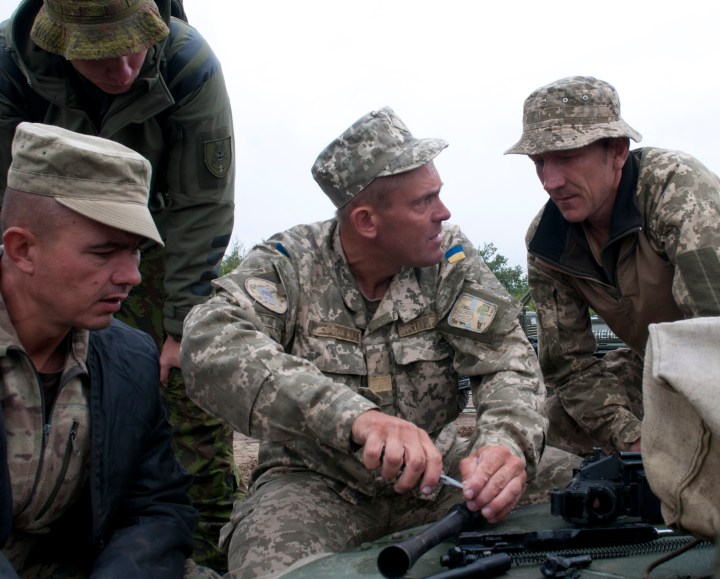
Photo: US Army EuropeIn recent weeks, the Biden Administration has intensified its diplomatic and military efforts to keep Ukraine within the North Atlantic Treaty Organization’s (Savranskaya 2017) sphere of influence under the pretext of a supposed Russian ground invasion of the Donbass (i.e. the Easternmost region of Ukraine) in the near future. The United States has even gone so far as to send an additional 3,000 troops to Poland and has recalled employees from the US embassy in Kyiv. Secretary of State Anthony Blinken has proclaimed that Russia’s failure to capitulate to US demands, which includes the possibility for NATO expansion into Ukraine, “would result in a resolute, massive, and united Transatlantic response” (Lamothe 2022; CBS 2022; Vella 2022).
On February 16, President Joe Biden declared “(If) we do not stand for freedom, where it is at risk today, we’ll surely pay a steeper price tomorrow” (Collinson 2022). Biden’s sentiment mirrors the standard geopolitical narrative perpetuated by Western powers: that Russia is a malevolent rogue state and is attempting to invade Ukraine without any provocation as part of President Vladimir Putin’s counter-hegemonic ambitions. However, reality offers a substantially different picture. To be sure, Russia has very real geopolitical interests in Ukraine, and for good reason. The Russian intervention in Ukraine must be understood within the context of decades of military and economic encirclement by Western imperialism.
The two great powers behind the current conflict are Western capital (exemplified militarily by NATO and financially by the European Union) and Russia. In examining the geopolitical interests of these parties, we can make several observations often ignored by Western observers—the first of which pertains to NATO. The North Atlantic Treaty Organization, it must be remembered, is not a benevolent ‘peacekeeping’ force. Rather, it is the fist of Western imperialist hegemony, originally founded in 1949 to internationally isolate and intimidate the Soviet Union and the burgeoning worldwide communist movement. Since the dissolution of the Soviet Union, NATO has been repurposed for two ends: the further geopolitical and military encirclement of Russia and the destruction of counter-hegemonic projects (notably in the former Yugoslavia and in Libya).
Likewise, the European Union represents imperialism in one of its most advanced forms hitherto seen in the modern world system. When we refer to these institutions as ‘imperialist,’ we mean that NATO/EU are “international monopolist capitalist associations which share the world among themselves” (Lenin 1916) through the export of finance capital to semi/peripheral countries in the world market.
Make no mistake; the European Union is by no means some sort of cosmopolitan union promoting international progressive socio-economic development. Rather, the EU is the consolidation of European finance capital, dominated by historical great powers (France, Germany, etc.). Its monopoly on transnational finance and trade strips smaller member states of economic sovereignty through the imposition of neoliberal economic policies, enabling the realization of super-profits on a continental scale and ensuring the permanent underdevelopment of the semi/periphery.
In short, we must understand that imperialism, particularly in Europe, is not a process of progressive integration into the world market, but rather an inherently violent process of the internationalization of capital. It is thus a barrier to the economic development of both semi/peripheral and smaller core countries. In contrast to the European Union, Russia is very much a semi-peripheral nation in the world market with a comparatively limited sphere of influence. Although Russia is certainly a practitioner of state-monopoly capitalism, it is also counter-balance to the European Union, and, as we shall see, has historically offered a regional alternative to Western European hegemony.
Although the War in Donbass thus amounts to a proxy conflict between these two powers, there is a distinct counter-hegemonic moment, as expressed by Russia’s demands that “Ukraine would never join NATO, and…NATO allies to pull all troops and nuclear weapons from former Soviet republics and nations that once belonged to the Warsaw Pact”; demands which the US of course regards as “nonstarters.” (Crowley and Sanger 2022). In the dying days of the Soviet Union, American diplomats verbally promised Soviet President Mikhail Gorbachev, on multiple occasions, that NATO would not expand eastward, in exchange for the Soviet Union allowing for the reunification of Germany (National Security Archive 2022). Furthermore, since the end of the Soviet Union, Ukraine has been put in the precarious position of being forced to choose whether to economically ally with the EU or Russia. In 2014, the situation culminated in the Euromaidan coup.
In 2013, the neutral government of Ukraine, led by President Viktor Yanukovich (who opposed NATO expansion) abruptly discontinued negotiations to establish an Association Agreement with the EU in favor of pursuing integration with Russia and the Eurasian Economic Union (“Ukraine’s Parliament” 2010). The decision polarized Ukrainians, particularly the Russian-speaking population in Eastern Ukraine, who have historically been skeptical of economic integration with the EU. Historically, this group has favored neutrality between East and West, if not being more inclined towards allying with Russia (Greene 2014).
Geostrategically, Russia had very real reasons to fear the prospect of Ukraine joining the European Union. The Crimean Peninsula is historically part of Russia; it was only in 1954 that the territory was transferred to Ukraine by the Soviet government. The Sevastopol Naval Base, located on the western coast of the peninsula, was one of the largest Soviet naval bases until it was handed over to the Russian Federation in 1991 in exchange for yearly lease payments to Ukraine. Under the agreement with the EU, Russia would have found one of its largest naval bases under Western economic control.
The deep socio-political divisions within the Ukrainian population exploded during the Maidan protests. Polls at the time found that while 84% of Western Ukrainians supported the protests, 81% of Eastern Ukrainians were decidedly against them (Olearchyk 2013). In the face of the increasingly violent protests, the Yanukovich government signed an agreement (mediated by the EU and Russia, with the US as an observer) with the political opposition. Yanukovich, among other things, agreed to hold early elections, political devolution to Ukraine’s provincial subjects, and a withdrawal of police from the capital.
Amidst the political chaos, the most reactionary, militaristic, and chauvinistic elements of Ukrainian politics took front and center in leading the Maidan protests. Ukraine has a long and violent history of national chauvinism amongst the political establishment. During World War II, Nazi-collaborator Stepan Bandera led a fascist insurgency in the region, and not only are members of Bandera’s Organization for Ukrainian Nationalists (1929-1956) eligible for veterans’ benefits but today Bandera himself is officially honored as a “Hero of Ukraine.” In the wake of the Maidan protests, several neo-fascist parties—Svoboda, Right Sector, the Ukrainian National Assembly–Ukrainian National Self Defense (UNA–UNSD), the Congress of Ukrainian Nationalists—played a central role in overthrowing the Yanukovich government.
On February 22, 2014, even after Yanukovich agreed to hold early elections, these fascist militias stormed the parliament building and forced Yanukovich to flee the country, lest he is assassinated. Although these groups have experienced an electoral decline in recent years, Maidan allowed for their integration into Ukraine’s military bureaucracy. The Azov Battalion, for example, founded in 2014 as an openly neo-Nazi military group and engages in the dissemination of ultra-nationalist propaganda among Ukrainian youth, was integrated into the Ukrainian National Guard. In 2015, the Office of the United Nations High Commissioner for Human Rights (OHCHR) connected the Azov Battalion to war crimes including mass looting, torture, and rape (OHCHR 2015). Perhaps most disturbingly, these groups have been militarily supported by the United States, through the CIA, since at least 2015 (Dorfman 2022).
It is in this context—the fascist overthrow of a neutral government and the subsequent pro-Russian protests in Eastern Ukraine—that Russia intervened militarily in Crimea to protect its military installations and the region’s ethnic Russian majority, with 95% of Crimeans voting to join the Russian Federation in a 2014 referendum. Although Sergey Aksyonov—then head of government of Crimea—invited international observers to monitor the elections, Western ‘observers’ declined and have since condemned the plebiscite (and without significant basis, one might argue). Subsequently, the Donetsk and Luhansk oblasts of Ukraine held similar referendums, with secessionists winning overwhelmingly in both territories.
The probability of Russia launching a full-scale ground invasion of Ukraine ranges from small to being outright farcical (unless Russia is willing to face another wave of devastating economic sanctions). What seems more likely is that the Ukrainian government is using the pretext of a supposed Russian invasion in order to launch its own offensive against the rebelling territories, with President Volodymyr Zelensky telling the Foreign Intelligence Service of Ukraine “It is time we begin offensive actions aimed at securing our national interests.” (Gazdiev 2022). The perceived urgency in pacifying the Eastern provinces likely also comes from Secretary of State Anthony Blinken’s January trip to Kyiv, in which he pressured the government to move towards implementing pro-Western political reforms (previously negotiated in 2015). Given the historic devaluation of the Ukrainian hryvnia since 2014, it’s possible that the implementation of said reforms is tied to the receival of credits by the International Monetary Fund (Events in Ukraine 2022).
The ultimate cause of the conflict in Ukraine is the expansion of Western hegemony into Eurasia, and the destruction of counter-hegemonic projects, such as the Russian-led Eurasian Economic Union. But whether NATO/EU or Russia prevails in Ukraine, it is a no-win scenario for the majority of people. Nonetheless, ensuring the autonomy of the provinces in question and preventing NATO expansion seems to be a more desirable alternative to fascist-backed Western ultra-imperialism.

Colin Mangan is a junior sociology and philosophy major, and is currently enrolled in the philosophy 4+1 program, on track to graduate in Spring 2023 with a BA and an MA. He is currently the host of Straight Talk on WHRW Binghamton, on Thursdays at 5:30. His wide array of interests include the study of capitalism as a world-ecology, and he is also a passionate student of Marxist, Leninist, and anti-imperialist theory. After his master’s degree, Colin aspires to pursue a PhD in sociology, focused around historical capitalism and the world-ecology conversation. Colin also has a dual Irish citizenship.
References
Collinson, S. 2022. “Analysis: Biden seeks to shore up his domestic flank in his showdown with Putin.” CNN, February 16. www.cnn.com/2022/02/16/politics/joe-biden-ukraine-russia-domestic/index.html (February 16, 2022).
“Ukraine’s Parliament Votes to Abandon Nato Ambitions.” 2010. BBC News, June 3. www.bbc.com/news/10229626 (February 14, 2022).
Crowley, Michael, and David E. Sanger. 2022. “U.S. and NATO Respond to Putin’s Demands as Ukraine Tensions Mount.” The New York Times, January 26. www.nytimes.com/2022/01/26/us/politics/russia-demands-us-ukraine.html (February 14, 2022).
Dorfman, Zach. 2022. “CIA-Trained Ukrainian Paramilitaries May Take Central Role If Russia Invades.” Yahoo News, January 13th. www.yahoo.com/news/cia-trained-ukrainian-paramilitaries-may-take-central-role-if-russia-invades-185258008.html (February 15, 2022).
Gazdiev, Murad. 2022. “President Zelensky Speaking to the Foreign Intelligence Service of Ukraine: ‘We Have Learned to Contain External Threats. It Is Time We Begin Offensive Actions Aimed at Securing Our National Interests. Our Citizens Are United in Wanting Their Territory Returned.’” Twitter, January 24. twitter.com/MuradGazdiev/status/1485595003963547649 (February 15, 2022).
Lamothe, Dan. 2022. “Pentagon Sends Another 3,000 U.S. Troops to Poland amid Threat of Russian Attack on Ukraine.” Washington Post, February 11. www.washingtonpost.com/national-security/2022/02/11/russia-ukraine-us-troops-poland/ (February 14, 2022).
Lenin, V. I. “IMPERIALISM AS A SPECIAL STAGE OF CAPITALISM.” Marxists.org. www.marxists.org/archive/lenin/works/1916/imp-hsc/ch07.htm (February 14, 2022).
Savranskaya, Svetlana and Tom Blanton. 2017. “NATO Expansion: What Gorbachev Heard.” National Security Archive, December 12. nsarchive.gwu.edu/briefing-book/russia-programs/2017-12-12/nato-expansion-what-gorbachev-heard-western-leaders-early (February 14, 2022).
Greene, Richard A. 2014. “Ukraine Favors Europe over Russia, New CNN Poll Finds.” CNN, May 12. edition.cnn.com/2014/05/12/world/europe/ukraine-cnn-poll/ (February 14, 2022).
Office of the United Nations High Commissioner for Human Rights. 2016. Office of the United Nations High Commissioner for Human Rights: Report on the Human Rights Situation in Ukraine 16 November 2015 to 15 February 2016.
Olearchyk, Roman. 2013. “Ukraine Protesters Take Rally to Yanukovich’s Residence.” Financial Times, December 13. www.ft.com/content/7be62f26-70a2-11e3-9ba1-00144feabdc0 (February 15, 2022)
Events in Ukraine. 2022. “Blinken Wants Ukraine to Implement the Minsk Agreements – Notes on the US Secretary of State’s Visit to Kiev.” Events in Ukraine, January 19. eventsinukraine.substack.com/p/blinken-wants-ukraine-to-implement (February 15, 2022).
“U.S. Orders Employees to Leave Embassy in Kyiv Ahead of Potential Russian Invasion of Ukraine.” 2022. CBS News, February 12. www.cbsnews.com/news/us-orders-employees-to-leave-embassy-in-kyiv-potential-russian-invasion-ukraine/ (February 14, 2022).
Vella, Lauren. 2022. “Blinken Warns Russian Official of ‘resolute, Massive’ Response If It Invades Ukraine.” The Hill, February 12. thehill.com/policy/international/russia/593975-blinken-warns-russian-official-of-resolute-massive-response-if-it (February 14, 2022).
-
Subscribe
Subscribed
Already have a WordPress.com account? Log in now.
 Happy Medium
You must be logged in to post a comment.