When the 13 colonies were established throughout the 16th-18th centuries, the myriad Christian denominations that found themselves in the New World began integrating religious practices into the laws of their respective colonies.

Political science, not political science-fiction. A student-run magazine at Binghamton University.
When the 13 colonies were established throughout the 16th-18th centuries, the myriad Christian denominations that found themselves in the New World began integrating religious practices into the laws of their respective colonies.

This year, America saw a great deal of new laws passed addressing issues such as AI, abortion, guns, tariffs, and more. 2025’s new policies and regulations display the ideological divide across the United States; while California and New York move to regulate AI and protect abortion access, states like Florida and Texas double down on restrictions.

Elections in the United States are dominated by a two-party system with Democrats on the centre-left and Republicans on the centre-right. Although there are other parties, they receive negligible amounts of support and often fail to win any significant elections. For voters who support third parties, elections can be frustrating, as it seems like there is no good outcome when casting a vote.
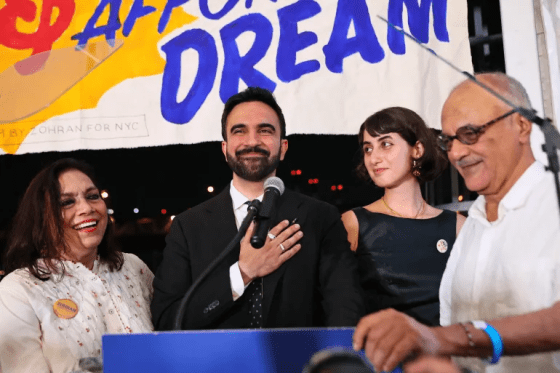
The 2025 Democratic mayoral primary stunned New York City when former Governor Andrew Cuomo conceded to Zohran Mamdani. Cuomo was a political veteran strongly favored by Democratic leaders, despite having a sexual harassment scandal in 2021. The odds had been stacked against the 33-year-old Assemblyman, a newcomer to citywide politics. Yet Mamdani made history.

Nothing in this world is free. The effort toward global decarbonization that has become a critical priority for much of the international community comes with its immediately obvious hurdles. The large-scale rollout of renewable energy production, the mass electrification of oil- and gas-powered sectors, and the scaling down of animal agriculture are all wide-scale and far from easy.

Gridlock is a term that was coined in New York City, referring to the traffic congestion preventing the efficient functioning of the city’s network of intersections, particularly in Manhattan. The term has existed since the emergence of America’s car culture in the 1900s when New York officials believed that a toll system would be the best solution to the traffic problem in Manhattan. However, New York officials have recently developed an ambitious experiment to resolve traffic control: congestion tolling.

Though there are many reasons why rich countries are rich and poor countries are poor, a large modern contributing factor is emigration. The growth of interconnected global economies has allowed brain drain to materialize, which many developing regions have been grappling with in recent decades.

There are contemporary influences that contributed to the necessary rise of the minimum wage in New York. One is the cost of living, with New York having a cost of living that is 26% higher than the national average in 2024. Housing, which includes buying and renting, is 75% higher compared to the national average.

By looking at historical examples, it’s made apparent that nuclear weapons have become a double-edged sword that simultaneously encourages and threatens peace in the international arena.

On October 7th, South Africa formally requested the Taiwanese government to move its unofficial embassy out of the administrative capital of Pretoria to Johannesburg. This move has been largely interpreted as South Africa conceding to China by subverting relations with Taiwan to strengthen relations with the former.

An often neglected aspect of political parties is their broader participation in transnational political organizations, referred to as political internationals. A political international is a transnational organization comprising parties with a common ideology or political outlook.

The 2024 presidential election campaign, characterized by a quick succession of unexpected and shocking twists and turns, is likely to result in an incredibly close election. Most polls show Vice President Kamala Harris and former President Donald Trump in a dead heat in the seven battleground states. Vice President Harris has a slight lead in national polls but is well within the margin of error.

What makes a nation successful? By what metrics do we measure how well a nation is doing? As an alternative to GDP, a government’s competency in promising and fulfilling its obligations to its population could be a better metric of success.

In an April 1966 edition of Time Magazine, the sociocultural landscape of Britain was vividly described as being “in the midst of a bloodless revolution” (“Time Magazine” 1966). The rejection of the elite-dominated status quo ushered in the creation of a new social order– a society in which people wore “suspiciously bright cloth[ing],” listened to catchy beat music, and talked openly about sex.
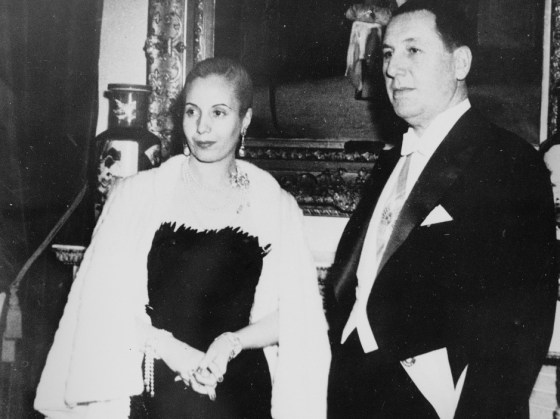
In the recent Argentine presidential election of November 2023, a surprising wave of young adult voters (almost 70% percent of the under 30’s) cast their votes for the libertarian, extremist candidate Javier Milei, instead of Sergio Massa, the candidate for the Peronist party in government. However, young voters weren’t just rejecting the current Peronist government, but rejecting the Peronists who have dominated Argentine politics for the last 80 years.
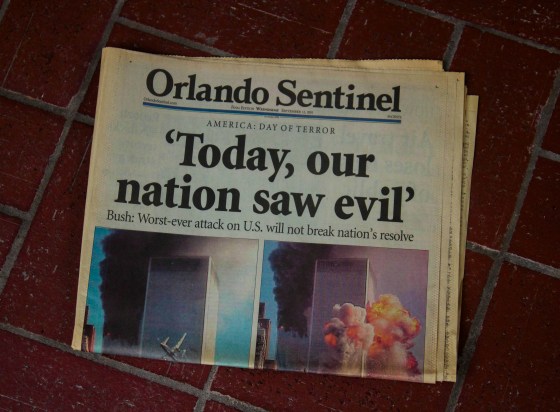
The extreme turbulence of the early 2000s along with the missteps of leadership by politicians created a larger problem – an overall loss of faith in government by some. The 2000s can be pinpointed as a shift in view for many Americans, splitting the American political sphere into various factions that have only continued to grow to this day.
 Happy Medium