-
Tension and Technology: The Connection Between Politics and Science
By Mihaela Pranjkovic-Kovac, Science and Technology
It can be easy to divide technology and politics into two distinct categories, viewing their distinctions as black and white. This being said, it is important to not overlook the relationship the two of them share. Politics and science most definitely impact each other and the relationship between the two can take on different forms. Moments of geopolitical tension can impact the type of technology being made, the reactions to those technologies, etc. And so, there seems to be a relationship between the advancement of scientific technology and moments of high geopolitical tension in the twentieth and twenty-first centuries.
The First World War (WWI) is one of the most prominent examples of tension causing the emergence of new technologies. WWI saw developments in both the machine gun and rapid-fire field artillery gun. These weapons were used in trench warfare and resulted in the term “no-man’s land” (Showalter and Royde-Smith 2024), in reference to the fact that whenever a soldier would try to cross to an opposing trench, they would be shot by rapid-fire artillery. Because WWI had an issue with trench warfare causing stalemates, the need for a solution presented itself. This would come in the technological development of the tank. The armored vehicle with wheels to handle war terrain allowed for the stalemates and “unwinnable” battles to progress. WWI also saw the development of air traffic control to fulfill the need to receive information from planes in flight. It was in 1917, in fact, that a radio allowed for a human voice to connect from a plane in flight to a ground operator (Sass 2023).
It follows naturally to look at the scientific developments in response to the Second World War (WWII). Largely taken for granted today, it is interesting to point out the connection between the development of penicillin and WWII. Before its development, infection could be caused by the smallest injuries that resulted from warfare. Penicillin was discovered by Alexander Fleming in 1928, but it was in WWII that its mass production for medical purposes was developed by the United States. It became so crucial to manufacture penicillin for soldiers, that 2.3 million doses were produced for the D-Day landings alone. Another beneficial development of WWII used to this day is radar. MIT’s Radiation Laboratory initially wanted to figure out how to expand on the first practical radar system produced in 1935 to turn it into a weapon. Later, it was mainly used for enemy detection. Today, it is also used for non-war purposes such as detecting hurricanes (Little 2021).
Of course, when discussing technological advancements in response to geopolitical tensions, the atomic bomb cannot be ignored. The Manhattan Project was spurred out of the United States’ fear that Nazi Germany would be the first to develop and use an atomic weapon. Eventually, the bomb was used by the United States against Japan, changing the nature of war forever (NPS 2024). 80,000 were killed instantly, and a mushroom cloud grew to 45,000 feet. One of the darkest technological developments in history was achieved because of a need created by political tension (The National WWII Museum 2020). How could science and politics ever possibly be divorced then? Such an invention was bound to create political reactions as well. This is demonstrated by the Cold War. The antinuclear movement sparked out the U.S. nuclear attacks on Japan and continued to grow throughout the 1960s. These movements were largely observed in the United States and Soviet Union, particularly out of fear from a nuclear attack during the Cold War, and Britain as well. The three countries would eventually sign the Treaty on the Non-proliferation of Nuclear Weapons in the late 1960s. This was not the end though, as the movement continued to grow during the energy crisis during the 1970s and remains to this day (Rothwell 2023).
The Cold War likewise served as motivation for technological developments, despite not leading to any large-scale wars. In fact, the Cold War was largely a race between the United States and Soviet Union defined in terms of technological developments. It was sparked by tension created by technological developments, which then resulted in even more technological advancements. One of the breakthroughs during this time period was high-speed jet aircraft. The United States worked on new aerodynamic designs with the goal of increasing speed. This would lead to the development of a jet engine that allowed for supersonic flight. The military, government, and aerospace industry all worked together in the United States in order to strengthen national defense, and it was in 1953 that the F-100 Super Sabre was able to reach supersonic speed (The National Air and Space Museum 2022).
The Cold War also produced technology that quite literally took us to new horizons through the Space Race. The Space Race stemmed from the competition between the United States and Soviet Union to build new rockets and developed into a race for space exploration. (The National Air and Space Museum). This led to the Apollo Program whose pinnacle was the Apollo 11 mission, the U.S. spaceflight that put man on the moon for the first time in July 1969 and demonstrated United States technological superiority (The Editors of Encyclopaedia Britannica 2024). To emphasize, political tension between the United States and the Soviet Union led to an incredible feat of technological advancement that marked a victory for the United States in the moment, but truly was a victory for all of mankind.
Geopolitical tension creating a “need” for new technologies carries on even into the modern era. Perhaps one of the best exemplifications of this is the War on Terror. The War on Terror resulted from the September 11, 2001 terrorist attacks on the United States and pushed President George W. Bush to announce a plan to stop terrorists globally (The George W. Bush Presidential Library). It also led to programs such as the Defence Against Terrorism Programme of Work (DAT POW). DAT POW was initially focused on bettering technological solutions to curb the effects of terrorist attacks. It has expanded, but still uses technology to combat “… asymmetric threats… including countering unmanned aircraft systems (C-UAS), biometrics, technical exploitation and countering improvised explosive devices…” (NATO 2024). The war on terror required a shift in surveillance as threats shifted from clearly defined nation-states to more ambiguous terrorist networks, leading to higher utilization of drones. The drone was increasingly used during the United States’ involvement in Afghanistan to both gather information and hunt for people. Another development was also internet monitoring and advancements in data collection as a form of data surveillance; this also heightened global political tensions at times through concerns of privacy protections (Wark 2021).
All in all, there most definitely seems to be a relationship between moments of geopolitical tension and technological advancements. It seems that these tensions can often create a demand to be fulfilled later by technology, yet it can also work the other way around, with technological advancements causing tension. We can then ask what is pushing science in the direction it’s going in, and the answer is often politics. It becomes important to consider that politics can push technology in both a progressive or destructive direction. Following this, it is crucial to note that the relation is not always destructive, such as with penicillin, while simultaneously understanding just how detrimental the relationship can indeed be, as with the atomic bomb. Politics and science should not be viewed as completely separate; we then lose a crucial understanding of history, and with it, a lesson that we can take with us into creating the future.

Mihaela Pranjkovic-Kovac is a political science major on the pre-law path from Liverpool, New York. She plans on attending law school after graduating from Binghamton in 2025, and her dream is to pursue International Human Rights Law. She is extremely passionate about politics and the power it has to shape lives- for better or worse. She interned at the Human Rights Quarterly over the summer as well as the Volunteer Lawyers Project of CNY. She enjoys reading in her free time and finding new music to listen to.
References
The Editors of Encyclopaedia Britannica. 2024. “Apollo 11.” Britannica, September 11. https://www.britannica.com/topic/Apollo-11.
The George W. Bush Presidential Library. “Global War on Terror.” The George W. Bush Presidential Library. https://www.georgewbushlibrary.gov/research/topic-guides/global-war-terror.
Little, Becky. 2021. “6 World War II Innovations That Changed Everyday Life” HISTORY, April 26. https://www.history.com/news/world-war-ii-innovations.
The National Air and Space Museum. “The Space Race.” The National Air and Space Museum. https://airandspace.si.edu/explore/stories/space-race.
The National Air and Space Museum. 2022. “Speed and the Cold War.” The National Air and Space Museum, July 7. https://airandspace.si.edu/stories/editorial/speed-and-cold-war.
Nato. 2024. “Countering Terrorism.” NATO, July 25. https://www.nato.int/cps/en/natohq/topics_77646.htm
The National WWII Museum. 2020. “The Most Fearsome Sight: The Atomic Bombing of Hiroshima.” The National WWII Museum, August 6. https://www.nationalww2museum.org/war/articles/atomic-bomb-hiroshima.
NPS. 2024. “What is the Manhattan Project?” NPS, June 28. https://www.nps.gov/mapr/learn/manhattan-project.htm.
Rothwell, Susan. 2023. “Antinuclear Movement.” Britannica, December 8. https://www.britannica.com/topic/anti-nuclear-movement.
Sass, Erik. 2024. “12 Technological Advancements of World War I.” Mental Floss, March 7. https://www.mentalfloss.com/article/31882/12-technological-advancements-world-war-i.
Showalter, Dennis E. and Royde-Smith, John. 2024. “Technology of War in 1914.” Britannica, September 19. https://www.britannica.com/event/World-War-I/Technology-of-war-in-1914.
Wark, Wesley. 2021. “The New World of Surveillance.” The Council of Councils, September 1. https://www.cfr.org/councilofcouncils/global-memos/911-effect-and-transformation-global-security
-
A Forgotten Promise: The United States’ Imperial Conquest of the Philippines

By Samuel Marks
Each decade brings forth a plethora of boundless history and significant events. Naturally, some events garner more attention than others, relegating some crucial and fascinating historical events to the annals of history. One often neglected chapter of history is the American campaign of imperialism, particularly in the Philippines. Through exploration of the initial decade of the 1900s, this piece sheds light on one of the often overlooked monstrosities of American foreign policy and ideology. This pseudo-Pax Americana philosophy highlights a contrast between a nation that promulgated dominant cultural narratives centered on freedom and liberty, while simultaneously establishing a hegemonic dominance over the Philippines.
Throughout the nineteenth century, industrialized and formidable nations took to the seas to grow their vast empires to see their nation’s flag fly high in foreign lands. This was the fantasy of many superpowers of the time, including Great Britain, France, Spain, but most importantly the United States, especially entering the twentieth century. The United States entered the proverbial “game” of imperialization and land conquest much later than their European counterparts, but used equally brutal and savage means to acquire their territories (Encyclopædia Britannica, nd, a). While some believed that imperialism was a necessary step for a burgeoning nation such as the United States, others viewed the practice as inherently contrasting to the morals of the founding fathers. After all, suppression of freedom is what the United States has been fighting against since its conception. This discrepancy between the United States’ original mission of independence and the fate faced by its subjected territories and nations is particularly evident in the United States’ campaign in the Philippines.
Contextualizing American Expansion
American imperialism began in earnest with the onset of the Spanish-American War in 1898. Many causes catalyzed this conflict, ranging from Spain’s establishment of concentration camps in Cuba, to the De Lome letter criticizing the American government, but the most critical junction was the sinking of the U.S.S. Maine. The U.S.S. Maine was an American naval warship sent to protect Havana, but was believed to have been attacked by the Spanish (Encyclopædia Britannica, nd, c). The veracity of the ship’s true fate is fairly inconsequential, as the event led to war. The conflict itself was a short American campaign that the United States won within mere months. As a result, the U.S. and Spain signed the 1898 Treaty of Paris, which concluded the war and granted independence to Cuba. The most important facet of the treaty was the United States’ purchase of Puerto Rico, Guam and the Philippines for $20 million (Encyclopædia Britannica, nd, c.). Currently, that is valued at about $750,000,000 (CPI Inflation Calculator, nd). Although the United States promised independence to Cuba and the Philippines, they were subsequently imperialized by the United States. Despite the intense brutality in Cuba, the United States’ imperial campaign in the Philippines was far more ghastly. During the war against the Spanish, the United States had promised to support Filipino nationalist leader Emilio Aguinaldo, who was critical in helping the United States remove the Spanish from power (Encyclopædia Britannica, nd, b). However, after the conclusion of the war, America’s true intentions were revealed and they took control of the Philippines. Aguinaldo, who had been forcibly isolated via manipulation by the U.S. government, did not initially learn of this news due to efforts to leave him intentionally uninformed. However, when Aguinaldo learned of the reality faced by the Philippines, he called for the Philippine Republic to take up arms, stating that he and his followers desired independence and had fought against the Spanish for the United States on such pretenses. Aguinaldo claimed that he did not seek a mere possession change amongst foreign powers for his people, but desired the legitimate independence that had been promised by the American government when they initially allied (Encyclopædia Britannica, nd, b). The result was a brutal guerilla war to be launched against the United States.
U.S. Aggression in the Philippines
The American campaign to maintain hegemony over the Philippines was a barbaric and inhumane war, lasting from 1899 to 1902 (Encyclopædia Britannica, nd, b). The Philippine insurgency was immediately met by the U.S. with the Spanish practice of reconcentration. The practice of reconcentration forces many people, including largely civilian populations, into small guarded camps to force/ward off insurgents from supporters. These camps were maintained in abysmally poor condition, leading to many deaths from starvation, diseases, etc. (Encyclopædia Britannica, nd, c). The irony of the United States’ employment of reconcentration is that it was one of the defining reasons for their entry into the Spanish-American War.
The Americans’ campaign to ensure their dominance also included burning crops, destroying villages, and torturing captives. There were over 220,000 Philippine deaths during the three-year conflict, a heavy majority of these being civilian casualties (Encyclopædia Britannica, nd, b). These high death totals were the primary contributing factor to the end of the war. After the war, splinter cell groups of Filipino nationalists continued to fight from 1903-1913, but with little success. In the end, it took the United States 48 years to fulfill the promise they made to the Filipino people, granting them independence in 1946 (Encyclopædia Britannica, nd, b).
Conclusion
Although the Philippines eventually gained independence, it was far later than when they deserved. It is often forgotten outside of the Philippines that at one point, the United States was their captor and led a brutal campaign to ensure it remained as such. As history inevitably continues, this event should elicit reflection on the paradox that exists between a nation that claims to advocate for the freedom and liberation of its people while, in conjunction, perpetuating the subjugation of other nations and peoples through imperialism. Acknowledging these ills allows for advancement in American society, as ignoring and/or denying the misdeeds of the country will create cultural stagnation and failure. In the end, acceptance of the nation’s past realities enables the citizens of this great country to truly understand the principles of liberty and freedom the nation was founded upon.

Samuel Marks is a Master’s of Public Administration student, with certificates in Genocide and Mass Atrocity Prevention, as well as Nonprofit Management. Sam has previously written on politics in the past and has had papers published. He also has a unique upbringing, as he grew up in Asia for 13 years, which gives him a unique insight into the global political sphere.
References:
CPI Inflation Calculator. (n.d.). Inflation Rate Between 1898-2023. https://www.officialdata.org/us/inflation/1898?amount=20000000
Encyclopædia Britannica, inc. (n.d.). Imperialism. Encyclopædia Britannica. https://www.britannica.com/topic/imperialism
Encyclopædia Britannica, inc. (n.d.). Philippine-American War. Encyclopædia Britannica. https://www.britannica.com/event/Philippine-American-WarEncyclopædia Britannica, inc. (n.d.). Spanish-American War. Encyclopædia Britannica. https://www.britannica.com/event/Spanish-American-War
-
Could the US Benefit From Economic Planning?

What makes a nation successful? By what metrics do we measure how well a nation is doing? Traditionally, gross domestic product (GDP) has served as an indicator of societal welfare. GDP measures economic activity, totaling up the numerous expenditures made by people, businesses, governments, and other parties. However, the use of GDP has come under scrutiny in the past century for not being a good measure of how well a society is doing, failing to account for inequality in income, prices, and general welfare for the average individual (van den Burgh 2007). Furthermore, GDP does not indicate wider economic health, as GDP as a measurement is far less correlated to economic stability than GDP as a theory (van den Burgh 2007). The United States GDP has been growing exponentially since the end of World War II, regularly hitting annual peaks that are hundreds of billions greater than the previous years. American GDP was at $27.94 trillion at the end of 2023 according to the Bureau of Economic Analysis, and despite this tens of millions are food insecure (Economic Research Service 2023), the average household is over $100,000 in debt (Experian, 2024 and Federal Reserve 2024), and about 1/3 of all Americans cannot afford to pay out of pocket for a $500 emergency (Federal Reserve 2022). In short, GDP is an inaccurate measurement of the welfare of society, as it does not give an accurate indication of the average person’s financial situation.
As an alternative to GDP, a government’s competency in promising and fulfilling its obligations to its population could be a better metric of success. If a nation can accurately determine what sort of projects would best directly serve the public interest and then complete those projects, it can be considered successful due to its ability to serve its people effectively. When presidential candidates promise to accelerate GDP growth if they are elected, what they are actually promising is greater quality of life for the average American, which GDP is meant to represent in those instances. This means that the measures taken by that president to improve livelihood through GDP growth might be unsuccessful given that GDP is an ineffective metric of success. Several nations use other indicators to measure how well their nations are doing, such as New Zealand’s implementation of “wellbeing” indicators and funds in its budgets starting in 2019, but the principle is the same: public welfare is achieved through efficient processes with specific goals in mind.
Economic planning might improve a nation’s ability to provide welfare consistently. Economic planning is a centralized resource allocation to specific processes with specific goals, with a larger purpose to improve overall conditions. Economic planning is not so much concerned with economic stimulation (encouragement of market activity) as much as it is with ensuring economic equity (resources are allocated based on where they are needed). Planned economies require specific goals to meet in order to generate plans, meaning a government’s efficacy in improving conditions is much easier to interpret. While unplanned economies do have mechanisms of planning, they are often decentralized and tend to prioritize market mechanisms as the primary means of allocating resources.
The Tax Cuts and Jobs Act of 2017 is an example of unplanned economics in action. The legislation was passed to generally stimulate economic activity among top earners through massive increases on deductibles and tax returns, slashing tax rates, and repealing wide swathes of regulations on business activity both domestically and abroad. This one act reduced corporate taxes by a total of around $1.3 trillion at minimum (Joint Committee on Taxation 2017). The policy was drastic, being the largest series of tax cuts since the 1980s, but not unprecedented. The Tax Cuts and Jobs Act was an application of the supply-side theory of economics. This theory is one against planning, believing that reducing regulations, taxes, and public spending improves overall conditions for everyone, as the lack of restrictions would encourage firms to spend more, allowing the market to naturally redistribute wealth among the population.
The main issue, though, is that the supply-side theory has never been proven to work as intended. Mass deregulation and tax cuts have never been correlated with economic growth, and, if anything, have mainly contributed to periods of massive budget deficit, economic depression, and hardship for average Americans (Boushey 2019). A 2022 study found that all of the gains to C-corporations from the Tax Cuts and Jobs Act went to the top 10% of earners among those corporations, a group composed of owners, executives, and higher managers (Kennedy et al. 2022). This allowed executives alone to collect extra billions while the wages of the vast majority of their employees saw no change in earnings.
The Tax Cuts and Jobs Act also increased the government budget deficit by around $164 billion in 2018, and is set to increase it by over $1 trillion total (Boushey 2019, and the Congressional Budget Office 2019). Tax cuts like this, in general, tend to not affect the conditions they promise to improve, failing to create new jobs, increase wages, generate new wealth, or maintain economic stability (Mitchell, 2023 and Mazerov 2018). If anything, they most reliably lead to decreased public spending and increased public debt (Mazerov 2018), which in turn leads to even fewer resources and opportunities available to workers while those at the top benefit heavily.
China, a planned economy, has taken a different approach to tackling its own issues with poverty. China has historically struggled with mass poverty, with the vast majority of the country living in underdeveloped, rural areas up until relatively recent years. The World Bank estimates that the worldwide extreme poverty population was about 1.8 billion in 1990, over 750 million of whom lived in China. The worldwide number, however, was reduced to 776 million in 2013 (Liu et al. 2019). Over 75 percent (about 800 million people) of the amount reduced is due to China’s poverty alleviation policies, which have improved the lives of more than half of the nation’s 1.4 billion people (World Bank 2022).
This overwhelming upward mobility of China’s working-class population came as a result of intensive and persistent economic planning. The programs sought to target existing extreme poverty and prevent future poverty among historically underserved areas and groups while providing measures that would also still benefit those who were not a part of the target demographics. Researchers have identified two different types of alleviation: relief-oriented and development-oriented (Liu et al. 2019). Relief-oriented alleviation involves a direct distribution of resources, giving immediate support to areas that need them most to boost quality of life and implementing a guaranteed social security program (Liu et al. 2019). This ensures a basic coverage of needs as long-term development takes place. Development-oriented alleviation includes credit to households, universal healthcare, developing vital infrastructure such as roads, farms and factories, power grids, and buildings, land cultivation, technological investment, direct job creation, relocation, job training, and education, and ecological compensation programs (Liu et. al 2019, and Shu 2022). These policies are public investments, which sought to prevent poverty among future generations and bring the standard of living up significantly through direct action as opposed to relying solely on market mechanisms to do the same. In all, over 800 million people were lifted out of poverty in China over the course of about 40 years (World Bank, 2022).
Comparing the outcomes of China’s policies to the US and concluding that the US should use the same strategies would do both nations a disservice. China has a completely different history and economic system to the US; their policies were tailored to a completely different economic system and different economic conditions. It is not as though there is no precedent for economic planning within the United States, however. Many of the most effective acts in American history were economic plans. The New Deal, a series of policies passed under the administration of President Franklin Delano Roosevelt, has provided the modern United States with some of its most pivotal policies. As an economic plan, the New Deal was focused primarily on meeting the goals of public welfare, regardless of market mechanisms.
The Social Security Act, passed in 1935, created a system that has enabled Americans aged 65 and older to retire from the workforce, provided those seeking work with sustenance, ensured financial security for single-parent households, and set the grounds for subsidized healthcare. Without it, according to an accompanying congressional report on the act, America would continue to face more “human suffering, weakened morale, and increased public expenditures” (Social Security Act, 1935). The Social Security Act was not passed to stimulate economic activity in the hopes that it would lead to better conditions, but instead to directly act on the needs of the American people.
Other acts of the New Deal, the Rural Electrification Act and Housing Act of 1937, mandated, codified, and provided electricity for rural areas and quality/pricing regulations for housing. Of course, the measures were not perfect and there are still major problems with these policy areas today, but their codification and the central planning of the New Deal dramatically increased the standard of living for working-class and rural Americans with just those two acts and has raised the quality-of-life baseline for succeeding generations. The measures provided by the New Deal had not yet been provided by the United States’ unplanned economic model, and there was no guarantee that they ever would have been without it.
The primary difference between planned and unplanned economics, then, is not the form of the economy or the availability of resources, but rather the political will of a nation’s government. Unplanned economics prioritizes economic growth, focusing policies around stimulating market activity. This model, however, falls into many of the same issues as measuring quality of life via GDP. Market activity does not inherently indicate improved conditions. As seen in the stated purpose of the Social Security Act and in the results of the Tax Cuts and Jobs Act, the market can often leave behind low earners and be unable to provide resources adequately to all people. Economic planning, however, does not operate with the same methodology. Governments using economic plans calculate the most effective distribution of resources so the needs of the nation can be covered directly. This planning, given the examples of the New Deal and China’s poverty alleviation policies, has been proven to consistently provide and maintain higher standards of living for people around the world. To tackle the economic challenges of the 21st century, we might be able to look to economic planning as a potential component of the solution.

Travis Rayome is a sophomore majoring in English with an economics minor from Alexandria, Virginia. He hopes to work for humanitarian NGOs around the Washington, DC area, continue writing on politics and economics, and play music. His areas of political interest are propaganda and information dissemination, structural violence and inequality, and power consolidation.
References:
Boushey, Heather. 2019. “Neither History nor Research Supports Supply-Side Economics.” Equitable Growth, July 12. https://equitablegrowth.org/neither-history-nor-research-supports-supply-side-economics/.
Bureau of Economic Analysis. 2024. “Gross Domestic Product, Fourth Quarter and Year 2023 (Second Estimate).” Bureau of Economic Analysis, February 28. https://www.bea.gov/news/2024/gross-domestic-product-fourth-quarter-and-year-2023-second-estimate.
Federal Reserve System. 2023. Report on the Economic Well-Being of U.S. Households in 2022. Board of Governors of the Federal Reserve System. May. https://www.federalreserve.gov/publications/files/2022-report-economic-well-being-us-households-202305.pdf.
Horymski, Chris and Experian. 2024. “Experian Study: Average US Debt and Statistics.” Experian, February 12. https://www.experian.com/blogs/ask-experian/research/consumer-debt-study/.
Joint Committee on Taxation. 2017. Estimated Budget Effects Of The Conference Agreement For H.R.1, The Tax Cuts And Jobs Act. United States Congress, December 18. https://www.jct.gov/publications/2017/jcx-67-17/.
Kennedy, Patrick J., Dobridge, Christine, Landefeld, Paul, and Mortenson, Jacob. 2022. “The Efficiency-Equity Tradeoff of the Corporate Income Tax: Evidence from the Tax Cuts and Jobs Act.” Yale Economics Department. October 31. https://economics.yale.edu/sites/default/files/2023-01/The%20Efficiency-Equity%20Tradeoff%20of%20the%20Corporate%20Income%20Tax.pdf.
Liu, Mingyue, Feng, Xiaolong, Wang, Sangui, and Qiu, Huanguang. 2020. “China’s poverty alleviation over the last 40 years: successes and challenges.” Australian Journal of Agricultural Resource Economics, 64: 209-28. https://doi.org/10.1111/1467-8489.12353.
Mazerov, Michael. 2018. “Review of Kansas Provides Compelling Evidence of Failure of “Supply-Side” Tax Cuts.” Center on Budget and Policy Priorities, January 22. https://www.cbpp.org/research/kansas-provides-compelling-evidence-of-failure-of-supply-side-tax-cuts.
Mitchell, David S. 2023. “Six Years Later, More Evidence Shows the Tax Cuts and Jobs Act Benefits U.S. Business Owners and Executives, Not Average Workers.” Equitable Growth, December 20. https://equitablegrowth.org/six-years-later-more-evidence-shows-the-tax-cuts-and-jobs-act-benefits-u-s-business-owners-and-executives-not-average-workers/.
Shu, Dongxin. 2022. “China’s Uniquely Effective Approach to Poverty Alleviation.” Advances in Applied Sociology 12.6 (June): 2015-18. 10.4236/aasoci.2022.126018.
The Social Security Act of 1935, H.R. 7260, 74th Congress (1935).
Van den Burgh, Jeroen C. J. M. 2007. “Abolishing GDP.” Tinbergen Institute Discussion Paper 07-19/3 (February 9). http://dx.doi.org/10.2139/ssrn.962343.
World Bank and the Development Research Center of the State Council, the People’s Republic of China. 2022. Four Decades of Poverty Reduction in China: Drivers, Insights for the World, and the Way Ahead. World Bank. https://thedocs.worldbank.org/en/doc/bdadc16a4f5c1c88a839c0f905cde802-0070012022/original/Poverty-Synthesis-Report-final.pdf.
-
The Swinging 60s: Cultural Revolutions and Legislative Reactions in Britain

In an April 1966 edition of Time Magazine, the sociocultural landscape of Britain was vividly described as being “in the midst of a bloodless revolution” (“Time Magazine” 1966). The city of London “burst into bloom”; it had shed its “sedate,” mundane former self and instead ushered in a new wave of “fads,” “styles,” and “people” willing to participate in cultural change. Members of the old “Tory-Liberal Establishment” were slowly losing their grip on societal control while simultaneously being replaced by a “[new] leadership community” that included “actors,” “photographers,” “singers,” and other grassroots professionals. The rejection of the elite-dominated status quo ushered in the creation of a new social order– a society in which people wore “suspiciously bright cloth[ing],” listened to catchy beat music, and talked openly about sex.
The “Swinging” 1960s were born. Driven by the increasingly influential Baby Boomer Generation, a “visibly different youth culture” marked by bold experimentation and new artistic flare in arts, music, and fashion emerged (Holden 2004). Young Britons began to reject prevailing moral orthodoxy and instead openly depicted previously taboo subjects– like homosexuality, abortion, drug use, and non-marital sex– through film and visual art (Holden 2004). The development and release of oral contraceptives in the 1960s, despite initially being made for married couples only, helped to break the stigma surrounding open discussion of sex and sexuality (Holden 2004). Many traditionalists decried such societal change as ushering in a wave of “permissiveness” and a newfound “disrespect” for the conservative moral standards of the 1940s and 1950s (Weeks 1989). Nevertheless, images of this youth-driven counter-culture movement became permanently embedded in the collective historical memory of 1960s Britain.
The cultural transformation in Britain prompted both individuals and key social institutions to demand that Parliament enact liberalizing reforms. Longstanding prohibitions or restrictions against same-sex intimacy, abortion access, and contraception were increasingly seen as being harsh and outdated (Weeks 1989). Censorship of theater plays and stringent obscenity laws against literary publications became out-of-step with softening attitudes toward public discussion of sexuality (Weeks 1989). Reform-minded members of Parliament were receptive to growing calls for change, and they introduced and passed transformative pieces of legislation reflecting the evolving social climate of 1960s Britain. An examination of two such pieces of legislative initiatives will demonstrate how parliamentary action came as a response to the broader societal shifts of the 1960s. As previously restrictive moral codes began to be lightened, the push for parliamentary reform further increased– creating a quasi-feedback loop resulting in substantial legal reform and increasing acceptance of previously taboo subjects.
Sexual Offences Act of 1967
Both chambers of Parliament passed the Sexual Offences Act in July 1967 to decriminalize private, consensual acts of same-sex intimacy between adult men over the age of 21 (Holden 2004). Such intimate conduct was a capital offense for centuries in Britain until 1861. Beginning in 1885, sexual activity between males had been regrettably classified as constituting “gross indecency” and liable to possible imprisonment (Weeks 1977). Notably, sexual intimacy between women was not subjected to criminal sanction (Levy 2023). As the number of gay men arrested spiked in the early 1950s, a government-assembled committee was formed in 1954 to evaluate the merits of prevailing prohibitions on such sexual conduct (“Wolfenden Report”). In 1957, the Wolfenden Committee published a findings report that recommended, among other things, that private acts between two consenting adults of the same sex be decriminalized (“Wolfenden Report”). Starting from the notion that “the function of law” is not to enforce “a particular moral code” in most circumstances, the Wolfenden Committee relied heavily on the enlightened viewpoints held by representatives of social institutions– like the Anglican Church (Holden 2004).
The Wolfenden Report’s recommendations made a splash in the media– but initially landed like a dud in Parliament. Out of fear that general public opinion would not approve of liberalizing reform, the House of Commons in 1958 was in no rush to implement the Wolfenden Committee’s recommendations pertaining to homosexuality. While it remains likely impossible to truly determine what the national consensus of Britons was with respect to decriminalization, a closely followed Gallup poll immediately following the House of Commons debate showed that a plurality of those surveyed were against the Wolfenden Report’s conclusions (Holden 2004). When Labour M.P. Kenneth Robinson in 1960 introduced a motion urging the Conservative government of P.M. Harold Macmillan to implement the Wolfenden recommendations, it was defeated by a vote of 213 to 99 (Holden 2004).
As the 1960s progressed, however, public opinion on decriminalization markedly shifted. A poll conducted in 1965 by the conservative-leaning Daily Mail showed that 63% of those surveyed believed that private sexual intimacy between gay adults should be decriminalized (Holden 2004). The push in favor of reform by the Anglican Church likely contributed significantly to the apparent shift in public opinion (Holden 2004). The shift was also facilitated by broader societal openness towards sexual liberation. A “better-educated middle class” became participants in the 1960s counterculture movement– one in which new trends in “[m]usic, clothes, [and] style” were inspired by the pioneering–both “sexually” and “socially”–pop stars of the 1960s (Weeks 1989). It is no surprise, then, that the younger generation seemed to be much more supportive of decriminalization: a 1964 poll of undergraduate students at Oxford University found that three-quarters of undergraduates surveyed supported decriminalization of same-sex intimacy between consenting males (“Oxford Supports Wolfenden”).
Throughout the next several years, both chambers of Parliament debated various bills introduced to amend the prevailing British laws against homosexuality. The election of Labour Leader Harold Wilson as Prime Minister in 1964 marked the arrival of a new government more open to reform (Holden 2004). Even before his election, several reform supporters in Parliament believed that it was their duty to amend the law– despite looming uncertainty over how the general public truly felt. M.P. Kenneth Robinson in 1960, for example, voiced his support for reform on the Commons floor by stating his belief that the Government should “lead” rather than merely follow public opinion (“Hansard”). As parliamentary debate pushed the subject of decriminalization into the limelight, the general public was able to refine or even change their previously held opinions on the subject. The proposed bills were narrow in scope: decriminalization would only apply to England and Wales, and several military branches would be wholly exempt from reform (Weeks 1989). By the summer of 1967, when M.P. Leo Abse’s bill became law, Parliament had demonstrated its ability to both actively lead and respond to rapidly changing morality standards in the 1960s.
Abortion Act of 1967
Increased willingness to debate sexuality and other previously taboo subjects also paved the way for changes in female access to reproductive care. Under English common law, abortion was originally not considered criminally offensive if performed before “quickening”– or the moment where the fetus begins to move within the womb (Green 1968). After 1803, any abortion attempt–regardless of what stage the mother was at– became severely punishable under law. In England and Wales, abortion remained a severe criminal offense under the Offences Against the Person Act of 1861 (Green 1968). The formation of the Abortion Law Reform Association (ALRA) in 1936 served to further the cause of women who sought reform of this draconian law (Green 1968). In 1961, M.P. Robinson– the same legislator who introduced the failed 1960 motion to implement the Wolfenden recommendations– introduced a bill that would permit a woman to proceed with an abortion if her pregnancy resulted from a “criminal offense” (e.g. rape) or if the child was likely to have a severe medical “deformity” (Green 1968). However, that bill never received a vote before the session adjourned. By 1966, advocacy groups like the ALRA began to galvanize support for a change in the law. A poll conducted on behalf of the ALRA in July of that year indicated that three-quarters of those surveyed indicated their support for reform (Holden 2004).
In July 1966, the House of Commons considered M.P. David Steele’s Medical Termination of Pregnancy Bill (Green 1968). The bill would allow for a registered physician to perform an abortion if the pregnancy: (a). would result in “serious risk” to the life of health of the mother, (b). would result in a child being “seriously handicapped” by “physical or mental abnormalities,” (c). would cause the woman’s capacity as a mother to be “seriously overstrained,” or (d). was a result of rape or occurred when the woman was under the age of sixteen (Green 1968).
Despite notable public resistance from the Roman Catholic Church, public polling throughout 1966 indicated that a sizable majority of the public remained in favor of passing abortion reform (Greene 1968). Before final passage of the bill through both chambers in July 1967, a clause was added to the legislation that provided an escape valve for practitioners who hold “conscientious objection[s]” to performing abortions in general (Green 1968).
While forces opposed to abortion consolidated in the 1960s and subsequent decades, women who sought to exercise a new degree of bodily autonomy were well helped by the Abortion Act’s passage. The rate of recorded abortions increased in the years following 1968– which reflects two broad shifts spurred by the Act’s passage: (a). movement away from dangerous “back-alley” abortions towards those performed safely in clinical settings, and (b). the growing acceptance of abortion as an option in case birth control fails (Weeks 1989). Parliamentary passage of the Abortion Act followed the heels of broader social acceptance of sexual openness and the ability of women to “control their own fertility” (Weeks 1989).
British society remade itself in the 1960s. Reforms passed by Parliament ushered in a new landscape where contemporary standards of morality within British society were not necessarily embedded within legal code. Reflecting broader shifts towards greater, more open discussions of sexuality, Parliament began to liberalize previously draconian restrictions that sought to govern how Britons ordered their private lives. From the expansion of abortion access to the decriminalization of intimacy between members of the same sex, such legislative action encapsulated how the British government responded to dynamically shifting public attitudes during the Swinging ‘60s.

Joseph Brugellis, Marketing Editor, is a sophomore from New Hyde Park, NY, double-majoring in history and philosophy, politics, and law. After graduation, Joseph plans to go onto law school and hopes to one day be appointed as a federal judge. Joseph is passionate about the American judicial branch and is deeply interested in how different interpretative philosophies held by judges shape constitutional law. During this past summer, Joseph worked as an intern in the office of United States Senator Kirsten Gillibrand. In his free time, Joseph enjoys reading, listening to music, and exploring nature.
References
Green, David. 1968. “The Abortion Act 1967.” The British Journal of Criminology.
https://www.jstor.org/stable/pdf/23635216.pdf?refreqid=fastly-default%3A4cc4fa95185fe757624f67c528d8e97e&ab_segments=&origin=&initiator=&acceptTC=1“Hansard.” U.K. Parliamentary Papers. https://parlipapers-proquest-com.proxy.binghamton.edu/parlipapers/result/pqpdocumentview?accountid=14168&groupid=96878&pgId=e02c217a-7b81-463b-9204-25e434d0d82e&rsId=18C697269F7
Holden, Andrew. 2004. “Makers and Manners: Politics and Morality in Postwar Britain.”
London: Politico’s Publishing.Levy, Michael. 2023. “Britannica: Gay Rights Movement.”
https://www.britannica.com/topic/gay-rights-movement#ref1077994“Oxford Supports Wolfenden.” 1964. Times, October 7.
https://link-gale-com.proxy.binghamton.edu/apps/doc/CS85157703/TTDA?u=bingul&sid=bookmark-TTDA&xid=e40ee2ba“Time Magazine.” 1966. The TIME Magazine Vault.
https://time.com/vault/issue/1966-04-15/page/38/Weeks, Jeffrey. 1977. “Coming Out: Homosexual Politics in Britain from the Nineteenth Century to the Present.” London: Quartet Books.
Weeks, Jeffrey. 1989. “Sex, Politics, and Society: The Regulation of Sexuality since 1800.”
London: Longman Group.“Wolfenden Report.” UK Parliament. https://www.parliament.uk/about/living-heritage/transformingsociety/private-lives/relationships/collections1/sexual-offences-act-1967/wolfenden-report-/
-
How Perón Rescued and Failed Argentina
By Arwen O’Brien
Photo: Associated PressIn the recent Argentine presidential election of November 2023, a surprising wave of young adult voters (almost 70% percent of the under 30’s) cast their votes for the libertarian, extremist candidate Javier Milei, instead of Sergio Massa, the candidate for the Peronist party in government. It may seem surprising that young voters chose a candidate like Milei, who the news outlets describe as a right-wing politician – against abortion rights and government spending – and is self-described as an anarcho-capitalist. However, young voters weren’t just rejecting the current Peronist government, but rejecting the Peronists who have dominated Argentine politics for the last 80 years.
The Roots of Peronism
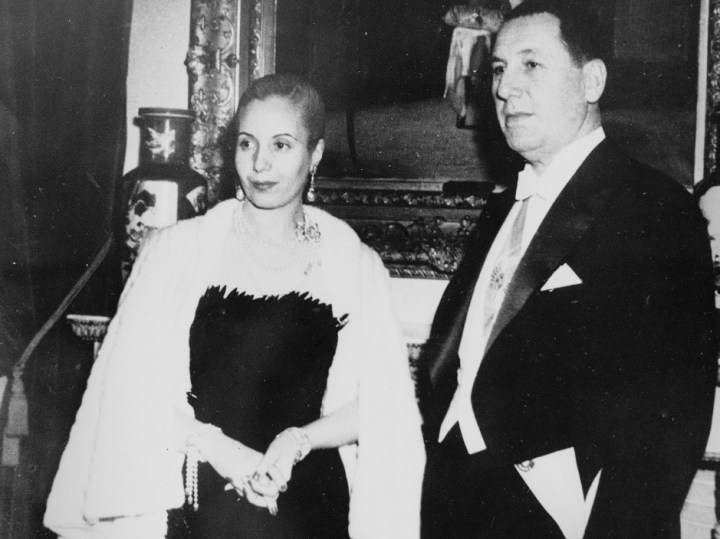
What exactly is Peronism? It is a political doctrine based on a mixture of nationalism and socialism, put forth by Juan Domingo Perón in the wake of World War II. Perón, the original populist, admired the strong-man bond between government and the masses, as seen in Germany under the rule of Hitler and Italy under Mussolini. In Perón’s speech “What is Peronism?” delivered in 1948, he claimed, “I live among my people [as president] so I share all the ups and downs…” (Perón). He sought to redistribute wealth, build up a strong, loyal support base among the poor and the workers, and reject foreign investment. Because he was a charismatic leader who appealed to the poorer masses and called for better working conditions, wages, and state pensions, he and his political ideology quickly gained popularity (Elliott and Cordoba 2023).
To further understand why Peronism gained such traction, it is important to emphasize just how many in Argentina at that time were poor in comparison to the small number of the wealthy. On the eve of World War I, Argentina was considered a developed country, its wealth built on agricultural exports. Its GDP per capita was on par with that of France and Germany, and higher than Spain’s, distinguishing it from all other South American countries. However, the majority of the population was composed of the “descamisados” (translated literally, the people with untucked shirts), a nickname given to the working class who wore their shirts untucked, symbolic of the lower class at a time when it was seen as etiquette to have your shirt tucked in. The extreme divide in wealth and privilege caused resentment to develop between the descamisados and the upper class. Peron’s politics fed off of this animosity, successfully earning him the support of the greater lower class. In his “The Twenty Truths of the Perónist Justicialism” speech in 1950, he declared, “The only privileged ones [in this country] should be the children” (Perón). With messages like these, impoverished Argentinians who for decades had been ignored by the wealthy elites felt they had a leader who could speak for them.
Perón in Power – Short-term Gains
In the years following Perón’s successful election as President in November of 1946, Peronism secured strong support as his government accomplished major, popular changes. One of the most notable was the formation of trade unions in every industry, which remain widespread in Argentina today. The unions aided in protecting workers’ existing rights and achieving new ones (e.g. holidays, paid maternity leave, and job security). For holidays, Perón not only ensured that paid vacations became standard for all workers but also built recreation centers across the country “available to workers for 15 days a year, at the cost of 15 cents per day, all services included” (Columbia University). Women received 3 paid months of maternity leave. By comparison, in the U.S., maternity leave was not made law until 1993 (Vahratian 2009), and paid maternity leave is still not federally mandated. There were also vast improvements made to education rights, with education being made free to all and students given one paid week off before each exam. Considering how many of these positive changes were most significant for young adults, and with younger voting groups tending to lean left-wing, it begs the question as to why the youth of Argentina largely supported the anti-Peronist and far-right candidate Milei in the recent 2023 election.
Perón’s Legacy – Long-term Pains
Simply put, many of the early policies under Perón did not play out well in the long term. Strong unions provided Perón with a power base that became arguably anti-democratic. Perón’s reforms gave the unions a lot of power, with which they were able to prevent legislation that perhaps would have benefited the country. They also created an inflexible labor market that persists to this day. And, of course, there were the financial costs behind these changes, which were not supported by sufficient investment. Reckless redistributive policies “set in motion predictable cycles that first bankrupt the state and then sent off an inflationary spiral and lead to a new government to go begging for a rescue package from the International Monetary Fund” (Toro 2023). In other words, Peronism put in place destructive economic policies that largely consisted of debt-financed wealth redistribution, eventually making everyone poorer.
Argentina was left in a cycle of economic malpractice with the “public sector spending way too much, inflation out of control, and working people getting poorer and poorer with each run-through of the populist cycle” (Toro 2023). Its per capita GDP plummeted and still has yet to recover. A hundred years ago its GDP was 80% of the U.S., while today it is around 30% (Rahn 2010).
While Peronism strives to diminish the divide between the poor and the wealthy, it is not to be confused with socialism. It falls into its own category of “Justicialism” – a mixture of authoritarianism and nationalism. Perón was deeply nationalistic and Peronism frequently employs protectionist policies that in the short-term can have benefits but in the long-term tend to hurt the economy. Argentina has long been associated with its staple diet – beef. For years it supplied the world’s dining tables, but the Peronist government restricted exports regularly and it banned all beef exports in 2021 with the intention of keeping domestic prices low. While most governments around the world try to encourage their local companies to export because it brings money into the country, Peronists chose to artificially reduce prices even though such a measure would negatively affect the economy in the long run. An ulterior reason Peronists perhaps enacted this measure is that landowners and Peronists have always been in conflict. Landowners want to sell the produce of their land on international markets, but Peronists placed high taxes on exports even when exports were allowed. This can be attributed to the Peronist dislike of entrepreneurs and business people, perceiving them as taking goods away from their fellow Argentinians. Before Perón and his legacy, Argentina was the world’s top beef exporter; now, it has fallen to 13th place (Eulich 2015).
When Argentina was a rich country, Europeans were keen to emigrate there. Between 1850 and 1913, the per capita level of immigration was higher in Argentina than in any other country (Droller et. al 2022). Today, after decades of Peronism, about 70% of young Argentinians have expressed the desire to emigrate elsewhere (Sippy 2023). Perhaps it is little surprise then that Milei has had success in basing his platform on rejecting Peronism and wanting to imitate the U.S., adopting the USD and expressing “In 50 years we will be the world’s biggest shanty town. But if you give me 20 [years, we will be like] Germany. If you give me 35: the United States” (Sippy 2023).

Arwen O’Brien is a senior in politics, philosophy, and law taking a minor in Spanish who was born in Buenos Aires, Argentina and now living in Westchester, New York. After growing up in both England and Chile, Arwen is interested in pursuing a career in international politics or journalism. Arwen is a founding member of the Happy Medium Executive Editing Team, serving as its first Marketing Editor and now as its Editor-in-Chief. In her free time, Arwen does tour guiding for the university, works as the project manager for Binghamton’s pilot Constructive Dialogue Program, and skis with Binghamton’s Ski and Snowboard Club.
References
Droller, Federico, Fiszbein, Martín, and Pérez, Santiago. “The Age of Mass Migration in Argentina: Social Mobility, Effects on Growth, and Selection Patterns.” University of California Davis, 2 Aug. 2022, https://seperez.faculty.ucdavis.edu/wp-content/uploads/sites/743/2022/08/Argentina_Migration_Chapter.pdf
Elliott, Lucinda, and Horacio Cordoba. “In Argentina, Three Generations of a Peronist Family Weigh Their Vote.” Edited by Adam Jourdan and Rosalba O’Brien, Reuters, 18 Nov. 2023, http://www.reuters.com/world/americas/argentina-three-generations-peronist-family-weigh-their-vote-2023-11-18/.
Eulich, Whitney. “Where’s the Beef? How Argentina Humbled a Once-Mighty Economy.” The Christian Science Monitor, The Christian Science Monitor, 8 Mar. 2015, www.csmonitor.com/World/Americas/2015/0308/Where-s-the-beef-How-Argentina-humbled-a-once-mighty-economy.
The Legacy of Juan Peron, Columbia University, http://www.columbia.edu/~lnp3/mydocs/state_and_revolution/Juan_Peron.htm. Accessed 8 Jan. 2024.
Perón, Juan. “The Twenty Truths of the Perónist Justicialism” 17 Oct. 1950, Plaza de Mayo. Speech.
Perón, Juan. “What is Peronism?” 20 Aug. 1948, Buenos Aires. Speech.
Rahn, Richard W. “Could the U.S. Become Argentina?” CATO Institute, 21 Apr. 2010, www.cato.org/commentary/could-us-become-argentina.
Sippy, Zachariah. “Why Young People in Argentina Backed Far-Right President-Elect Javier Milei.” The Nation, 30 Nov. 2023, https://www.thenation.com/article/politics/argentina-youth-javier-milei/
Toro, Quico. Argentinians Pick Their Poison, Persuasion, 17 Nov. 2023, http://www.persuasion.community/p/argentinians-pick-their-poison.
Vahratian, Anjel, and Timothy R.B. Johnson. “Maternity leave benefits in the United States: Today’s economic climate underlines deficiencies.” Birth, vol. 36, no. 3, Sept. 2009, pp. 177–179, https://doi.org/10.1111/j.1523-536x.2009.00330.x.
-
German Socialist and Liberal Policies, and Their Influence on Art in the 1960s

As the Berlin Wall divided a nation, the artistic landscape of modern art in the 1960s is represented by a contrast between the German Democratic Republic, or GDR, i.e. East Germany, and the Federal Republic of Germany, or FRG, i.e. West Germany. Walter Ulbricht’s Socialist Unity Party of Germany (SED) in the GDR pursued the ambitious goal of forging a “classless society and the new human being,” (Zils 2023) establishing a governance model that extended its influence over every facet of the republic’s social fabric, encompassing “political, ideological, scientific, technical, economic, and cultural” (Zils 2023) realms. The zenith of this ideological commitment unfolded during the 1959 Bitterfeld Conference, where Der Bitterfelder Weg took shape as a comprehensive initiative. This visionary plan aspired to bridge the gap between workers and intellectuals in the art world, aligning their creative endeavors with the SED’s political platform to address the artistic needs of the common man.
The FRG had no equivalent to Der Bitterfelder Weg, but there was a socially accepted style that artists often didn’t stray from. According to historian Claudia Mensch, the FRG has had a reputation with scholars for being a liberal bastion of artistic freedom, but further analysis shows that this is not wholly true. Pure abstraction, influenced by American artist Jackson Pollock, was the accepted style of modern art at the time in West Germany, but not all artists subscribed to the style. While it’s true that the GDR was repressive artistically, the FRG was not as free as some scholars suggest.
No artwork encapsulates the policies of the GDR more profoundly than Walter Womacka’s Am Strand. Born in Czechoslovakia and later residing in Germany for the majority of his life, Womacka, an unwavering supporter of communism, crafted Am Strand in the vein of East German Socialist Realism. This artistic style was endorsed and propagated by the Association of Visual Artists in the GDR (VBK) and other GDR critics, evolving from the roots of German modernism.

Clad in matching red shirts, Am Strand depicts two figures reclining casually on a beach enveloped in the embrace of warm red sand. The youthful man directs his gaze towards the woman, who, in turn, looks in a different direction. Their fingers lightly graze each other, imbuing the scene with subtle suggestions. In the backdrop, the sea gracefully conjures a tranquil wave, careful not to disrupt the serenity of the tableau. Womacka’s oil strokes meticulously craft a realist painting, distinctly falling within the realm of Socialist Realism, a classification underscored by the pervasive and symbolic use of the color red.
During its creation, independent critics were uncertain about the future trajectory of German Socialist Realism. They critiqued Am Strand as one of the “straightforward depictions or copies totally lacking in sophistication…negative attempts at reaching Socialist Realism through superficial depiction of people, objects, and events” (Mensch 2008, 33). However, state-influenced press and critics celebrated the piece as a triumphant manifestation of Socialist Realism, resonating positively with viewers who deemed it their favorite that year.
Socialist Realism comprised four essential tenets—it sought to be proletarian, portraying art relevant and comprehensible to the working class; typical, depicting scenes from the daily lives of the people; realistic, adhering to representational accuracy; and partisan, aligning with the State and Party objectives (Booker and Juraga 2002). Am Strand echoed these principles.
The impact of this piece extended beyond the confines of the art world; Am Strand was reproduced over three million times as art prints, postcards, and art calendars, and a stamp featuring the artwork in 1968 had a circulation of twelve million (Grennan 2022). This widespread reproduction underscored that Der Bitterfelder Weg was less about addressing the “growing artistic-aesthetic needs of the working people” (Zils 2023) and more about branding—an endeavor to perpetuate an artificial socialist culture in the fledgling state through the mass production of art.
Hailing from the eastern reaches of Germany, Brigitte Reimann entered adulthood within the confines of the GDR. Initiated into the world of literature at the tender age of 14, Reimann etched her mark primarily through her journals, which eloquently captured the GDR’s pervasive influence on the arts, particularly literature, but with an extended impact on the realm of fine arts as well. The entries within these pages vividly illuminate the profound and constraining effect of the GDR’s policies on the artistic landscape of the time. Artistic endeavors faced stringent scrutiny from the “narrow-minded dogmatists” (Reimann 2019, 147) who held sway over the artistic domain; if creation failed to align with their ideologies, it faced exclusion from publication.
Reimann’s poignant narratives shed light on the financial hardships she and her writer-husband, Siegfried (known as Daniel in her diaries), endured in the GDR. The stringent rejection from cultural critics, influenced by state directives, pushed Daniel to the brink of self-destruction, driven by a perceived “failure” (Reimann 2019, 135) as a writer. This perceived failure, however, was a judgment imposed by publishing critics rather than the readers. The critics, guided by state influence, deemed the book’s protagonist as “petty-bourgeois” and labeled the narrative as “un-socialist” (134), leading to its outright rejection.
Following Daniel’s recovery, the couple, desperate for financial sustenance, embarked on the creation of a radio play centered around factory workers, albeit harboring little optimism for its success. Through the implementation of Der Bitterfelder Weg, their radio play garnered state approval and funding. However, this approval came with a stipulation—the couple was mandated to visit the factory setting of their play and instruct the workers in the art of writing. This directive formed an integral part of the approach, deemed a “programmatic development of socialist cultural policy” (Zils 2023) intended to cultivate an independent socialist national culture.
Reimann’s journal style, deeply personal, occasionally expresses intense anger at the GDR and its artistic policies, “Our motto is lying on our desk: ‘Three difficulties when writing the truth: True is whatever the editors believe is true. Beautiful is whatever the editors believe is beautiful. Typical is whatever the editors believe is typical’” (Reimann 2019, 153).
Reimann’s accounts reflect a sense of entrapment, compelled to adhere to every suggestion proffered by socialist editors. Her diaries reveal participation born not out of pride in the art they were producing but out of sheer monetary desperation. This experience serves as a microcosm of the GDR and Der Bitterfelder Weg—a stark choice between conforming to the production of Socialist-approved art and adhering to the prescribed plan or facing inevitable rejection.
Turning attention to an artist who defied the prescribed plan, A.R. Penck, formerly known as Ralf Winkler, offers a compelling case study. Navigating his formative years amidst the division of Nazi Germany into the GDR and the FRG, Winkler, hailing from Dresden, spent the majority of his life as an East German under Soviet influence. According to Mensch, aspiring to carve a path in the artistic realm, Winkler fervently sought admission to the aforementioned VBK. However, persistent denials compelled him to earn a livelihood as a laborer. The rejections from state-sponsored art institutions became a recurring theme for Winkler, a pattern evident from his numerous unsuccessful applications to both the East Berlin and Dresden academies.
In a significant turn of events in 1966, Winkler secured a candidacy to join the VBK. Unfortunately, due to the unconventional nature of his work, his candidacy was rejected just two years later. Faced with repeated setbacks from Soviet art institutions, Winkler adopted the pseudonym A.R. Penck, perhaps as a necessity to shield his notorious art from the party’s scrutiny. This transformation marked him as the “father of alternative art in East Germany” (Mensch 2008, 155). His artistic creations served as both a departure from the prevalent styles of Germany during that era and a rebellion against the sanctioned styles of the Socialist GDR.
Here Penck paints Ein mögliches System (A Possible System) in his distinctive pseudo-cave painting style. On the far right, a figure holds a sign proclaiming “A = Ich; Ich = B,” while a group of imprisoned figures displays various iterations of “A,” enduring the assault of other figures wielding axes. On the far left, dancing figures pay homage to a central figure holding a sign titled “A = Ā,” accompanied by another sign portraying figures embracing and coexisting. The color palette is restrained, dominated by blacks and greys, a hallmark of Penck’s artistic expression.

The SED’s pervasive influence unfolded with diverse consequences, acting as a catalyst for the ascent of some artists, coercing compliance in others, and actively alienating those who deviated from the party’s agenda. Unsurprisingly, this comprehensive agenda failed to yield the envisaged results, prompting the SED to abandon the program in 1964 according to Zils. This pivotal moment marked not only the end of an ideological experiment but also underscored the inherent challenges in reconciling artistic expression with political doctrine in the pursuit of societal transformation. However, in the period of Der Bitterfelder Weg, we can see the desires of artists for a “Third Way,” illustrated in Penck’s Ein mögliches System. A third way, as discussed by Zils, was an economic movement in the FRG in the 1960s that stood somewhere between Western free-market liberalism and Eastern socialism, namely containing a social market economy. However, this “third way” extended further than economics and permeated into the world of modern art.
While these three selected artists and the circumstances of their art portray the GDR as being an inhospitable place for art, one should examine life for artists outside of the GDR. As mentioned earlier, the FRG was always thought of as a place for free artistic expression, but that isn’t the case with artists Eugen Schönebeck and Georg Baselitz. According to Mensch, both were born in the GDR in the 1930s and both left GDR art schools and defected to the FRG in the mid-1950s. Upon arrival to the FRG and enrollment in West Berlin art schools, neither was particularly moved by the abstraction movement, the accepted style of art in the FRG, influenced by Pollock.
Instead, the two artists collaborated on Pändemonisches Manifest II, or the “Pandemonium Manifesto.” In their writings, much borders on incoherence, but an overarching desire for a return to the figure is stated. However, the style of the figure in which they desired to paint was not that of socialist realism, but rather neo-expressionism. This desire to break from the status quo of the FRG is highlighted again in the manifesto “Its condemnation of ‘the amiable’ who proceed ‘by art-historical accretion’ and its rejection of ‘those who can’t wrap art up in a smell’” (Michelli 2012). This “third way” of modernism is shown with Baselitz’s P.D. Stengel or “Pandemonium Stalk.” Painted in neo-expressionism, this was a break from Pollock’s pure abstraction.

Though Baselitz defected from the GDR, it was expected that “artists would certainly abandon the ‘primitive’ tendencies of Soviet-style Realist painting. Why would Baselitz invoke a … figure of Realism… after arriving in West Berlin?” (Mensch 2008, 106). “Stalk” is also extremely phallic, so while the painting revives the figure, something long-dead in FRG art, it depicts the figure in a way that’s also foreign to socialist realism—hence, a third way. Stalk, along with another of Baselitz’s, titled Der große Nacht im Eimer, or “The Big Night Down the Drain” depicts a similar style of figure-focused phallicism. According to the Guggenheim Museum, “In 1963, Baselitz’s first solo exhibition at Galerie Werner & Katz, Berlin, caused a public scandal; several paintings were confiscated for public indecency” (The Solomon R. Guggenheim Foundation 2023) and immorality. After two years of proceedings, the paintings were finally returned to Baselitz.

In the ostensibly free and culturally vibrant Federal Republic of Germany, celebrated as a hub of artistic expression, a perplexing reality emerged. Creative minds, daring to deviate from sanctioned artistic norms, found their works subject to detainment. This occurrence brought to light the repercussions faced by artists who refused alignment with the accepted styles of the state, shedding light on the far-reaching consequences experienced on both sides of the ideological divide. In this seemingly liberated enclave, the censorship of avant-garde expressions served as a stark reminder of the delicate balance between artistic autonomy and prevailing socio-political norms, revealing the nuanced complexities that unfolded within the context of the divided nation.

Malcolm Schultz, Copy Editor and Director of the High School Magazine Development Program (HSMDP), is a Philosophy, Politics, and Law and German double major from Buffalo, NY. Malcolm plans to attend law school after graduating from Binghamton University, and has previously interned with the Buffalo Common Council and the Coppola Firm, a Buffalo-based law firm specializing in personal injury and employment law. His interests include travel, linguistics, and writing and has spent his Spring 2023 semester abroad in Graz, Austria. He edits for the Happy Medium Magazine and writes for Dynasty Football Factory.
References
Baselitz, Georg. Germany 1938 – , Die große Nacht im Eimer (The Big Night Down the Drain), West Berlin, FRG 1962-63, Oil on canvas: 250×180 cm, Museum Ludwig – Cologne, Germany.
Baselitz, Georg. Germany 1938 – , P.D. Stengel (P.D. Stalk), West Berlin, FRG 1962, Oil on canvas: 130×90 cm, Michael Werner Gallery – New York City, United States
Baselitz, Georg. Germany 1938 – , Schönebeck, Eugen. Germany 1936 – , Pändemonisches Manifest II (Pandemonic Manifesto II), West Berlin, FRG 1962, Paper, typewritten, ink drawings: 88×124 cm, Berlinische Galerie – Berlin, Germany
Booker, Keith and Juraga, Dubravka. “Socialist Cultures East and West.” 68. Westport: Praeger.
Grennan, Rosemary. 2022. “Grab your pen, buddy, German socialist culture needs you!” The Left Berlin, September 19. https://www.theleftberlin.com/grab-your-pen-buddy-german-socialist-cultur e-needs-you/.
The Solomon R. Guggenheim Foundation. 2023. “Georg Baselitz.” The Solomon R. Guggenheim Foundation. https://www.guggenheim.org/artwork/artist/georg-baselitz.
Mensch, Claudia. 2008. “Modern Art at the Berlin Wall: Demarcating Culture in the Cold War Germanys.” 32-157. New York: Tauris Academic Studies.
Michelli, Thomas. 2012. “One Paints, the Other Doesn’t.” Hyperallergic, September 22. https://hyperallergic.com/57227/eugen-schonebeck-david-nolan-gallery/.
Penck, A.R. Germany 1939 – 2017, Ein mögliches System (A=Ich) (A possible system (A=I)), East Berlin, GDR 1965, Oil on canvas: 95×200 cm, Museum Ludwig – Cologne, Germany
Pollock, Jackson. United States 1912 – 1956, Number 18, Long Island, United States 1950, Oil and enamel on Masonite: 56×56.7 cm, Solomon R. Guggenheim Museum – New York, United States
Reimann, Brigitte. 2019. “I Have No Regrets: Diaries 1955-1963.” Edited by Angela Drescher, Translated by Lucy Jones. 133-153. New York: Seagull Books.
Womacka, Walter. Czechoslovakia 1925 – 2010, Am Strand (At the beach), East Berlin, GDR 1962, Oil on canvas: 91×116.5 cm, Albertinum – Dresden, GermanyZils, Harald. 2023. “Lecture Slides.” Binghamton University.
-
Roe’s Legacy: Feminism Within the 1970s Abortion Movement
The 1970s—a decade notably defined in the United States by disco beats, bell bottoms, and of course, significant political turbulence. Marked by the legal milestone of Roe v. Wade (1973) that legalized abortion across the nation, the 1970s represents a time of cultural shifts that challenged norms of female reproductive freedom, gender, and sexual liberation. History illustrates how the past often serves as a productive tool to better examine the present, and abortion, as well as the right to privacy, continue to be prominent points of political tension in the modern day. This paper seeks to illuminate the foundations of the United States abortion rights and second-wave feminist movements of the 1970s to illustrate how sentiments of the past continue to shape cultural norms and understandings of women’s autonomy and reproductive freedom in the modern age.
“The Person is Political”
The monumental legalization of abortion in 1973 did not occur within a vacuum. The abortion movement had already been picking up steam before the Supreme Court’s decision, as recognized in a variety of notable works by feminist authors. As the second wave of feminism grew in the United States, new arguments and ways of thought regarding the bodily autonomy of women spread largely through word of mouth, as well as through publications.
“Women and their Bodies” (1970), a 193-page booklet published by the New England Free Press, discussed female sexuality and pregnancy termination innovatively and provocatively. This was a revolutionary publication as it was risky to distribute; abortion was illegal at the time (“Women and Their Bodies” n.d.). Although the procedure was considerably taboo, that did not stop women from taking an interest in the political discussions of female bodily autonomy in the pamphlet. It sold over 200,000 copies despite all selling of the work done completely underground (“Women and Their Bodies” n.d.). The spread of amateur works such as “Women and their Bodies” (1970) was monumental to the feminist movement during the 1970s as such literature contributed to the public opinion of female bodily autonomy shifting more in favor of abortion and birth control becoming socially acceptable.
“The person is political”, a popularized slogan at the time, is often recognized as a defining sentiment for second-wave feminism during the late 60s into the 70s. Originally coined by feminist writer Carol Hanisch in 1969, “the person is political” centered around the notion that individual experiences of bias or discrimination, especially as women or other marginalized groups, are all a part of larger political and societal structures. The paper by Hanisch outlined the intersection of personal experiences and political goals (Hanisch 2006).
As it pertains to women’s liberation, Hanisch insists that women ought to see their common struggles, whether they be related to reproductive freedom, equal pay, or maternal healthcare, as part of a larger system rather than as private or individualized hurdles. Coming together to form a movement, in the eyes of Hanisch, is most necessary in order to tackle outstanding systemic inequalities highlighted by feminist thought. Before the popularization of Hanisch’s phrase, many political areas pertaining to women’s issues were considered to be private in nature, but her work as an activist aided in cultural changes that allowed for women’s issues to be spoken about more openly and authentically.
Hanisch’s impact with her innovative thought on the place of women’s issues in the political sphere also gained popularity in other movements. As the slogan gained more traction and the ideas behind it began to spread, the concept bled into other movements such as the Civil Rights, Student, Anti-War, and Black Power Movements (Hanisch 2006). The transcendence of “the person is political” in these other movements illustrates that personal experiences of discrimination are not isolated, but rather intersected between a person’s identity as it pertains to class, race, and gender. This concept, now understood to be intersectional feminism, has gained more prominence in feminist discourse since the 1970s.
Roe v. Wade (1973) and the Significance of Public Opinion
Although Roe v. Wade (1973) centered around abortion rights, the true nature of the argument taken on by the court was centered around privacy rights. The decision effectively declared a Texas state law unconstitutional–one that identified a fetus as a human being entitled to equal protection under the due process clause of the 14th Amendment. The Texas law thus criminalized abortion procedures unless it was necessary to save the life of the mother (Temme 2022).
The decision was 7-2 and issued by Justice Harry Blackmun in January of 1973. The court found that although the state of Texas has a legitimate interest in protecting human life, the 14th amendment holds a fundamental right to privacy, and the state may not interfere with a woman and her healthcare provider’s decision to terminate a pregnancy within the first trimester (“Roe v. Wade” n.d.)
A fundamental factor of the Supreme Court’s design serves as an attempt for it to remain nonpolitical and uninfluenced by partisanship or public opinion: lifetime appointments–a practice received with mixed opinions by the American public (“Statement of the Court Regarding Code of Conduct” 2023). Some hold the opinion that the structure of the court, including its signature lifetime appointments of justices, is important to protect presiding justices from political pressures that may sway their decision-making. However, others feel the lifetime appointment of justices dismisses the opportunity for judicial accountability and hinders the ability of laws to adjust with the times, properly representing changes to societal norms.
This long-standing debate has been and continues to be intermingled with the abortion movement, as many feel a body of nine non-elected justices should not have a final say in decisions that create irrefutable legal precedent. Legal scholars find that in instances where public opinion is noncongruent with the opinion of the court, policy often tends to “lean more conservative than desired by voters” (Lax & Phillips 2009), and this noncongruence can cause an erosion of trust due to feelings of inadequate representation among the public.
To this point one may ask: if the Supreme Court of the United States is supposed to be non-political in nature, how is it possible that the feminist movement present in the 1970s had any influence on the Court’s decision to legalize abortion? How does mobilization make a difference in a political system where the judicial branch is designed to ignore pressure from the public? To answer, many feminist scholars would argue that although the feminist movement did not directly command the Court’s decision, new and innovative legal arguments in support of the right to privacy as seen in Roe were built upon the growing sentiment within the public that a woman should have the right to decide between motherhood for herself. Legal scholarship supports the idea that public opinion shapes legal outcomes in the Supreme Court, but the exact reasoning or explanation of this phenomenon remains in a bit of a grey area (Epstein & Martin 2012). Although there is speculation, no one will know for certain if the Roe decision was ultimately influenced by this societal shift; however, the impact of the work of feminists during the 1970s continues to shape modern-day legal arguments for abortion and rights to privacy.
Since the era of ABBA and the disco tech, we now live in a world where Roe v. Wade has been overturned (Supreme Court of the United States 2021). The decision in Dobbs v. Jackson’s Women’s Health Organization (2021) found the Constitution to not “…confer a right to abortion” (Dobbs v. Jackson’s Women’s Health Organization n.d.) and this reversal of legal precedent has resulted in nationwide conversations that beg the question as to whether or not the right to abortion access falls under one’s right to privacy. Notably, the Dobbs decision is widely unpopular, and the decision in Dobbs was not met with majority support by the American public (Galston 2022). The discourse regarding the laws of privacy and female bodily autonomy mirrors that of the 2nd wave feminism movement of the 1970s, and looking back at this monumental time in history serves as a guide for new pathways to conversation about this widely contentious policy area.

Amanda Escotto, Managing Editor, is a candidate for a Master of Public Administration through the university’s 4+1 program. She is from Hastings-on-Hudson, New York, and loves to listen to music and paint in her free time. With a background as a copy editor for Happy Medium and previous involvement in two congressional campaigns, Amanda has honed her skills in political communication. She spent the past summer in Washington D.C. assisting a researcher at the Library of Congress. Amanda is especially passionate about congressional procedure, education, elections, and civic engagement. She plans to dedicate her career to the public sector.
References
Dobbs v. Jackson Women’s Health Organization. (n.d.). Oyez. Retrieved December 25, 2023, from https://www.oyez.org/cases/2021/19-1392
Epstein, L., & Martin, A. D. (2012). Does Public Opinion Influence the Supreme Court? Possibly Yes (But We’re Not Sure Why). University of Pennsylvania Journal of Constitutional Law, 13(263), 263–281. https://papers.ssrn.com/sol3/papers.cfm?abstract_id=2087255
Galston, W. A. (2023, June 24). Roe v. Wade overturned despite public opinion. Brookings. https://www.brookings.edu/articles/roe-v-wade-overturned-despite-public-opinion/
Hanisch, C. (2006, January). The Person is Political: The Women’s Liberation Movement with a new explanatory introduction. The personal is political: The original feminist theory paper at the author’s web site. https://www.carolhanisch.org/CHwritings/PIP.html
LAX JEFFREYR, PHILLIPS JUSTINH. Gay Rights in the States: Public Opinion and Policy Responsiveness. American Political Science Review. 2009;103(3):367-386. doi:10.1017/S0003055409990050
Our Bodies Ourselves Today. (2023, November 6). History & legacy. Our Bodies Ourselves. https://www.ourbodiesourselves.org/about-us/our-history/
Roe v. Wade. (n.d.). Oyez. Retrieved December 21, 2023, from https://www.oyez.org/cases/1971/70-18
Supreme Court of the United States Statement of The Court Regarding the Code of Conduct . Supreme Court of the United States. (2023, November 13). https://www.supremecourt.gov/about/Code-of-Conduct-for-Justices_November_13_2023.pdf?wpisrc=nl_powerup
Supreme Court of the United States.Dobbs v. Jacksons Women’s Health Organization (2022, June). https://www.supremecourt.gov/opinions/21pdf/19-1392_6j37.pdf
Temme, L. (2023, March 17). Roe v. Wade Case Summary: What You Need To Know – Findlaw. FindLaw. https://supreme.findlaw.com/supreme-court-insights/roe-v–wade-case-summary–what-you-need-to-know.html
-
The Time of Monsters – Russia’s Failed Experiment With Democracy

Shots rang out across Moscow. The forces loyal to the Parliamentary faction were holed up in the ‘White House’: Russia’s Legislative Building. They shoot volleys of small arms fire at the Russian Military controlled by Russian president, Boris Yeltsin. Yet like two warships in an 18th-century naval engagement, Yeltsin’s army wheeled out its great cannons and returned a volley to the defenders. Tanks have been deployed along the historic Novy Arbat bridge as well as a nearby playground and have just shelled the top floors of the White House (Felkay 2002). As thick black smoke billows into the sky, the president’s forces stormed the Parliament to the sound of more gunfire. The political change is palpable; Russian democracy is dead, and while no one knows it yet, the path has been laid for a new unknown political actor named Vladimir Putin to take and hold power. To fully understand this event, we must first examine the period when Russian democracy was an almost achievable dream and it seemed that the end of autocracy was near. We know how this story ends, but where does it begin and when did things go so terribly wrong?
Italian philosopher Antonio Gramsci famously said, “The old world is dying while the new world struggles to be born: now is the time of monsters” (Zizek 2010). Here Gramsci was referencing the tumultuous conditions during the 20th century at the end of the First World War and the beginning of the Second. It is equally applicable to Russia in the early 90’s. Here we have a situation in which the Cold War, the driving ideological conflict of the latter half of the 20th century, had ended with the defeat of the USSR and the fall of the Iron Curtain in 1991. Yet the Russia we know today, defined by Putin’s personalistic dictatorship, had not been created yet. It would not be for another 6 years when the aging Yeltsin would choose the up-and-coming politician as his replacement to save him and his family from his political opponents (Rutland 2000).
So what happened in the two short years from 1991 to 1993? Why did they end with the chaos just described and increasing autocratic rule? The simple, perhaps surprising answer is democracy–or at least the closest Russia has come to democracy in modern history. Understanding the failure of Russia’s democratic experiment is key to unraveling the years that followed. Russia today is without question a deeply personalistic, autocratic state, these two years can serve as to part of an explanation for why that is. More importantly, it is a period we can learn from. Examining the failures of democracy, may, when the time is right inform new growth toward democracy in Eastern Europe by allowing us to learn from old mistakes.
The tail end of 1991, and the years leading up to it was an exciting change for Russians and the world alike. The great behemoth of unchanging soviet bureaucracy faltered and fell as the great gears of change started to gradually turn. For much of the 20th century, the Soviet Union had been, as Alexei Yurchak calls it, an ‘Eternal State.’ Nothing changed–reform never came, and the state itself was believed to be immortal. It was only when Gorbachev’s monumental democratic-leaning reforms were well underway that illustrated to the public that change was coming. A sense of excitement then gripped the Russian people, inspiring a literary and political renaissance (Yurchak 2005). It reached a fever pitch with the simultaneously dramatic yet then-expected collapse of the USSR.
March of 1991 would also see another major event in the history of the short-lived Russian democracy. The popular democratic reform politician Boris Yeltsin would call for elections for a Russian President within the USSR. In June the election took place, with Yeltsin winning a decisive victory, having held 57% of the vote out of 6 candidates (Felkay 2002). Yeltsin’s victory was driven by him being the antithesis of all that the USSR had represented; an outspoken advocate of a Western style of democratic government and capitalism.
However, Yeltsin and his liberal reform supporters would face an incredible challenge that would color the rest of his presidency and remain a mark on Russian politics today. This was due to his infamous economic reforms. Russia had never been an industrial capitalist nation like those of Western Europe and the United States. Its most recent transition was from a semi-feudal monarchy into a rapidly industrialized communist state. Yeltsin, however, was eager to catch up to the rest of the world, and his solution was removing most market restrictions to promote rapid capitalist integration; or as it is more commonly called today, “shock therapy”.
Yeltsin’s Monster, the Troubles of A New Economy
All are familiar with the story of Frankenstein, where an obsessed scientist revives a long-dead amalgamation of beings using electricity. Victor Frankenstein would of course be shocked and horrified by his creation as he did not create a functional human being as he had intended, but something else, a monster. Yeltsin, though, perhaps unfamiliar with the story had a very similar idea to the fictional Victor Frankenstein. The Soviet Economy existed as a behemoth heavy industrial system, but one that was ill-suited for the modern world. Perhaps with a decisive shock of Western-style capitalism, this behemoth would once again rise. This of course was not what happened, instead, a monster was created.
The Shock Therapy strategy had many foreign supporters–including the IMF and American economists. They, along with many Russians in the Yeltsin Administration, were hopeful that it would energize the old struggling Soviet system and promote modernization (Rosalsky 2022). Unfortunately, this shock, instead of reviving the soviet economy, gave it something more akin to a heart attack. Almost immediately, the country would be gripped by massive inflation, devastating the personal finances of millions of Russians. A candy bar that would have been $1 in 1990 skyrocketed to an eye-watering $2000 only four years later (Rosalsky 2022). Despite the general population’s suffering and increasing government dissatisfaction, Yeltsin’s chief economic reform advisors, Yegor Gaidar, and Anatoly Chubais, pushed him to continue the shock strategy, thinking this period of struggling was necessary to achieve stable economic growth (Goldman 2004).
To help jumpstart business development Yeltsin, Gaidar, and Chubais created a scheme nicknamed “Loans for Shares.” Under this policy, the state would auction off its plethora of resources through private banks to enter the private sector. However, when implemented in a society defined by corruption and backroom contracts, the distribution was unfair. The banks would sell off the bulk of resources to deeply connected Russians who often had outsized control. This led to a new hyper-wealthy class of Russians who illicitly took control of formerly state-owned resources at a time of already extreme economic distress (Goldman 2004).
This new class of Russians used their wealth to increase their political influence, and in turn increase their wealth, as evidenced by their ‘generous’ campaign contributions that allowed Yeltsin to have a hold on power up till 1999 (Rosalsky 2022). Thus, a new class of Russian nobility was born, who utilized their wealth even more ostentatiously than the nobles of Tsarist times. Meanwhile, the quality of life plummeted for the majority of Russian people. The average life expectancy of an adult Russian man dropped from 65 before the collapse of the USSR to around 57 in 1993. The largest cause of this decline was the loss of key social programs and a sharp rise in alcoholism. Yeltisin’s reforms, once shining symbols of hope to Russians, were now undoubtedly the cause of a deep economic spiral, which would not start to recover until 1995 (Shkolnikov et al. 2001).
While this occurred, Russian democratic politics grew to be increasingly unstable. Yeltsin and his Western-style economic reforms had fallen into cronyism and the hope at the start of the decade had soured into a national bitterness. This was reflected in the legislature, where two highly unlikely bedfellows, the communists, and the nationalists, formed a broad coalition to remove Yeltsin from power. As time went on more parliamentarians joined the cause, leading to a notably massive multi-partisan political movement with the singular goal of stopping Yeltsin. Yeltsin attempted to extinguish this by dissolving the Russian Congress of People’s Deputies and Supreme Soviet in September 1993 (Brown 1996).
So dire was the atmosphere of Russian politics that the dissolution of the Russian Parliament, a highly unconstitutional policy, was on the table. At this point, Yeltsin truly had nowhere to turn. Yet the Russian Parliament was not dissolved, and increasing disagreement between the legislative and executive branches would continue to swell until one month later. On October 4th, 1993, while the Parliamentarians and their armed supporters were holed up in the Russian white house, Yeltsin made the shocking order for tanks to fire on the building (Brown 1996). The next day the siege was over and Yeltsin had taken a massive step into unknown, unconstitutional territory.
Following a common strategy of authoritarian leaders when the constitution no longer allows for their actions, Yeltsin decided to write a new constitution, signaling another move towards autocracy. The new constitution was approved by the now-pacified legislature with no further debate. This constitution, in keeping with Yeltsin’s most recent actions, massively increased the power of the executive (Brown 1996). An agreement was made that everyone would abide by the constitution until 1996 when the next election would take place, an election that Yeltsin would win thanks to the support of his Oligarch backers.
With that, Russia’s tumultuous democracy had effectively ended. The executive held nearly all official power while a tremendous amount of unofficial power lay in the hands of the oligarchs. These two new powerful forces in modern Russia were the strategic webs of alliances that Putin would take over in 1999, and use effectively to further strengthen his position. For any cynical observers of Eastern Europe, this was an event that would substantiate the view that any attempt at a Russian democracy was doomed to fail.
Democracy was a flash in the pan, a brief shout from a people who thought that at long last, they could have a government for the people. However is this the end? Will democracy ever see the light of day in Russia again? These questions, unfortunately, remain unanswered. One day, perhaps after learning from the mistakes of the past, democratic reformers will arise again, and awaken the dream of 1991. If this democratic dream reemerges it must be a new Russian form of democracy and not an attempt at westernization.
Attempting to build a Western liberal capitalist state in Russia failed because at its core Russia was not ready for such a dramatic transformation. The first step that must be taken would be the rooting out of the deep corruption that allowed for the oligarchical class to emerge. It is these feudal patron-client ties between oligarchs and politicians that led to the violent usurpation of Russian democracy. Russia must not and should never have been shocked into a new political and economic system, instead if this dream is revived it should follow a path of gradual reform and acclimation. Perhaps the ultimate lesson here is that while Rome was not built in a day, it took only two years for Moscow to leave democracy behind and again feel the tight grip of an autocrat.

Matthew Beylinson is a political science and classical civilizations double major from Staten Island, NY. He is in his junior year and hopes to attend law school and eventually work in international law or government. Outside of Happy Medium, Matthew is a member of the History Club, Rowing Club, and works as a bus driver for OCCT. He is fluent in Russian and specializes in Post-Soviet politics and the analysis of autocratic and totalitarian regimes.
References:
Brown, Archie. 1996. “The Russian Transition in Comparative and Russian Perspective.” The Johns Hopkins University Press 63(2): 403–15.
Felkay, Andrew. 2002. Yeltsin’s Russia and the West. Westport, CT: Praeger.
Goldman, Marshall I. 2004. “Putin And The Oligarchs.” Foreign Affairs 83(6): 33–44. doi: 10.2307/20034135.
Rosalsky, Greg. 2022. “How ‘Shock Therapy’ Created Russian Oligarchs and Paved the Path For Putin.” NPR. https://www.npr.org/sections/money/2022/03/22/1087654279/how-shock-therapy-created-russian-oligarchs-and-paved-the-path-for-putin (December 2023).
Rutland, Peter. 2000. “Putin’s Path to Power.” Post-Soviet Affairs 16(4): 313–54. doi: 10.1080/1060586x.2000.10641490.
Shkolnikov, Vladimir, Martin McKee, and David A Leon. 2001. “Changes in Life Expectancy in Russia in the Mid-1990s.” The Lancet 357(9260): 917–21. doi: SS10.1016/s0140-6736(00)04212-4.
Yurchak, Alexei. 2005. Everything Was Forever, Until It Was No More: The Last Soviet Generation. Princeton, NJ: Princeton University Press.Zizek, Slavoj. 2010. “A PERMANENT ECONOMIC EMERGENCY.” New Left Review 64.
-
The War on Terror and its Impact on the Trust of Politicians in the 2000s

By Bryan Goodman
Photo: Aidan Bartos on UnsplashIntroduction
Early American foreign policy focused on isolationism: a “don’t bother us, and we won’t bother you” style of policy. Washington warned us of entangling alliances, but nearly 250 years later, the United States has not adhered to his warning. With various alliances developed militarily and economically, the United States – as well as the entire world – is more entangled than ever. These alliances have undoubtedly pulled various nations into different conflicts they may not have necessarily wanted to be directly involved in, and have had their own repercussions domestically as a result.
There are few days where nearly everyone remembers exactly where they were and what they were doing. For most Americans, September 11, 2001 is undoubtedly one of those days. The deadliest terrorist attack on American soil brought together the citizens of nearly every racial and economic group in a “rally around the flag” effect not seen in decades. In the months immediately following the attacks, no organization, group, or country took responsibility, but the U.S. government and its intelligence agencies had already determined it was Al-Qaeda, an “Islamist organization founded by Osama bin Laden in the 1980s … one of the world’s most notorious terrorist organizations” (Britannica, 2023). It took until 2004 for bin Laden to formally claim responsibility for the attacks in a recorded video released just four days before the United States Presidential election.
Immediately following the attacks, the War on Terror was launched. It began when the U.S. Congress authorized the use of military force (AUMF), granting the President authority to do whatever is necessary and required to fight back against those responsible for the September 11 attacks as well as to prevent any future acts of terrorism against the United States (Public Law 107-40-Sept. 18, 2001). The AUMF joint resolution passed the Senate unanimously, 98-0, and passed the House nearly unanimously, 420-1. The lone member of the House of Representatives to vote against the AUMF was Congresswoman Barbara Lee of California.
Representative Lee faced an unquantifiable level of backlash for her lone ‘No’ vote against the AUMF. This backlash included so many death threats that she had a police protective detail for the immediate time following her vote. Lee defended her position by saying this on the House floor: “However difficult this vote may be, some of us must urge the use of restraint. Our country is in a state of mourning. Some of us must say, ‘Let’s step back for a moment, let’s just pause, just for a minute, and think through the implications of our actions today, so that this does not spiral out of control.’ ” (Brockell, 2021).
Afghanistan
In his September 20, 2001 address to Congress, President Bush put forward a list of demands to the Taliban, the ruling group in Afghanistan. These demands included handing over Al Qaeda leaders sheltered in Afghanistan, releasing all imprisoned foreign nationals, protecting journalists, diplomats, and aid workers, closing “terrorist” training camps, and giving the US access to all such camps to ensure their closure. Bush warned of the punishment for non-compliance: “Our response involves far more than instant retaliation and isolated strikes. Americans should not expect one battle, but a lengthy campaign unlike any other we have ever seen” (CNN Transcript 2001). He additionally issued a stark warning to any nations providing aid or safe haven to Al-Qaeda members and gave them an ultimatum: you are either with the U.S., or with the terrorists. Bush warned that any nations who provided such aid or safe haven would be treated as a hostile regime. The Taliban ultimately did not surrender the Al-Qaeda network within its border, prompting the U.S. invasion less than a month later.
The U.S. invasion of Afghanistan began on October 7, 2001 with a heavy bombing campaign. The U.S. gathered a strong coalition of allies to launch the invasion including Australia, Canada, France, and Germany. By mid-November, the capital city Kabul fell to the coalition forces, with Al Qaeda in full retreat. Afghan militias tracked bin Laden to a cave complex in Tora Bora and engaged in a two week long battle with Al Qaeda, ending in Bin Laden’s escape into Pakistan (Council on Foreign Relations, The U.S. War in Afghanistan).
This missed opportunity to subdue a large swath of the Al Qaeda network was a miscalculation that certainly prolonged the conflict and U.S. presence in Afghanistan. Following the collapse of the Taliban as a governing body, an interim government was appointed in late 2001, which remained until a transitional government was established in the summer of 2002 (Council on Foreign Relations, The U.S. War in Afghanistan). In May of 2003, U.S. Secretary of Defense Donald Rumsfeld “declared an end to ‘major combat’” (Council on Foreign Relations, The U.S. War in Afghanistan). NATO (North Atlantic Treaty Organization) assumed control of international security forces in Afghanistan, marking the first commitment from NATO outside of Europe (Council on Foreign Relations, The U.S. War in Afghanistan). 2004 brought a constitution to Afghanistan, as well as its first democratically elected head of state, evidencing the strong influence of democratic nations on its restructuring.
In the years after Osama bin Laden’s 2004 video officially claimed responsibility for the September 11 attacks, violent insurgencies began to appear more frequently throughout Afghanistan. These insurgencies were fueled by the lack of services provided to the Afghani population, the difficulty in setting up a police force, and lack of international forces to assist in security (Council on Foreign Relations, The U.S. War in Afghanistan). The NATO coalition began withdrawing, setting a target date of 2008 for the Afghans to start taking control of their security (Council on Foreign Relations, The U.S. War in Afghanistan).
In 2008, President Barack Obama was elected 44th President of the United States. Within the first 30 days, he announced plans for a troop surge that would see a drastic increase in activity in Afghanistan to counter a resurgent Taliban. President Obama committed to sending an additional 30,000 forces in December 2009, bringing the total up to 98,000 in the region, with a troop drawdown established for 2011 (Council on Foreign Relations, The U.S. War in Afghanistan).
American presence in Afghanistan continued interminably until August of 2021, when President Joe Biden withdrew American forces from Afghanistan. The task was not simple, nor did it bring long-awaited stability to the region; the U.S. was faced with a chaotic and catastrophic withdrawal that saw the deaths of thirteen Marines along with over 100 Afghanis in a suicide bombing attack outside an airport in Kabul. Almost immediately following the U.S.’s withdrawal, the Afghani government collapsed. 20 years of war, occupation to root out the Taliban, and progress to democratize Afghanistan was gone in a matter of weeks.
Iraq
On October 10, 2002 the United States House of Representatives passed an Authorization for Use of Military Force Against Iraq by a vote of 296-133 (Clerk, U.S. House of Representatives 2002), with a smaller margin of support than the AUMF that was issued for the broader War on Terror following 9/11. The AUMF passed the Senate the next day 77-23 (U.S. Senate 2002). Nearly all opposition in both the House and Senate came from the Democratic Party. The resolution was justified by the allegation, “members of Al Qaeda, an organization bearing responsibility for attacks on the United States, its citizens, and interests, including the attacks that occurred on September 11, 2001, are known to be in Iraq” (Public Law 107-243).
Before the invasion began, the United States Secretary of State Colin Powell addressed the United Nations Security Council, explaining the rationale for the Iraq War and attempting to gather a broad coalition of support for the effort. He stated, “My [second] purpose today is to provide you with additional information, to share with you what the United States knows about Iraq’s weapons of mass destruction, as well as Iraq’s involvement in terrorism” (U.S. State Department Transcript). Powell also stated in his address “Indeed, the facts and Iraq’s behavior show that Saddam Hussein and his regime are concealing their efforts to produce more weapons of mass destruction” (U.S. State Department Transcript). Powell, who was personally a critic of this plan to invade Iraq, additionally reassured the world of the verifiability of his claims. “These are not assertions,” he said. “What we are giving you are facts and conclusions based on solid intelligence” (U.S. State Department Transcript). The U.S. began its invasion of Iraq in March of 2003.
Within three weeks of the initial invasion, Iraqi civilians and U.S. soldiers toppled a statue of Iraq’s ruler, Saddam Hussein, in Baghdad, symbolically ending the conflict (Council on Foreign Relations, The Iraq War). In May of 2003, President Bush declared an end to the major combat portion of the invasion, with a banner on a US Navy ship reading “Mission Accomplished” in the background. By the end of May 2003, the Iraqi Army and Iraqi intelligence services were disbanded by L. Paul Bremer III, who served as the head of the Coalition Provisional Authority in Iraq. This decision would lead to hundreds of thousands of military trained Iraqis being released into the general population – an action with lasting repercussions (Council on Foreign Relations, The Iraq War).
Saddam was captured by U.S. troops in December of 2003. He would later be convicted of crimes against humanity and was sentenced to death. On December 30, 2006, Saddam was executed (Council on Foreign Relations, The Iraq War).
Less than a year after the invasion, the Bush administration admitted that their arguments and evidence for weapons of mass destruction were mistaken. “A presidential commission concludes in March 2005 that ‘not one bit’ of prewar intelligence on Iraqi weapons of mass destruction panned out” (Council on Foreign Relations, The Iraq War). There were large scale protests against the war at the time, even before it was discovered that there were no WMDs. President Bush faced attempts of impeachment by House Democrats which were unsuccessful. The first four articles of impeachment explored included illegally creating a case for war, falsely representing Iraq as responsible for 9/11 and falsely representing Iraq as an imminent danger to the U.S. The false pretense for the war in Iraq and its destabilization of the region has been weaponized politically against multiple presidential candidates. The United States withdrew its forces from Iraq by the end of 2011, bringing to an end the foreign occupation.
The chaotic exit of U.S. forces from Afghanistan, compounded with the never discovered WMDs in Iraq have created an environment ripe for distrust in the foreign policy establishment in the United States.
Political Backlash
While at the beginning of the War on Terror there was near universal support, as time went on, the public grew frustrated with the decisions that political leaders were making both in the US and abroad. The British Labour Party has not been in the majority in the British House of Commons since 2010. Labour dominated British politics in the early 2000s, but Prime Minister Blair’s unwavering support for the U.S. and its doctoring of truth – in support of the invasion did not come without consequence. These actions have led to increasing distrust of the government among the British public (Wintour 2023). This issue was not solely limited to Great Britain, however. In the United States, following the September 11 attacks, President Bush saw his approval rating skyrocket to levels never seen before. According to Gallup polls, Bush peaked in his approval ratings at 90% in the week following the attacks (Gallup). Bush rode this mighty approval rating through the 2002 midterms. Though it did cool off and dip into the 60s where it plateaued through the elections. Republicans expanded their majority in the House and regained control of the Senate. This was the first midterm election since 1934 where an incumbent President’s party gained seats in both houses of Congress (Wikipedia).
The “rally around the flag” effect that developed after the attacks is arguably what kept Bush in office after the 2004 presidential election. Bush’s approval rating around election day was in the low-to-mid 50% (Gallup), which proved to be enough to propel him to a second term in the White House. The 2004 presidential election in the U.S. was nearly as close as the 2000 election. President Bush beat Senator John Kerry in the Electoral College, 286-251, and also secured the first popular vote victory for Republicans since George H.W. Bush in 1988 (Wikipedia). As far as approval ratings go, Bush almost immediately saw a decrease once his second term commenced. Towards the end of 2005, his ratings fell into the low 40s and by the summer of 2006, just mere months before the 2006 midterms, his ratings dropped into the 30s (Gallup).
The timing of his decreases in approval could not have been worse for Bush. He had led the country into two large-scale military operations in the Middle East, with the aim of retaliating against those responsible for the September 11 terrorist attacks. Since the administration had all but guaranteed Iraq had weapons of mass destruction, the public began to grow concerned about the possibility that they were misled or lied to about the existence of such weapons. As a result of his declining approvals and poor results in the two conflicts, the 2006 midterm elections were an utter disaster for Bush and his Republican Party.
In the House, Republicans lost 30 seats as well as the majority, handing the Speakers’ gavel back to Democrats for the first time since the early 90s (Wikipedia) . In the Senate, Republicans lost six seats, as well as their majority (Wikipedia).
In the last two years of his presidency, Bush’s approvals went into free fall. It held steady in the low 30s and sometimes even the high 20s (Gallup). This was not solely due to the wars and occupations, however. There was the Great Recession which began under Bush’s watch, as well as an unpopular legislative agenda. The downward trend of approval for Bush led to a Democratic landslide in the 2008 elections. Democrats expanded their majorities in the House and Senate, gaining a ⅗ supermajority in the Senate, as well as a resounding victory in the presidential election from Senator Barack Obama.
The extreme turbulence of the early 2000s along with the missteps of leadership by politicians ultimately led to this change in administration. However, it created a larger problem – an overall loss of faith in government by some. The 2000s can be pinpointed as a shift in view for many Americans, splitting the American political sphere into various factions that have only continued to grow to this day.

Bryan is a recent graduate of the Binghamton Master of Public Administration program. He served as the Political Director for Happy Medium from February 2022 through May 2023. He has worked in fair housing, and as the campaign manager for a slate of candidates in his hometown of Mount Pleasant, New York. Bryan’s interests include elections as well as legislative and judicial politics. He has written several articles for Happy Medium in the past covering the Supreme Court and the 2022 Midterm elections
References
2001. “Transcript of President Bush’s address.” 2001. CNN, September 21. https://edition.cnn.com/2001/US/09/20/gen.bush.transcript/2024 “al-Qaeda” Encyclopedia Britannica, January 12. https://www.britannica.com/topic/al-Qaeda
“2002 Midterm Elections” Wikipedia https://en.wikipedia.org/wiki/2002_United_States_elections
“2004 Presidential Election” Wikipedia https://en.wikipedia.org/wiki/2004_United_States_elections
“2006 Midterm Elections” Wikipedia https://en.wikipedia.org/wiki/2006_United_States_elections
Brockell, Gillian. 2021. “She was the only member of Congress to vote against war in Afghanistan. Some called her a traitor” The Washington Post, August 17. https://www.washingtonpost.com/history/2021/08/17/barbara-lee-afghanistan-vote/
Clerk, 2002. U.S. House of Representatives, October 10. https://clerk.house.gov/evs/2002/roll455.xml
“How Iraq war destroyed UK’s trust in politicians and left Labour in turmoil.” 2023. The Guardian, March 20. https://www.theguardian.com/world/2023/mar/20/iraq-war-destroyed-uk-trust-politicians-labour-turmoil-tony-blair
Pilkington, Ed. 2009. “Rumsfeld let Bin Laden escape in 2001, says Senate report.” The Guardian, November 29. https://www.theguardian.com/world/2009/nov/29/osama-bin-laden-senate-report
Powell, Colin L. 2003. “Remarks to the UN Security Council” U.S. Department of State, February 5. https://2001-2009.state.gov/secretary/former/powell/remarks/2003/17300.htm
“Public Law 107-243.” 2002. 107th Congress, October 16. https://www.govinfo.gov/content/pkg/PLAW-107publ243/html/PLAW-107publ243.htm
“Public Law 107-40” 2001. 107th Congress, September 18. https://www.govinfo.gov/content/pkg/PLAW-107publ40/pdf/PLAW-107publ40.pdf
“Presidential Approval Ratings – – George W. Bush” Gallup. https://news.gallup.com/poll/116500/presidential-approval-ratings-george-bush.aspx
“Roll Call Vote 107th Congress – 2nd Session.” 2002. U.S. Senate, October 11. https://www.senate.gov/legislative/LIS/roll_call_votes/vote1072/vote_107_2_00237.htm
“Timeline: The Iraq War.” Council on Foreign Relations. https://www.cfr.org/timeline/iraq-war Wintour, Patrick.
“The U.S. War in Afghanistan.” Council on Foreign Relations. https://www.cfr.org/timeline/us-war-afghanistan
-
Writers on Strike
On May 1, 2023, the Writers Guild of America (WGA) announced that it couldn’t reach an agreement with the Alliance of Motion Picture and Television Producers (AMPTP). Thus, beginning at 12:01a.m. PT on May 2, the WGA officially went on strike.
The Original Demands
Four of the most crucial WGA demands, which were emphasized by union members, include: (1) an increase in minimum rates, (2) viewership-compensation for streaming residuals, (3) preserving the writers’ room and duration of employment and (4) addressing concerns regarding artificial intelligence.
Minimum Rates
These demands stem from the fact that a career in television and film writing has grown to be no longer sustainable. Adjusting for inflation, most writers are making less than they were ten years ago. According to the Associated Press, “Accounting for inflation, writer pay has declined 14% in the last five years. The median weekly writer-producer pay is down 23% over the last decade, with inflation factored in.” Many writers have been forced to find second jobs.
Caroline Kwan is a WGA and SAG-AFTRA member who also livestreams daily on Twitch. Throughout the strike, Kwan informed her over 2,000 concurrent viewers about why the strike happened, any updates that occurred, and would even stream going to picket lines in Los Angeles. “Everybody looks at the WGA and is like ‘you guys are just whining about not being super rich,’” Kwan said on a stream from a WGA rally. “But that’s not the case at all. So many people are having to work a second job in something that should be just, your only job.”
Streaming Residuals
Streaming residuals are an issue that significantly contributed to both the WGA and SAG-AFTRA strike. Briefly, residuals are payments writers and actors receive for a television show or movie after it originally premiered. The way people consume content has drastically changed over the past decade. With the rise of platforms like Netflix, Hulu, Max and numerous others, fewer people are watching broadcast and cable television in favor of streaming. In July 2022, streaming outperformed both the traditional forms of television, cable and broadcast (Davis 2022). However, the way writers’ and actors’ residuals are calculated has not caught up with the dominance of streaming.
Residuals are much lower than they used to be. While residuals from cable reruns are based on the amount of times the episode or movie is aired and viewed, streaming residuals are based on the number of subscribers the streaming service has (Anders 2023). No matter how many times a show is viewed on a streaming service, the writers and actors are paid a flat fee. A writer for the fourth season of Stranger Things, which crossed 1.35 billion hours viewed in its first 28 days on Netflix, would receive the same amount of residuals as a writer for a much less successful show (Dellatto 2022).
Fighting Against Mini Rooms
Over the past several years, studios have been aiming to shift how a television show is written. One example of this is the increased use of mini rooms. A traditional writers’ room usually consists of seven or eight writers while a mini room contains only two or three writers. For a show in development, along with the pilot episode, writers in a mini room will also typically have to write a number of additional scripts for the same rate—even before the show is greenlit. Networks or streaming services may also establish a mini room and request scripts for an ongoing show to determine if it should be renewed (Maas et al. 2023). One of the biggest issues with this model is that if the show is not picked up or renewed, the writers would have wasted eight to ten weeks of their time, during which they turned down other jobs. Moreover, even if the series gets ordered, the mini room writers will often not be involved in the production or post-production of the show.
The WGA asserted that the increased separation of writing and production has hindered any possibility of growth for new writers. In addition to the fact that mini room writers are paid less, new writers will not get the experience and mentorship of working throughout the production process. Without that experience, young writers would struggle to eventually advance to showrunners. Furthermore, in the past, writers were always involved throughout production.
Kwan goes on to illustrate the implications for writers with this separation by explaining how the final version of scripts goes through extensive changes before use on set, leaving writers limited in their involvement outside of the writing room. “Sometimes they’re over budget so they have to consolidate. Sometimes actors are like ‘this isn’t working with my character.’ So writing is happening from start to finish throughout the entire production and post production.”
Artificial Intelligence
With the rise of sophisticated artificial intelligence (AI) tools such as ChatGPT, another major concern of the WGA regards AI and regulating its use. Many writers fear that studios and production companies will seek to use AI in order to save money or use AI to completely write a script, then hire a real writer to revise it. Reuters reported in August that before the strike started, Disney “created a task force to study artificial intelligence and how it can be applied across the entertainment conglomerate, even as Hollywood writers and actors battle to limit the industry’s exploitation of the technology,” (Chmielewski and Hu 2023). Just two months prior to this report, Disney sparked controversy when it used AI to generate the opening credits of the Marvel Disney+ show Secret Invasion.
“It’s not so much about what AI is going to do, but what companies are going to use AI to justify,” Sarah Myers West, the Managing Director of AI Now Institute told Time. “They could use AI to create a first draft and then bring in someone else to do a second draft. And that devalues their work by not having them do that whole process.”
Public Opinion
Even outside of the industry, the Union has always had support from across political parties. Polling released by Rob Todaro and Lew Blank from Data for Progress found that a majority of likely voters supported both the WGA and SAG-AFTRA, with 67% of likely voters in support of strikes and only 18% opposed. Even among those polled who held an unfavorable opinion of labor unions, a plurality (48%) supported the strikes.
Additionally, 59% of voters say they have an unfavorable opinion of the major Hollywood studios after learning that they rejected the demands of the WGA and SAG-AFTRA. The studios’ favorability also took a hit when insider studio executives told Deadline in July that they planned to “break the WGA.”
“The endgame is to allow things to drag on until union members start losing their apartments and losing their houses,” (Patten 2023).
International Support
Support for the WGA goes beyond those in the United States. When the strike began, the Writers’ Guild of Great Britain (WGGB) informed its members that they were not to accept work on United States productions for the duration of the strike, and in doing so actors would be considered crossing the picket line and subsequently blacklisted (Goldbart 2023). The Writers Guild of Ireland (WGI) also recommended to its members that they show the same solidarity in not accepting work from an American company.
Additionally, June 14 marked the International Day of Solidarity for the strike, branded as “Screenwriters Everywhere,” which was organized by the Federation of Screenwriters in Europe, International Affiliation of Writers Guilds, and UNI Global Union; combined, these organizations represent roughly 67,000 film and TV writers worldwide (Veltman 2023). Events were held in numerous countries, including Argentina, Belgium, Colombia and more. The general delegate of La Guilde des Scenaristes Marie Roussin spoke at an event in Paris about how the issues the WGA faces in the United States are also felt internationally.
“We’re not yet seeing so many French producers using AI but we need to be prepared for it because it’s coming,” Roussin said. “We don’t want them to start offering screenwriters €1000 [$1083] to rework six episodes written by an AI app. The WGA is fighting so that writers will get credited and paid for their scripts even when AI is involved, and we want to do the same in France,” (Keslassy et al. 2023).
The Historic Deal
On Sept. 24, the WGA announced that a tentative agreement was reached, writing in an email to members that the deal is “exceptional—with meaningful gains and protections for writers in every sector of the membership.” The strike officially ended at 12:01a.m., PT on Sept. 27 after 148 days. In each of the key demands, the WGA made remarkable gains.
Minimum Rates
At the beginning of negotiations, the WGA proposed annual increases over the next three years of 6%-5%-5% for all minimums including residual bases. The AMPTP offered 4%-3%-2% and a one-time increase to most residual bases of 2% or 2.5%. In the tentative agreement, the WGA secured increases of 5%-4%-3.5% for most minimums (WGA 2023).
Residuals
While the AMPTP initially refused to even discuss the notion of performance-based residuals and more transparency regarding program viewership, it eventually relented on the issue. For a movie or series that is viewed by 20 percent or more of a platform’s domestic subscribers in the first 90 days, or during a 90-day window in a new calendar year, writers will receive “a bonus equal to 50% of the fixed domestic and foreign residual.” As for streaming data transparency, the AMPTP agreed “to provide the Guild, subject to a confidentiality agreement, the total number of hours streamed, both domestically and internationally, of self-produced high budget streaming programs (e.g., a Netflix original series),” who can then share aggregated information (WGA 2023).
Fighting Against Mini Rooms
On the issues of both preserving the writers’ room and the duration of employment, the AMPTP rejected the WGA’s original proposals and refused to make counter offers. However, an agreement was eventually reached. With the new deal, a show in development that has more than three writers will require a minimum staff of three writer-producers that are guaranteed at least ten consecutive weeks of work. A post-greenlight writing room will have minimum staff requirements based on the episode order, unless a single writer is employed to write all episodes of a season. Writers in post-greenlight rooms will be guaranteed either at least 20 weeks of work or the duration of the post-greenlight room, whichever is shorter. Additionally, two writer-producers, along with the showrunner, must be hired “for the lesser of 20 weeks or the duration of production,” (WGA 2023).
Artificial Intelligence
The WGA originally demanded the regulation of AI, that AI cannot write or rewrite literary material, be used to generate source material and that AI cannot be trained using contract-covered material. The AMPTP rejected this proposal, instead offering annual meetings to discuss advancements in technology. In the end, the WGA scored big protections against AI. The new agreement establishes that “AI-generated written material is not considered literary material, source material or assigned material.” Moreover, while writers can choose to use AI as a tool with the production company’s consent, the company cannot require the use of AI software such as ChatGPT. Although the new deal does use vague language regarding training AI using contract-covered material, it asserts, “Guild reserves right to assert that exploitation of writers’ material to train AI is prohibited by MBA or other law,” (WGA 2023).
Conclusion
The WGA Strike of 2023 will undoubtedly be remembered for many years to come. Not only did the union achieve improvements for American writers, but the outcome of the deal will be felt across the country.
“I really want to take a moment and relish in the success of the strike and the fact that we won,” Kwan said in a stream after the end of the strike. “This will have an effect on SAG-AFTRA, on IATSE, on other unions who are on strike or thinking about going on strike. This absolutely will have an effect with UAW, these things work as a domino effect. So it’s a big deal. It’s not to be taken lightly but there are other aspects of this industry that are very worrisome and are problems that need to be addressed yesterday.”

Ashley Pickus is a senior from Plainview, New York. She is double-majoring in political science and English rhetoric and minoring in writing studies. Ashley spends most of her free time following the current pop culture trends, watching television shows, or listening to music. If asked, she can explain the meaning of any Taylor Swift song and its significance. After graduation, Ashley hopes to find a job in the media industry.
References
Anders, Caroline. 2023. “Residuals are a key issue for Hollywood strikers. Here’s how they work.” Washington Post, July 15. https://www.washingtonpost.com/lifestyle/2023/07/15/actors-strike-what-are-residuals/.
Associated Press. 2023. “What do striking Hollywood writers want? A look at demands.” AP News, May 3. https://apnews.com/article/wga-writers-strike-demands-d403f5b4666f20e2ce3e379bcaef5f2a.
Chmielewski, Dawn and Krystal Hu. 2023. “Disney creates task force to explore AI and cut costs – sources.” Reuters, August 10. https://www.reuters.com/technology/disney-creates-task-force-explore-ai-cut-costs-sources-2023-08-08/.
Davis, Wynne. 2022. “Streaming outperforms both cable and broadcast TV for the first time ever.” NPR, August 18. https://www.npr.org/2022/08/18/1118203023/streaming-cable-broadcast-tv.
Dellatto, Marisa. 2022. “Netflix’s ‘Wednesday’ Surpasses ‘Stranger Things 4’ As Most-Watched English-Language Series In A Week.” Forbes, November 30. https://www.forbes.com/sites/marisadellatto/2022/11/29/netflixs-wednesday-surpasses-stranger-things-4-as-most-watched-english-series-in-a-week/?sh=21ebaa55dfd9.
Goldbart, Max. 2023. “UK Writers Guild Expresses Solidarity With WGA & Tells Members Not To Work On U.S. Projects For Strike Duration.” Deadline, May 2. https://deadline.com/2023/05/writers-guild-uk-wggb-solidarity-ban-non-members-1235353404/.
Keslassy, Elsa, K.J. Yossman and Manori Ravindran. 2023. “Charlie Brooker, Jesse Armstrong, Russell T Davies Turn Out to Support Global WGA Day of Solidarity.” Variety, June 14. https://variety.com/2023/biz/global/writers-strike-wga-international-solidarity-1235643165/.
Kwan, Caroline. 2023. “IRL WRITERS STRIKE MARCH TO RALLY!” Twitch, June 21. https://www.twitch.tv/videos/1886800600
Kwan, Caroline. 2023. “news! reacts! my brain is dying! hello!” Twitch, September 27. https://www.twitch.tv/videos/1936947183.
Maas, Jennifer, Joe Otterson and Michael Schneider. 2023. “One of the Writers Guild’s Biggest Contract Negotiation Issues Is the ‘Mini Room’ Boom.” Variety, March 29. https://variety.com/2023/tv/news/writers-guild-contract-negotiation-mini-room-1235568173/.
Patten, Dominic. 2023. “Hollywood Studios’ WGA Strike Endgame Is To Let Writers Go Broke Before Resuming Talks In Fall.” Deadline, July 11. https://deadline.com/2023/07/writers-strike-hollywood-studios-deal-fight-wga-actors-1235434335/.
Shah, Simmone. 2023. “The Writers Strike Is Taking a Stand on AI.” Time, May 4. https://time.com/6277158/writers-strike-ai-wga-screenwriting/.
Todaro, Rob and Lew Blank. 2023. “A Majority of Voters Support the WGA and SAG-AFTRA Strikes, Overwhelmingly Agree With Key Demands.” Data for Progress, August 18. https://www.dataforprogress.org/blog/2023/8/17/a-majority-of-voters-support-the-wga-and-sag-aftra-strikes.
Veltman, Chloe. 2023. “International screenwriters organize ‘Day of Solidarity’ supporting Hollywood writers.” NPR, June 14. https://www.npr.org/2023/06/14/1181981582/international-screenwriters-organize-day-of-solidarity-supporting-hollywood-writ.
WGA. 2023. “What We Won.” WGAContract2023, September 27. https://www.wgacontract2023.org/the-campaign/what-we-won.
-
Subscribe
Subscribed
Already have a WordPress.com account? Log in now.
 Happy Medium
You must be logged in to post a comment.