-
The GSEU and Beyond: How Graduate Student Labor Action Reflects a Solution to a Wide-Spread Crisis
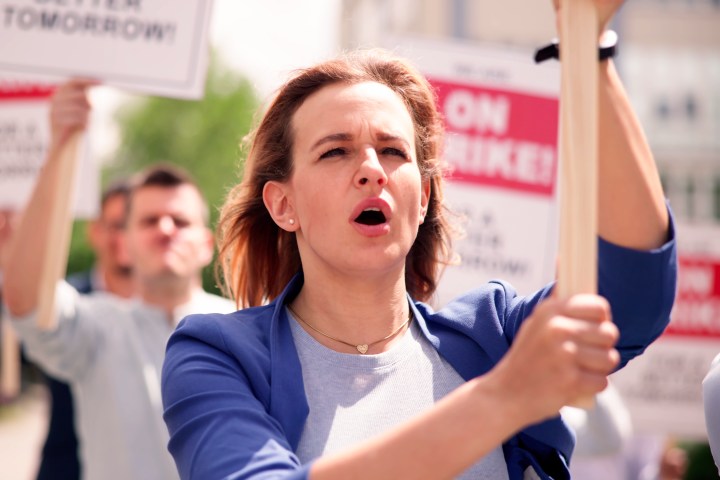
According to the Economic Policy Institute, a worker living in the city of Binghamton must earn a minimum of $36,261 per year to cover costs of living. Up to the 2022-2023 school year, according to the Binghamton Graduate Student Employee Union (GSEU), Binghamton University graduate student teaching assistants made an average of $19,428 annually, a massive shortfall. Graduate students were struggling to make payments for rent, food, healthcare, and transportation. Something needed to change.
After months of petitions, rallies, and writing campaigns, the GSEU and Binghamton University settled on increases in pay for some graduate workers set to be implemented in the Fall of 2023. But this is not the happy ending it might seem to be. It’s only the start of a larger struggle for better conditions.
The pay increases, according to members of the GSEU, were not significant enough to cover the cost of living. In fact, due to rising inflation, graduate students ended up worse off than they were the previous year. They were not significant enough to close the increasingly wide gap between graduate employee wages and the cost of living, and most employees did not even receive a raise. Masters students were left out of the deal, too. Now the difference in minimum wages between masters and doctoral students is close to $10,000 annually, and conditions remain relatively the same for all graduate students.
Matthew Midgett, a PhD student working as an English TA and a leader in Binghamton’s GSEU chapter, has been struggling due to the university’s consistently poor compensation. “TAs, GAs, RAs, and adjuncts are consistently paid poverty wages, sometimes for teaching the same courses and/or course load as our full-time counterparts.” Matthew looks forward to every teaching year, but the poverty wages, frequent unpaid overtime, and indifference from the university’s administration make him feel restricted. Matthew, as a doctoral student, makes a larger salary than many of his peers, but it is still not enough. Sometimes the university will offer reimbursement for any work-related expenses, but it makes little difference. “My low wages prevent me from feeling financially comfortable enough to front the money and wait for a reimbursement,” comments Midgett.
On top of low pay, a significant portion of the wages earned by the graduate workers are eventually reclaimed by the school in the form of various fees. For most students, these fees total up to around $1,200 per semester. For international students, this number could increase by hundreds per semester. These fees are required to pay for amenities provided by the school, including technology and transportation. As pointed out by a petition conducted in November 2023, the technology fee covers materials that are required for graduate students to perform their jobs in the first place, and the school’s transportation is used far more by undergraduates than by graduate students. These fees have caused major backlash from students both graduate and undergraduate and sparked accusations of wage theft against the school.
The State University of New York system provided each of its flagship schools with funds to eliminate the need for fees placed on graduate employees in Fall of 2023. Binghamton University has not yet used these funds, and comments from Binghamton University’s president Harvey Stenger have suggested that the school does not intend to apply those funds equally despite that being its explicit purpose.
The struggles of Binghamton graduate workers are by no means unique. The same issues these student workers face impact workers everywhere in the United States today. It is estimated that as of 2020, around 40% of all American renters spend 1/3 or more of their monthly income on rent (Statista Research Department 2020). Additionally, the Survey of Household Economics and Decision Making, a study conducted by the United States Federal Reserve Board, estimates that, as of 2019, over 16.4 million Americans work multiple jobs, speculated to have only expanded since then. Low wages like the ones paid to Binghamton graduate workers are just not enough to cover the costs of living. Supporting family members, affording quality healthcare, and achieving total food security are all becoming increasingly inaccessible for millions.
The United States’ economy-wide productivity has shot up over 60% since 1979, yet median wages have only risen by around 14% (Cooper and Mishel 2023). Despite soaring profits for companies and inflation demanding increased spending from Americans, the vast majority of workers have not seen any significant improvement in their earnings. “The administration has consistently made me feel as if the most important role I play for the university is to help their bottom line,” says Midgett, “It’s hard not to understand this dynamic as anything other than the university cutting corners on labor compensation to save money or increase profits.”So what is the way forward? How can conditions improve for workers with this fundamental conflict between the goals of companies and the needs of their employees? Although it isn’t a perfect solution, we can look to labor unions as an answer to these questions. Labor unions, put briefly, are democratic organizations composed of workers. Unions effectively consolidate bargaining power among workers. Unions leverage the necessity of workers to influence the decisions of management. Historically, unions have been overwhelmingly successful in improving conditions for workers of all kinds. On average, for the same position and working hours, union-covered workers earn around 11% more per hour than their non-union counterparts (Banerjee et al. 2021). Unions also have been shown to greatly improve job security, increase paid leave time, and secure universal health insurance for workers (Zoorob 2018, and Amick et al., 2015, as cited in Banerjee et al. 2021). The benefits of unions also extend to workers who are not even in a unionized field. The 17 states with the highest unionization rates have minimum wages 20% higher than the national average (Banerjee et al. 2021). This means that, even though they are not represented by a union, workers in states with notable union membership (≥13.5% of the state’s workers) see notable increases in their hourly earnings. Unions have won major victories over the course of 2023 that have not been seen in years. United Auto Workers, the Writers’ Guild of America, Kaiser Permanente nurses, and Unite Here have all gone on strike in 2023, with the resolved strikes as of November of 2023 ending with major victories for the workers despite major pushback from the companies that employed the striking workers. The GSEU, after less than one school year of serious campaigning, has already secured better conditions for doctoral students and does not intend to stop there. The GSEU has also secured endorsements from recently elected Binghamton City Council members who intend to support them in their continued fight for better conditions, so the organization is feeling optimistic. “We feel confident that the councilmembers we endorsed will work tirelessly toward enacting policies that will benefit the people who live in Binghamton rather than the businesses that live here,” comments Midgett.

Travis Rayome is a sophomore majoring in English with an economics minor from Alexandria, Virginia. He hopes to work for humanitarian NGOs around the Washington, DC area, continue writing on politics and economics, and play music. His areas of political interest are propaganda and information dissemination, structural violence and inequality, and power consolidation.
References
Banerjee, Asha. 2021. “Unions Are Not Only Good for Workers, They’re Good for Communities and for Democracy.” Economic Policy Institute, December 15. https://www.epi.org/publication/unions-and-well-being/.
Cooper, David and Mishel, Lawrence. 2023. “America’s Vast Pay Inequality Is a Story of Unequal Power.” American Bar Association, January 6. https://www.americanbar.org/groups/crsj/publications/human_rights_magazine_home/wealth-disparities-in-civil-rights/americas-vast-pay-inequality-is-a-story-of-unequal-power/.
GSEU Binghamton. 2023. “Don’t Leave Some Grad Workers Behind on Fee Elimination.” https://actionnetwork.org/petitions/dont-leave-some-grad-workers-behind-on-fee-elimination.
GSEU Binghamton. 2023. “Living Wage.” https://gseubing.org/campaign.
Rho, Hye Jin and Fremstad, Shawn. 2020. “Multiple Jobholders: Who Are They and How Are They Impacted by the Pandemic?.” Center for Economic Policy Research, July 17. https://cepr.net/multiple-jobholders-who-are-they-and-how-are-they-impacted-by-the-pandemic/.
Statista Research Department. 2022. “Gross Rent As a Share of US Household Income in 2020.” https://www.statista.com/statistics/186732/gross-rent-as-a-percent-of-household-income-in-the-us/.
-
The Problem is Black and White: Drastic Disparities Between Low-Income and Affluent Communities Throughout New York State

By Rachael Ali, Distinguished Writer
I was born and raised in the Bronx, the daughter of two Trinidadian immigrants. Throughout middle and high school, I went to a predominantly white, all-girls private school on a scholarship in the affluent city of Greenwich, Connecticut. For eight years, I traveled daily between these two cities, observing the differences between the two communities—and there were many. Greenwich looked so prim and proper, with many families of four living in six-bedroom mansions on 10-acre properties. In contrast, my neighborhood was overcrowded, with my sidewalks covered in feces and litter. It was not uncommon for parents, grandparents, and five children to live together in a two-bedroom apartment. Why were our communities so different?
To start, there is a clear racial divide between low-income communities in NYC and wealthier communities throughout the state. According to the US Census Bureau, 9.0% of the Bronx population is white, while 44.3% is Hispanic/Latino and 43.8% is Black/African American (US Census 2021). Many of my high school classmates were from Rye, New York. I had been to Rye a few times to visit friends from school; I even went to a country club there for the first and only time in my life. I remember seeing lots of greenery throughout Rye, as well as large houses and clean-cut hedges. Rather than the trash-littered streets I was used to, the streets of Rye were littered with expensive boutiques and brands I had never heard of, like LuluLemon and Lily Pulitzer. In stark contrast with the Bronx, 83.8% of the Rye population is white, 9.6% Hispanic, and 2.1% Black (US Census 2021).
The US Census Bureau also provides economic data, stating that 24.4% of people in the Bronx live in poverty, yet this number is only 4.9% in Rye (US Census 2021). The median household income in the Bronx was $41,895 in 2020, less than a quarter of Rye’s $193,919 (US Census 2021). These statistics are mirrored when looking more broadly at the United States. In 2019, the poverty rate for the Black population was 18.8%, while this number was 15.7% for Hispanic communities, and 7.3% for whites (Creamer 2020).
Where do these racial and economic disparities come from? It goes back decades, as the federal and local governments implemented several racist laws, such as racially restrictive covenants. These clauses were written into property deeds for individual homes or even entire neighborhoods and explicitly banned people of color from renting or purchasing properties (Brenzel 2022). These covenants became common in the 1920s but were rendered unenforceable by the Housing Rights Act of 1968 (“Bill” 2022). However, racist language from these covenants can still be found in deeds throughout New York. In 2020, it was discovered that 288 deeds in Brighton, NY contained a clause that “[n]o lot or dwelling shall be sold to or occupied by a colored person” (Brenzel 2022). Several states, such as Idaho (“Bill” 2022) and California (“California Law” 2022), have passed bills requiring this discriminatory language to be erased from property deeds. New York has no such laws, but the State Assembly passed a bill in March 2022 that would require property owners to remove these racial deed restrictions (Brenzel 2022). This bill is still awaiting Senate approval over a year later.
Redlining, once backed by the federal government (Brooks 2020), was also a crucial factor in the racial segregation of US cities. The practice of redlining started in the 1930s as many banks throughout the US denied mortgages to people of color at disproportionate rates, preventing them from buying houses in certain areas or getting loans to renovate their homes (Brooks 2020). In addition to the Housing Rights Act of 1968, the Community Reinvestment Act of 1977 (CRA) helped ban this harmful and discriminatory practice (Brooks 2020).
Rye is located in Westchester County—one of the most expensive places to live in the United States (“Westchester” 2017). In the 1920s, several cities in Westchester took the lead on implementing zoning laws to prevent housing for Black and Latino populations (Hannah-Jones 2012). However, in 2017, after an 8-year-long battle with the federal government, Westchester began construction on affordable housing units to promote racial integration (“Westchester” 2017). Despite this progress, there are still drastic racial and economic differences throughout New York. There are a number of other ways in which this state’s racist history manifests itself today, especially when looking at public school funding.
The reason why I went to a school in a different state, 40 minutes away, was because the public schools in the Bronx were severely underfunded, run-down, and even dangerous. I do remember, though, that public schools in more affluent suburbs like New Rochelle and Greenwich had abundant resources and spacious campuses. Why were our public schools so different?
School district borders reflect the decades of residential segregation mentioned above. More than half of American students go to “racially concentrated” schools, meaning that populations at these schools are either more than three-quarters white or more than three-quarters non-white (Lombardo 2019). In terms of funding, predominantly white school districts throughout the United States receive around $23 billion more than districts that serve primarily students of color (Lombardo 2019).
Schools that have lower funding also tend to have higher drop-put rates. In fact, the Bronx has the highest drop-out rate (9.4%) of all the boroughs in NYC (“Dropout Rate” 2020). This percentage is significantly higher than other boroughs whose drop-out rates range from 3.8% in Staten Island to 5.3% in Brooklyn (“Dropout Rate” 2020). In 2018, the dropout rate for Black students was 6.4%, with that number at 4.2% for white students (Cai 2020). This high dropout rate correlates directly with statistics regarding race and unemployment. For example, 22% of Black 18 to 24-year-olds were neither enrolled in school nor working in 2018, and this was notably higher than the percentage of all other Americans in this age group (14%) (Cai 2020). Faced with these challenges, NYC parents and City Council members protested Mayor Adams’ proposal to cut the city’s Department of Education (DOE) budget by $1 billion (Rama 2022). However, the most recent city budget has actually reflected a budget increase instead of the proposed budget cuts. As of this year, the DOE’s spending has increased by $121 million (Gould 2023). These funds are intended to increase school-based mental health support (Gould 2023) as well as the Summer Rising Program which provides free academic enrichment activities (field trips, arts/crafts, outdoor recreation) to all NYC public school students in grades K-8 (“Summer Rising” 2023). These activities are supervised by licensed teachers and the state provides these children with free breakfast and lunch (“Summer Rising” 2023).
It is important to note the racial demographic changes that have taken place in New York City in the past century. The Bronx saw an influx of white immigrants (Irish, Italian, European-Jewish) at the turn of the 20th century. These high immigration rates were the result of rapid urbanization (more jobs) and low-cost public transportation. By 1926, the Bronx was infamous for its high crime rate and rampant gang activity (“History of the Bronx” 2008). This low quality of life resulted in a common phenomenon known as “white flight,” when white populations migrate from urban areas to more suburban neighborhoods (“White Flight” 2023). After climbing the social ladder, white immigrant families moved out of the Bronx between the 1930s and 1960s, and they left behind housing and job opportunities for a new wave of Black and Brown immigrants (“History of the Bronx” 2008). However, these new immigrants of color have faced racial discrimination for decades and are still unable to escape a crippling cycle of poverty.
Due to decades of racially motivated housing and educational policies, Black and Brown children in NYC are forced to survive shabby housing conditions and a discriminatory educational system. I was fortunate enough to receive a scholarship and financial aid to attend a prestigious private school in Greenwich CT, but American children should have equal educational opportunities no matter where they live. I shouldn’t have needed to travel roughly 80 minutes every day over state lines just to receive a good education; Black and Brown children deserve the same opportunities that white students have been afforded for decades.

Rachael Ali is a senior originally from the Bronx and majoring in political science with a double minor in Spanish and French. Rachael is a distinguished writer at Happy Medium Magazine, formerly serving as the publication’s head writer for foreign affairs. Rachael’s goal is to attend law school and become an international lawyer. Topics that Rachael is passionate about include immigration, reproductive rights, indigenous communities, gun laws, and environmental justice.
References
“Bill to Remove Racially Restrictive Covenants from Home Deeds Sails out of Committee.” 2022. Idaho House & Senate Democrats, February 2. https://idahodlcc.org/bill-to-remove-racially-restrictive-covenants-from-home-deeds-sails-out-of-committee/.
Brenzel, Kathryn. 2022. “New York Lawmakers Move to Ban Racial Covenants in Deeds.” The Real Deal New York, March 31. https://therealdeal.com/2022/03/31/state-bill-seeks-to-eliminate-racial-restrictions-in-deeds/.
Brooks, Khristopher J. 2020. “Redlining’s Legacy: Maps Are Gone, but the Problem Hasn’t Disappeared.” CBS News, CBS Interactive, June 12. https://www.cbsnews.com/news/redlining-what-is-history-mike-bloomberg-comments/.
Cai, Jinghong. 2020. “Black Students in the Condition of Education 2020.” Perspectives, National School Board Association, June 23. nsba.org/Perspectives/2020/black-students-condition-education.
“California Law Requiring Removal of Racial Covenants from Property Records Now in Effect.” 2022. Yahoo! News, July 6. https://news.yahoo.com/california-law-requiring-removal-racial-164257727.html.
Creamer, John. 2020. “Inequalities Persist Despite Decline in Poverty for All Major Race and Hispanic Origin Groups.” United States Census Bureau, September 15. https://www.census.gov/library/stories/2020/09/poverty-rates-for-blacks-and-hispanics-reached-historic-lows-in-2019.html.
“Dropout Rate” 2020. Citizens’ Committee for Children of New York, https://data.cccnewyork.org/data/table/135/dropout-rate#135/219/99/a/a.
Gould, Jessica. 2023. “Mayor Adams’ Budget Deal Includes Education Spending Boost, but Big Funding Fight Looms.” Gothamist, July 7. gothamist.com/news/mayor-adams-budget-deal-includes-education-spending-boost-but-big-funding-fight-looms.
Hannah-Jones, Nikole. 2012. “Soft on Segregation: How the Feds Failed to Integrate Westchester County.” ProPublica, November 2. https://www.propublica.org/article/soft-on-segregation-how-the-feds-failed-to-integrate-westchester-county.
“The History of the Bronx, NY.” 2008. UrbanAreasnet, urbanareas.net/info/resources/the-history-of-the-bronx-ny/.
Lombardo, Clare. 2019. “Why White School Districts Have So Much More Money.” NPR, February 26. www.npr.org/2019/02/26/696794821/why-white-school-districts-have-so-much-more-money.
Rama, Kala. 2022. “NYC Parents, Pols Urge Mayor Adams to Restore School Funding.” PIX11, July 19. pix11.com/news/local-news/nyc-parents-pols-urge-mayor-adams-to-restore-school-funding/.
“Summer Rising 2023.” 2023. Nyc.gov, www.nyc.gov/site/dycd/services/after-school/summer_rising.page.
“U.S. Census Bureau Quickfacts: Bronx County, New York.” 2021. United States Census Bureau, https://www.census.gov/quickfacts/bronxcountynewyork.
“U.S. Census Bureau Quickfacts: Rye City, New York.” 2021. United States Census Bureau, https://www.census.gov/quickfacts/ryecitynewyork.
“Westchester County’s Zoning Laws ‘Deemed Acceptable’ Following Years-Long Fight with Feds.” 2017. CBS News, CBS Interactive, July 18. https://www.cbsnews.com/newyork/news/westchester-county-zoning-laws/.
“White Flight.” 2023. Oxford Reference, www.oxfordreference.com/display/10.1093/acref/9780199599868.001.0001/acref-9780199599868-e-2046.
-
New York’s Failed Housing Deal: What Went Wrong?
By Jonathan Maestre
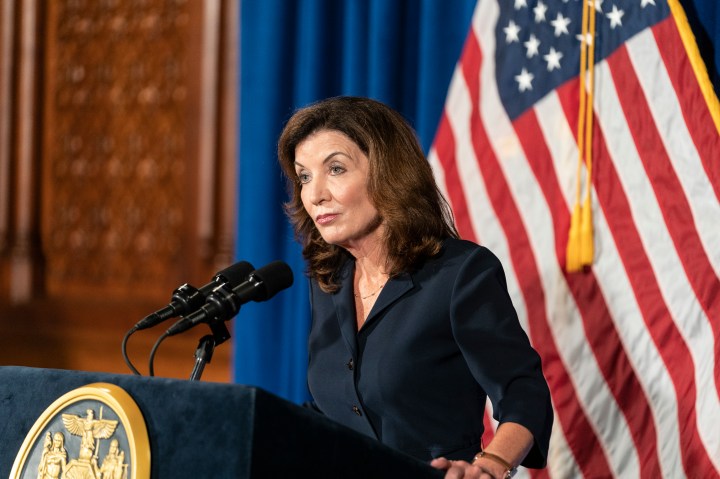
Photo: New York Governor Kathy HochulAlthough the homeless population in New York is decreasing from pandemic levels, homelessness and housing insecurity are still persistent enough to say there is a housing crisis. New York currently has the second-highest homeless population in the United States, with roughly 13% of the country’s homeless population living in the state. Since 2007, the homeless population in the state has increased by 18.5%, with most of the homeless population residing in New York City (de Sousa et al. 2022). The problem is only expected to get worse as the population of New York City is expected to reach 9.1 million by 2030 (New York City Department of City Planning 2006). According to a report from the Real Estate Board of New York, or REBNY, 560,000 new housing units must be constructed by 2030 in New York City in order to meet growing demand (2023). This is where the New York Housing Compact comes in.
In the latest State of the State address, Governor Kathy Hochul announced her plan to tackle New York’s housing crisis. The New York Housing Compact was a bold initiative that aimed to create 800,000 new housing units over the next decade, with 500,000 of them to be built in New York City (Governor Kathy Hochul 2023a). Hochul’s plan sought to achieve its goal using a number of strategies. These strategies include increasing infrastructure funding for municipalities, legalizing office and basement conversions, and authorizing property tax exemptions for affordable housing outside of New York City and secondary housing units on single-family properties, also known as accessory dwelling units (Governor Kathy Hochul 2023b). However, the main focus of the compact is that it would establish new statewide housing targets. Downstate localities would be forced to increase the housing supply by 3% every 3 years and upstate localities by 1% every 3 years, with affordable multi-family housing units given double weight (Governor Kathy Hochul 2023b). If localities are unable or unwilling to meet these new housing targets, developers would be allowed to bypass local zoning codes and negotiate for approval directly with the state.
After the State of the State address, Governor Hochul’s ambitious plan received nearly as much praise as it did criticism from local leaders. The plan was praised for seeking to cut red tape for new housing projects in order to stimulate housing growth. However, it saw pushback from many local community leaders because it also would have significantly decreased the powers of local zoning authorities. In particular, Hochul’s plan saw massive pushback in suburban counties like Westchester, Nassau, and Suffolk. Although the Governor was praised by many local suburban officials for her ambitions, many of these same officials would unite against the plan because of their shared desire for zoning authority to remain in their hands. But, this pushback wasn’t unexpected. “I know from personal experience, most municipalities are incredibly wed to their authority with home rule and are very defensive of that,” said New York State Senator Peter Harckham when initially asked about Hochul’s plan (Brand and Campbell 2023a). Before long, local officials would be rallying under signs reading, “Local Control, Not Hochul Control” (Chang 2023). However, the housing compact would also start to see more opposition from the left.
While the suburban “Not In My Backyard” crowd opposed the housing plan for going too far, tenant advocates and progressive lawmakers opposed the deal for not going far enough. Tenants have long been fighting for “good cause” eviction laws, which would restrict rent increases and prevent private landlords from evicting tenants without a specific reason. So, by halting the Governor’s proposals, progressive lawmakers hoped to use the housing deal as a means to gain support for “good cause” as well as rental assistance programs like the Housing Access Voucher Program, or HAVP. “If good cause and HAVP aren’t part of the deal, then we can’t accept it!” tweeted Assemblymember Phara Souffrant Forrest (Brand and Campbell 2023b).
Soon, both houses of the state legislature would each propose their own versions of the housing deal that attempted to appeal to NIMBYs and progressives alike. These counter-proposals radically changed the goals of the Governor’s plan. Gone was the state’s ability to override local zoning codes, which was the core of the initial plan. Instead, the legislature proposed a weaker incentive-based housing plan, which the Governor initially opposed due to similar incentive-based plans failing in other states (Governor Kathy Hochul 2023b). In addition to dropping the key strategy of Governor Hochul’s plan, neither of the counter-proposals also included tax exemptions for accessory dwelling units or plans for denser transit-based zoning. Both the Senate and Assembly did include “good cause” pledges in their proposals but they were criticized for seeming to lack any real commitments (Small 2023).
Although the housing deal was now a shell of its former self, it still included many of its original components such as the legalization of office conversions and a new rental voucher program. However, this did not mean that housing proposals were now set to be included in the new state budget. The legislature’s unwillingness to support Governor Hochul’s key terms of the original plan caused tensions that would continue to prevent a housing plan from being agreed upon. This would come to a head when Governor Hochul threatened to veto any proposal from the legislature (Ferré-Sadurní 2023). By the end of the legislative session, it was clear that a housing deal would not be met and finger-pointing began among New York’s top political figures. In a joint statement from Senate Majority Leader Andrea Stewart-Cousins and Assembly Speaker Carl Heastie, they said, “Unfortunately, it was clear that we could not come to an agreement with the governor on this plan. It takes all three parties – the Senate, the Assembly and the governor – in order to enact legislation into law.” Governor Hochul fought back with a statement of her own. Julie Wood, the Governor’s communications director said in a statement, “Governor Hochul put forward nation-leading housing legislation in her executive budget that the legislature flatly rejected. Now, in the final hours of the legislative session, the Assembly and the Senate are blaming the governor for their own failure to act” (Chadha 2023).
The New York Housing Compact failed, and the only party to leave satisfied were local suburban officials who got to keep local control. While it’s easy to attempt to blame one party for the failure to reach a housing deal, it’s clear that the state’s collective action problems reach deeper than one bad actor being at fault. Late budgets have long been an issue in New York, especially when controversial issues are being debated. When the state budget was overdue in 2017, former Governor Andrew Cuomo blamed its tardiness on the political polarization surrounding the issue of bail reform (Fink 2023). Like bail reform, housing is a very polarizing issue and one that will likely grow as the housing crisis worsens, and the fight for a housing deal will surely continue into the next legislative session. We can only hope that New York’s political savvy are able to learn from the failures of the past legislative session and that polarization does not cause history to repeat itself.

Jonathan Maestre is a senior from Queens, New York. He is currently studying political science and plans to pursue a master’s degree in public administration through the university’s 4+1 program. Last fall, Jonathan interned on State Senator Lea Webb’s election campaign. Currently, he is involved in multiple on-campus political organizations, such as Binghamton’s chapter of the New York Public Interest Research Group and the College Democrats. He is passionate about elections, international relations, and environmental justice. Outside of politics, Jonathan enjoys movies and creative writing.
References
de Sousa, Tanya, Alyssa Andrichik, Marissa Cuellar, Jhenelle Marson, Ed Prestera, and Katherine Rush. 2022. “The 2022 Annual Homelessness Assessment Report (AHAR) to Congress.” The U.S. Department of Housing and Urban Development. https://www.huduser.gov/portal/sites/default/files/pdf/2022-AHAR-Part-1.pdf.
“New York City Population Projections by Age/Sex & Borough 2000-2030.” 2006. New York City Department of City Planning. https://www.nyc.gov/assets/planning/download/pdf/data-maps/nyc-population/projections_report.pdf.
“Report: In Q1 2023, New York City’s Dwindling Construction Pipeline Continued to Languish amid Housing Supply Crisis.” 2023. Real Estate Board of New York (REBNY), April 14. https://www.rebny.com/press-release/report-in-q1-2023-new-york-citys-dwindling-construction-pipeline-continued/.
“Governor Hochul Announces Statewide Strategy to Address New York’s Housing Crisis and Build 800,000 New Homes.” 2023a. Governor Kathy Hochul, January 10. https://www.governor.ny.gov/news/governor-hochul-announces-statewide-strategy-address-new-yorks-housing-crisis-and-build-800000.
“The New York Housing Compact.” 2023b. Governor Kathy Hochul, March. https://www.governor.ny.gov/sites/default/files/2023-03/NY_Housing_Compact_info_deck_March_2023.pdf.
Brand, David and Jon Campbell. 2023a. “Gov. Hochul’s Ambitious Housing Plan Meets Suburban Blockade.” Gothamist, January 30. https://gothamist.com/news/gov-hochuls-ambitious-housing-plan-meets-suburban-blockade.
Brand, David and Jon Campbell. 2023b. “Gov. Hochul Drops Core of Ambitious Housing Plan as Budget Talks Drag On.” Gothamist, April 18. https://gothamist.com/news/gov-hochul-drops-core-of-ambitious-housing-plan-as-budget-talks-drag-on.
Chang, Clio. 2023. “Long Island NIMBYs May Be Winning Housing Fight.” Curbed, April 19. https://www.curbed.com/2023/04/kathy-hochuls-long-island-nimby-housing.html.
Small, Eddie. 2023. “Assembly, State Senate Budget Proposals Take Sledgehammer to Hochul’s Housing Plans.” Crain’s New York Business, March 16. https://www.crainsnewyork.com/real-estate/assembly-state-senate-budgets-take-sledgehammer-gov-kathy-hochuls-housing-plans.
Ferré-Sadurní, Luis. 2023. “N.Y. Democrats, at Odds Over Tenant Protections, Fail to Reach Housing Deal.” The New York Times, June 8. https://www.nytimes.com/2023/06/08/nyregion/housing-good-cause-eviction.html.
Chadha, Janaki. 2023. “A Last-Ditch Effort for a Housing Deal in Albany Collapses. Finger Pointing Begins.” POLITICO, June 9. https://www.politico.com/news/2023/06/09/new-york-housing-deal-collapse-00101100.
Fink, Zack. 2023. “A Late State Budget? Certainly Not the First.” Spectrum News NY1, April 5. https://www.ny1.com/nyc/manhattan/politics/2023/04/05/a-late-state-budget–certainly-not-the-first-.
-
What is the Presidential Records Act?

By Ashley Pickus, National Politics Reporter
Photo: Department of Justice — Documents possessed by Fmr. President Donald J. Trump at Mar-a-LagoCongress enacted the Presidential Records Act (PRA) in 1978 initially as a reaction to the Richard Nixon Watergate scandal and a dispute over his presidential records. The new legislation essentially changed the legal ownership of presidential records from private to public; the records belonged to the United States government rather than the President himself. It also laid out the process of filing records and what happens after a President’s term comes to an end.
All official White House records were considered the President’s personal property previous to the PRA, which first applied to the Reagan administration. Thus, from Presidents Washington to Carter, the President could do whatever he pleased with official records. Presidents Hoover through Carter chose to donate their records to the National Archives and Records Administration (NARA), along with the Presidential Library buildings where they are stored (National Archives and Records Administration 2023). This changed after Nixon attempted to withhold secret recordings created in the White House.
The Watergate Hotel is the center of the scandal that brought down the Nixon presidency. On June 17, 1972, five men broke into the Democratic National Committee headquarters located in the hotel. After being apprehended by authorities, Acting FBI Director L. Patrick Gray was notified that one of the men arrested was a security officer for the Committee to Re-Elect the President, tying him directly to Nixon’s campaign (FBI 2016).
In the aftermath of the Watergate scandal, it was discovered that Nixon secretly recorded conversations held in the White House, including conversations regarding the Watergate burglary and the administration’s plans to try and cover it up. In 1974, a grand jury indicted seven of Nixon’s closest aides for their roles in the Watergate affair. Nixon refused to hand the tapes over to the special prosecutor and defendants, claiming that he had the right to withhold the information due to executive privilege. This led to United States v Nixon in 1974, where the Supreme Court ruled that “when the ground for asserting privilege as to subpoenaed materials sought for use in a criminal trial is based only on the generalized interest in confidentiality, it cannot prevail over the fundamental demands of due process of law in the fair administration of criminal justice,” (United States v Nixon 1974). On August 8, 1974, Nixon announced his resignation. At the end of the same year, Congress passed what would become the predecessor to the PRA—the Presidential Recordings and Materials Preservation Act (PRMPA). Applied only to the Nixon presidential materials, the act stipulated that “those materials relevant to the understanding of Abuse of Governmental Power and Watergate are to be processed and released to the public prior to the release of all other materials,” (National Archives and Records Administration 2016).
In order to prevent a similar situation from occurring in the future, Congress passed the PRA in 1978. The act states “The United States shall reserve and retain complete ownership, possession, and control of Presidential records,” (Presidential Record Act 1978). Therefore, presidential records are no longer considered personal property of the President. Instead, they are the property of the federal government.
The act also defines personal records versus presidential records to mitigate any potential confusion; personal records include “diaries, journals, or other personal notes serving as the functional equivalent of a diary or journal which are not prepared or utilized for, or circulated or communicated in the course of, transacting Government business.” Conversely, presidential records are defined as, “documentary materials created or received by the President, the President’s immediate staff, or a unit or individual of the Executive Office of the President whose function is to advise or assist the President, in the course of conducting activities which relate to or have an effect upon the carrying out of the constitutional, statutory, or other official or ceremonial duties of the President.” To summarize, personal records belong to the President while presidential records belong to the government.
The President is also expected to separate personal documents from presidential records before leaving office, as custody of the latter immediately transfers to NARA. Additionally, the President does not have the discretion to categorize a presidential record as a personal record. Donald Trump’s attorney, Tim Parlatore, claimed that a President “is supposed to take the next two years after they leave office to go through all these documents to figure out what’s personal and what’s presidential,” (Gangel et al. 2023). However, in regards to sorting records after a President’s term ends, NARA released a statement on June 9, 2023, asserting that “There is no history, practice, or provision in law for presidents to take official records with them when they leave office to sort through, such as for a two-year period as described in some reports. If a former President or Vice President finds Presidential records among personal materials, he or she is expected to contact NARA in a timely manner to secure the transfer of those Presidential records to NARA.”
Overall, the purpose of the PRA is to preserve presidential records. It also established a new statutory structure under which Presidents must manage their records in order to preserve sensitive documents and avoid getting them into the hands of hostile or bad actors. Ironically, originally enacted as a response to a presidential scandal, the PRA only regained relevance in the wake of another.

Ashley Pickus is a senior from Plainview, New York. She is double-majoring in political science and English rhetoric and minoring in writing studies. Ashley spends most of her free time following the current pop culture trends, watching television shows, or listening to music. If asked, she can explain the meaning of any Taylor Swift song and its significance. After graduation, Ashley hopes to find a job in the media industry.
References
Gangel, Jamie, Zachary Cohen, and Elizabeth Stuart. 2023. “National Archives refutes claims Trump had two years to go through presidential records in Rare public statement.” CNN. https://www.cnn.com/2023/06/09/politics/national-archives-refutes-trump-claim-classified-documents-indictment/index.html.
“Presidential Recordings and Materials Preservation Act (PRMPA) of 1974.” 2016. National Archives and Records Administration. https://www.archives.gov/presidential-libraries/laws/1974-act.html.
Presidential Records Act, 44 U.S.C. ß2201-2209 (1978).
“Press statements in response to media queries about Presidential Records.” 2023. National Archives and Records Administration. https://www.archives.gov/press/press-releases/2022/nr22-001#June-9-2023-statement.
United States v. Nixon, 418 U.S. 683 (1974).
“Watergate.” 2016. FBI. https://www.fbi.gov/history/famous-cases/watergate.
-
Trump’s Legal Woes: How Will it Affect the Primaries?
By Arwen O’Brien, Editor in Chief
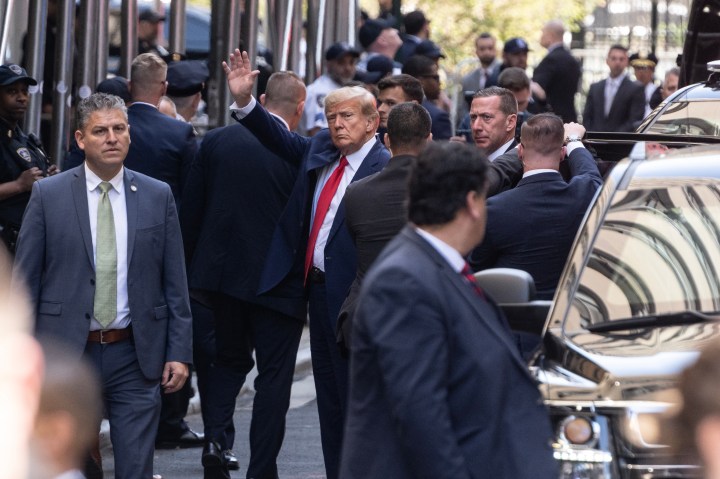
In an unprecedented turn of events, Donald Trump, the former president and current presidential candidate, finds himself in uncharted waters, becoming the first U.S. president to be indicted while simultaneously dealing with multiple other major legal cases and federal felony counts. As his name remains a constant fixture in news headlines, there is speculation on how these legal challenges will shape the course of the upcoming primary and election season.
On March 30, 2023, Trump found himself facing the first indictment in a New York State case related to the alleged falsification of business records tied to a hush money payment to adult film star Stormy Daniels (Freifeld et al. 2023). The payment was overseen by Trump’s personal lawyer, Michael Cohen, in 2016 to maintain silence about a decade-old alleged sexual encounter between Daniels and Trump. Although Trump had denied the relationship and pleaded not guilty to falsifying the business records, he has openly acknowledged the payment itself, which, while an unsavory look for a head of state, does not directly violate any U.S. laws. However, prosecutors argue that it does breach campaign financing regulations. The trial date has been set for March 2024.
Separately, a federal jury has found Trump liable for allegations of sexually abusing esteemed writer E. Jean Carroll back in the mid-1990s and subsequently lying about the incident in 2022 (Reuters 2023). Delivering a momentous verdict in May, the jury ordered Trump to pay $5 million in damages. The legal battle is not over, as Trump is planning an appeal. Trump has also been involved in other potentially more damaging cases from a political point of view.
On June 13, 2023, Trump stood before the federal court in Miami and pleaded not guilty, this time facing charges related to the “illegal retention of classified documents” (Protess et al. 2023). Boxes of national security documents were discovered in the former president’s Florida residence, potentially implicating him in a violation of the Presidential Records Act of 1978. A trial for this case has been set for May 2024.
In addition, Trump is also facing a Georgia state indictment into whether election results were tampered with in the 2020 presidential election. On January 2, 2021, Trump placed a phone call to Georgia’s Republican secretary of state Brad Raffensperger during which Trump urged him to “find” enough votes to overturn the election outcome in his favor (Reuters 2023). This investigation has raised concerns about the potential violations of no less than three Georgia criminal laws, specifically encompassing “conspiracy to commit election fraud, criminal solicitation to commit election fraud, and intentional interference with performance of election duties” (Reuters 2023). Federal prosecutors are also looking into his role to overturn the election and his role in the January 6 riot, which has led to charges including conspiracy to defraud the United States and inciting an insurrection.
In the face of all these legal woes, Trump remains undeterred, pushing forward with his 2024 campaign for the White House. Ultimately there is nothing stopping him from doing so, as the U.S. Constitution notably sets forth just three prerequisites for the presidency in Article II Section I Clause 5. One must be a natural-born citizen, of 35 years of age or older, and have resided in the U.S. for 14 years. Consequently, despite any potential legal entanglements–even if he were to end up behind bars–Trump encounters no constitutional impediment to his potential candidacy for the presidency once again.
In fact, Trump appears unconcerned about the potential negative impact on his presidential bid. When questioned about the possibility of withdrawing from the race ahead of the Conservative Political Action Conference in March, Trump confidently dismissed such notions, stating, “I wouldn’t even think about leaving… probably it will enhance my numbers” (Romero 2023). So the question remains – will these legal woes actually boost Trump’s support in the upcoming election? A big factor that contributed to Trump’s win in 2016 was the relentless media coverage he received. Embracing the belief that “all press is good press,” Trump adroitly controlled the media spotlight throughout the entire presidential campaign, amassing a substantial base of supporters. Now, in 2023, history seems to be repeating itself as Trump once again retakes the media spotlight in overshadowing his main primary opponent, Florida Governor Ron DeSantis, and making headlines about himself–even if unintentionally. This effective reclamation of the media spotlight has thrust Trump back into the public consciousness, rekindling the fervor of his supporters and potentially attracting new ones.
A theory has emerged on how the storm of legal battles may help Trump gain traction – the witch hunt narrative. This argument suggests that Trump has become a target of unfair scrutiny, with some, including Trump himself, asserting that the cases against him have been purposefully drawn up and investigated in order to stain his image. According to Republican congressman Dan Newhouse, the current legal challenges Trump is facing would have likely destroyed the reputation of any other presidential contender in past decades. However, Newhouse contends that the situation is different for Trump, particularly among Republican supporters (Colvin and Peoples 2023). He attributes Trump’s relatively unscathed image within his party to the fact that his supporters have anticipated these legal issues, as Trump himself had repeatedly suggested the possibility of facing indictments. Consequently, many Republican voters perceive the charges against him as mere political maneuvers rather than genuine legal concerns (Colvin and Peoples 2023). By effectively setting expectations for potential charges well in advance, Trump appears to have controlled the narrative to his advantage among his supporters. Since Trump emerged as the front-runner for the 2024 GOP nomination in April, the percentage of Republicans with a favorable view of him has experienced an 8% decline, polls show, but 60% of Republicans still hold a favorable view (Colvin and Sanders 2023). With the upcoming primaries looming, DeSantis may be facing an uphill battle against Trump. Recent polling data from Monmouth University, conducted between July 12 and 19, 2023, reveals that Trump is still backed by 55% of potential GOP voters, while DeSantis trails behind at 35%.
The real long-term significance may lay in the sway of the narrative over a different segment of the electorate – the moderates and independents. For Trump, winning over these crucial voters is paramount to securing a path to the White House. Some may see him as unjustly mistreated while others may feel appalled by his conduct and apparent disregard for established presidential and democratic norms, choosing to instead vote for his opponents. According to a survey conducted from March 20th to March 23rd, 2023 by NPR/PBS NewsHour/Marist National Poll, 41% of respondents view the investigations as a “witch hunt,” while 56% believe they are fair. Within the Republican Party, a staggering 80% of members stand firmly behind the notion that the investigations are nothing more than a “witch hunt.” But, the poll highlights that only 23% of Americans as a whole share the belief that Trump did nothing wrong, suggesting a more nuanced perspective on his actions during his tenure as president.
The survey results underscore the enduring polarization that has characterized American politics in recent years. The “witch hunt” narrative, embraced by a substantial portion of Republicans, amplifies the idea that the investigations targeting Trump are politically motivated and lack legitimacy. However, the recent decline in Trump’s favorability suggests that not all Republicans are maintaining support amid the ongoing legal battles. Meanwhile, a majority of the population maintains that the investigations are warranted and must be conducted impartially to uphold the principles of justice and accountability. Ultimately, this could play on people’s minds when the country votes on November 5, 2024.

Arwen O’Brien is a senior in politics, philosophy, and law taking a minor in Spanish who was born in Buenos Aires, Argentina and now living in Westchester, New York. After growing up in both England and Chile, Arwen is interested in pursuing a career in international politics or non-profit work. Arwen is a founding member of the Happy Medium Executive Editing Team, serving as its first Marketing Editor and now as its Editor in Chief. In her free time, Arwen does tour guiding for the university, works with the American Red Cross for its National Headquarters, and skis with Binghamton’s Ski and Snowboard Club.
References
Colvin, Jill. Peoples, Steve. 2023. “Will Trump’s legal issues hurt his standing with Republican voters?” PBS, June 9. https://www.pbs.org/newshour/politics/will-trumps-legal-issues-hurt-his-standing-with-republican-voters.
Colvin, Jill. Sanders, Linley. 2023. “GOP support for Trump dips slightly after classified documents indictment, AP-NORC poll says.” PBS, June 29. https://www.pbs.org/newshour/politics/gop-support-for-trump-dips-slightly-after-classified-documents-indictment-ap-norc-poll-says.
Freifeld, Karen. Cohen, Luc. Clifford, Tyler. 2023. “Trump criminally charged in New York, a first for a US ex-president.” Reuters, March 30. https://www.reuters.com/world/us/urgent-trump-hit-with-criminal-charges-new-york-first-us-ex-president-new-york-2023-03-30/.
Monmouth University. 2023. “Trump maintains strong GOP primary advantage despite indictments.” Monmouth University, July 25. https://www.monmouth.edu/polling-institute/reports/monmouthpoll_us_072523/.
NPR, PBS NewsHour, and Marist National Poll. 2023. “Majority of Americans Think Trump Investigations are Fair…Three in Four Say Trump Did Something Wrong.” Marist Poll, March 27. https://maristpoll.marist.edu/polls/donald-trump-investigations/.
Protess, Ben. Feuer, Alan. Hakim, Danny. 2023. “Donald Trump Faces Several Investigations. Here’s Where They Stand.” The New York Times, July 27. https://www.nytimes.com/article/trump-investigations-civil-criminal.html.
Reuters. 2023. “Donald Trump legal issues: What charges, lawsuits and investigations does he face?” Reuters, June 27. https://www.reuters.com/legal/government/legal-troubles-former-us-president-donald-trump-2023-06-27/.
Romero, Laura. 2023. “Trump could still be elected president despite 2nd indictment, experts say.” ABC News, June 8. https://abcnews.go.com/US/trump-elected-president-indicted-convicted-experts/story?id=97688250.
-
The Outer Limits of Free-Speech: Violence and the First Amendment
By Joseph Brugellis, Marketing Editor
The ability to express one’s beliefs on political and social matters through speech—verbal or nonverbal—without fear of government-led censure for doing so is a central element of American democracy. The First Amendment to the Constitution protects this right by proscribing Congress from passing a law “abridging the freedom of speech” possessed by individuals (U.S. Const. amend. I). Vigorous enforcement of the Free Speech Clause is vital “for the political participation of [the citizenry]” by preserving an open marketplace of ideas whereby citizens may “form their [political] opinions and judgments” in a complete manner via the full exposure to the merits of “various [competing] viewpoints” on issues of significance (Badamchi 2015). The expression of political speech may take on numerous forms: spoken words, written pamphlets, or symbolic action. But no matter the form of expression, political speech cannot be prohibited by the government simply “because of its message, its ideas, its subject matter, or its content” (“Ashcroft v. ACLU”).
As broad as the contours of the First Amendment may be, the enumerated rights protected within are not absolute. Governments on the local, state, and federal levels have all attempted to set limits on the degree to which individuals may speak freely (“Categories of Speech”). That is because an unqualified right to speech and expressive conduct can often conflict with a separate, but undoubtedly important, governmental interest: protecting both the citizenry and the state itself from actual or threat of violence. After all, any functioning society would seek to ensure stability among its members. Preventing the actual or perceived incitement of violence against either the body politic at large or its individual members via appropriate legislation is legally permissible in certain circumstances. If an individual exercises his or her free speech rights to communicate a message perceived as being (a) an incitement of violence, (b) fighting words against another person, or (c) true “threats” against an individual or collective group, the First Amendment “does not bar” a government from taking suppressive action against the speech (“Categories of Speech”). The clash between the Free Speech Clause and government-backed attempts to prevent violence has been fought along these battle lines for more than a century. An analysis of each of these three unprotected speech categories will help to illuminate how the scope of this precious First Amendment right has fluctuated throughout the years.
Before performing such an analysis, a general historical background of the First Amendment’s Free Speech Clause and how it has been interpreted by the Federal Judiciary is warranted.
The First Amendment—together with the other nine separate provisions that collectively make up the Constitution’s Bill of Rights—was hardly the major focus of debate in Philadelphia at the beginning of the Constitutional Convention of 1787. Much of the discussion in Philadelphia was instead focused on setting up the structure and powers of the federal government to correct for the many fundamental deficiencies present in the previous national charter—the Articles of Confederation (Rosen and Rubenstein 2023). When the participants of the Convention finally got around to discussing what we know today as the Bill of Rights, their discussion was largely limited to whether such a document was necessary at all to preserve ordered liberty (Hamilton 1787). Many Federalists such as Alexander Hamilton strongly opposed a Bill of Rights, arguing that its inclusion was not only unnecessary but could even dangerously serve as an implied pretext for the government to assume regulatory powers over individual liberties (Hamilton 1787). Anti-Federalists and several state legislatures, however, voiced much concern over the absence of any provisions in the Constitution explicitly protecting individual liberties such as freedom of speech or religion (NCC Staff 2023). Therefore, in order to secure the ratification of the Constitution by these states, James Madison (with Anti-Federalist input) drafted a list of proposed amendments that would eventually become the Bill of Rights (NCC Staff 2023). Upon Virginia’s approval on December 15, 1791, the Bill of Rights was ratified.
Despite the broad generality of its text, “the framers gave very little indication as to the exact meaning of the [First] Amendment” (Congdon 2004). Historical evidence from the Founding Era indicates that freedom of speech was considered to be a natural right retained by the individual that was nevertheless subject to certain restrictions for the benefit of the “public good” (Campbell 2017). Making “well-intentioned statements of one’s view[points]” was considered an inalienable right to the Founders, but evidently, the Free Speech Clause lacked the same rigor under other circumstances (Campbell 2017). Stringent anti-blasphemy laws were enforceable for more than a century after ratification (“Blasphemy and the First Amendment” 2021). Bans on profanity usage abounded (Campbell 2017). And the Alien and Sedition Acts of 1798’s prohibition against the “utter[ance]…[of] any false, scandalous [or] malicious” sentiments against the United States was repeatedly upheld by lower courts before it expired in 1801 (Congdon 2004). In spite of the First Amendment’s seemingly broad textual protections, both state legislatures and the federal government continued to implement somewhat strict restrictions on speech for decades after ratification.
For the first 120 years after the ratification of the Bill of Rights, the U.S. Supreme Court was notably silent on the Free Speech Clause of the First Amendment; the first case testing the limits of this provision did not arrive at the Court until after World War I (Irons 2006). The idea that freedom of speech was a fundamental individual right was not made official by the Supreme Court until 1925, in a case that held the Free Speech Clause applicable to States as well as the federal government (Congdon 2004). Since then, the Court has made clear that so-called “content-based” laws, or laws that “restrict or compel speech based on its content” are “presumptively unconstitutional”; to clear such a high bar, the government must demonstrate that a law restricting freedom of speech advances a “compelling” governmental interest and represents the “least restrictive means” of securing such an interest (“Free Speech: Content Based Laws”). But unprotected speech falling outside of boundary lines of the First Amendment– including incitement, fighting words, and “true” threats– is subject to government regulation.
With this general background of the First Amendment in mind, a closer look at the three unprotected categories above will illustrate how both the federal and numerous state governments have balanced the interest of free speech with the countervailing desire to insulate the state and its individual members from attempted or actual violence.
Incitement and Sedition
The Supreme Court’s first foray into this murky field came soon after the end of World War I. During the height of U.S. military involvement, the Wilson administration was determined to stamp out all opposition to American wartime participation by sponsoring private campaigns that encouraged civilians to “spy on their [fellow] neighbors” for evidence of disloyalty (Irons 2006). Congress sought to formalize this anti-dissident campaign with the passage of the Espionage Act of 1917. The Espionage Act mandated imprisonment for those who “attempt to cause insubordination, disloyalty, [or] mutiny” among military forces or for those who “willfully obstruct” American military recruitment processes (Irons 267). In Schenck v. United States (1919), the Supreme Court famously upheld the three-count conviction of Charles Schenck for violating the Espionage Act by distributing leaflets encouraging men not to register for the draft (Congdon 2004). In a pithy opinion by Justice Holmes, the Court reasoned that while Schenck’s actions “in ordinary times” would have been constitutional, the surrounding wartime effort made it so that Schenck’s speech posed an “[utter] hindrance” to the Nation’s efforts (“Schenck v. US”). Holmes set forth the following infamous test to govern future cases: whether the nature of the speech combined with surrounding circumstances creates a clear and present danger of “bringing about substantive evils that Congress has a right to prevent” (“Schenck v. US”).
The clear-and-present-danger (CAPD) inquiry was similar in many respects to the equally misguided “bad-tendency” legal test, which once permitted governments to outright prohibit certain speech (e.g. pro-Communist sympathies) subjectively viewed as being prone to endanger “the public welfare… and the foundations of organized government [by] threaten[ing] its overthrow” (“Whitney v. CA”). But unlike the bad-tendency test, which easily morphed into a discriminatory blanket-ban on uttering certain speech at all times regardless of speaker intent, the CAPD test explicitly highlighted the importance of both speaker intent and surrounding circumstances in making a legal determination (Congdon 2004).
After decades of sometimes reluctant application of the CAPD criterion, the Supreme Court chartered a new course in Brandenburg v. Ohio (1969). The State of Ohio had convicted Clarence Brandenburg, a leader of the Ku Klux Klan, under its criminal syndicalism statute which prohibited the advocacy of “violence[] or unlawful methods of terrorism” to accomplish political reform (“Brandenburg v. OH”). The Court invalidated Brandenburg’s conviction and struck down the criminal syndicalism law. Essentially repudiating the CAPD test as construed in Schenck, the Brandenburg Court reasoned that a state cannot prohibit the advocacy of using force except when such advocacy is “likely to incite or produce imminent lawless action” (“Brandenburg v. OH” ). Within a half-century span, the Supreme Court swapped its overbroad CAPD standard in favor of a much stricter imminent-lawless-action test that permits government interference in proscribing violent incitement only under narrow circumstances.
Fighting Words
In a similar vein, the Supreme Court has also ruled that so-called “fighting words” fall outside the scope of the First Amendment’s protection. The Court first enunciated this doctrine in Chaplinsky v. New Hampshire (1942). The State of New Hampshire convicted Walter Chaplinsky under a statute prohibiting the use of “offensive, derisive, or annoying” words to provoke someone on a street (Congdon 2004). After meeting local resistance to distributing Jehovah’s Witness literature, Chaplinsky called the town marshal a “damned Fascist” while being led away by police (“Chaplinsky v. NH”). The Court upheld his conviction, reasoning that Chaplinsky’s speech constitutes “fighting words” because they inflicted direct harm and incited an “immediate breach of the peace” (“Chaplinsky v. NH”).
In subsequent years, the Court has clarified that the fighting words doctrine is not a roving license for the government to censor speech or conduct that it finds disagreeable or even offensive. In Texas v. Johnson (1989), for example, the Supreme Court invalidated the conviction of Gregory Lee Johnson for burning an American flag to protest the policies of the Reagan administration. The Court refused to classify Johnson’s expression of dissatisfaction as constituting “fighting words”, reasoning that “[n]o reasonable onlooker” would consider the burning of an American flag as being either a direct personal insult or an invitation to engage in a peace-breaching fistfight (“TX v. Johnson”).
R.A.V. v. City of St. Paul provides another limiting example of the fighting words doctrine. Here, a teenager was convicted under a local ordinance for “placing” a “burning cross” in the front yard of a Black family. The teenager challenged the ordinance as being both overbroad and impermissibly content-based by singling out the act of cross-burning as being worthy of government-imposed sanction (“RAV v. St. Paul”). The Court agreed and struck down the ordinance, even while proceeding under the assumption that the teenager’s actions did constitute “fighting words.” The Court reasoned that by singling out and prohibiting only “fighting words” that would provoke violence on the basis of “race, color, creed, religion, or gender,” the ordinance impermissibly imposes “special prohibitions” on these speakers, as opposed to those who use “fighting words” to provoke hostility on the basis of, say, political affiliation (“RAV v. St. Paul”). While reaffirming the validity of the fighting words doctrine, the Court has endeavored to prevent governments from weaponizing it to censor disfavorable speech.
“True” Threats
Finally, the Supreme Court has held that the government has a ‘legitimate interest” against the proliferation of so-called “true threats” against individuals (Congdon 2004). The true threat doctrine was first formulated more than fifty years ago in Watts v. United States (1969). During a discussion group focused on police brutality at the height of the Vietnam War, 18-year-old Robert Watts complained about having received his draft classification and date for physical examination. He then proceeded to comment that, should the military ever make him “carry a rifle”, the first person whom he wishes to see is President “L.B.J.” (“Watts v. US”). The government charged him with violating a federal statute that prohibits any person from “knowingly and willfully… threaten[ing] to take the life of… the President of the United States” (“Watts v. US”). While the Court upheld the statute as a lawful exercise of a compelling governmental interest, it nevertheless invalidated Watts’ conviction. The Court reasoned that the government must prove that Watts’ sentiments constituted an actual “true ‘threat’” to the President’s life, rather than just inflamed “political hyperbole” (“Watts v. US”). Since political discourse can often be “imprecise and obnoxious”, the true threats doctrine must be limited to prevent censorship of a wide variety of permissible speech (Congdon 2004).
The Court has also applied the true threats doctrine to conduct as well. In Virginia v. Black (2003), the Court evaluated the constitutionality of a Virginia law that designated cross-burning as prima facie (on its face) evidence of an intent to intimidate others (“VA v. Black”). In light of the association between cross-burning and brutal intimidation efforts by the Ku Klux Klan, the Court concluded that states are permitted to “outlaw cross burnings done with the intent to intimidate”. However, the Virginia statute at issue was struck down because the designation of cross-burning automatically as prima facie evidence of intimidation “blurs the line” between protected speech and proscribable intimidation, as not every individual who burns a cross is committing the act to stoke intimidation (“VA v. Black”).
Motivated by the concern that the true threats doctrine could morph into another roving license used to censor speech, the Court imposed additional limitations to the doctrine’s employment in June 2023. In Counterman v. Colorado, the Court announced a subjective-intent requirement that prosecutors must clear before prosecuting an individual for truly threatening speech (Liptak 2023). The State of Colorado had convicted Billy Counterman under a law that prohibits one from “[r]epeatedly… mak[ing] any form of communication with another person” in “a manner that would cause a reasonable person to suffer serious emotional distress and does cause that person . . . to suffer serious emotional distress” after he repeatedly sent hundreds of Facebook messages to a female singer in a stalking-like manner (“Counterman v. CO”). The Court vacated his conviction and established a subjective-intent requirement for prosecution of “true” threats. This requires a state to prove “recklessness” on behalf of the alleged perpetrator- or, in other words, prove that the “true” threats speaker “is aware that others could regard his statements as threatening violence and delivers them anyway” (“Counterman v. CO”). This new recklessness standard is emblematic of how the Court seeks to protect a state’s interest in prosecuting truly threatening statements while preventing undue encroachment of the free speech rights that are enjoyed by all.
Freedom of speech is undoubtedly a deeply-rooted fundamental right cherished by all Americans. The First Amendment ensures that governments may not bar even the most patently offensive speech simply because they disagree with the subject matter of the speaker’s message. At the same time, and consistent with historical evidence, the Supreme Court has qualified this right by creating narrow categories of speech liable to regulation based on the countervailing governmental interest in preventing violence among members of the collective society. As shown, the tension between these two important interests has engendered substantial litigation and volumes of discussion over the last century. The litigants in these cases espoused eccentric and sometimes even deeply hurtful messages and ideas that could provoke anger among the targets of such speech. Even so, one thing remains clear: no matter how substantial a violence-preventive interest the government may proffer up, such an interest cannot serve as a pretext to outright eliminate the expression of even fringe views from society.

Joseph Brugellis, Marketing Editor, is a sophomore from New Hyde Park, NY, double-majoring in history and philosophy, politics, and law. After graduation, Joseph plans to go onto law school and hopes to one day be appointed as a federal judge. Joseph is passionate about the American judicial branch and is deeply interested in how different interpretative philosophies held by judges shape constitutional law. During this past summer, Joseph worked as an intern in the office of United States Senator Kirsten Gillibrand. In his free time, Joseph enjoys reading, listening to music, and exploring nature.
References
“Ashcroft v. ACLU.” 2004. Library of Congress. https://tile.loc.gov/storage-services/service/ll/usrep/usrep542/usrep542656/usrep542656.pdf.
Badamchi, Devrim Kabaskal. 2015. “Justifications of Freedom of Speech: Towards a Double-Grounded Non-Consequentialist Approach.” Philosophy and Social Criticism. https://philpapers.org/rec/BADJOF.
“Blasphemy and the First Amendment.” 2021. Harvard Law Review. https://harvardlawreview.org/print/vol-135/blasphemy-and-the-original-meaning-of-the-first-amendment/.
“Brandenburg v. OH.” 2023. National Constitution Center. https://constitutioncenter.org/the-constitution/supreme-court-case-library/brandenburg-v-ohio.
Campbell, Judd. 2017. “Natural Rights and the First Amendment.” The Yale Law Journal. https://www.yalelawjournal.org/pdf/Campbell_2hytucjq.pdf.
“Chaplinsky v. NH.” 1942. Oyez, March 9. https://www.oyez.org/cases/1940-1955/315us568.
Congdon, Amanda J. 2004. “Burned Out: The Supreme Court Strikes down Virginia’s Cross Burning Statute in Virginia v. Black.” Loyola University Chicago Law Journal. https://lawecommons.luc.edu/cgi/viewcontent.cgi?article=1255&context=luclj.
“Counterman v. CO.” 2023. The Supreme Court of the United States, June 27. https://www.supremecourt.gov/opinions/22pdf/22-138_43j7.pdf.
Hamilton, Alexander. 1788. “Federalist No. 84.” The Federalist Papers, July 16. https://avalon.law.yale.edu/18th_century/fed84.asp.
Irons, Peter. 2006. A People’s History of the Supreme Court. New York, NY: Penguin Group.
Killion, Victoria L. 2019. “The First Amendment: Categories of Speech.” Congressional Research Service, January 16. https://sgp.fas.org/crs/misc/IF11072.pdf.
Killion, Victoria L. 2023. “Free Speech: When and Why Content-Based Laws Are Presumptively Unconstitutional.” Congressional Research Service, January 10. https://crsreports.congress.gov/product/pdf/IF/IF12308.
Liptak, Adam. 2023. “Supreme Court Puts First Amendment Limits on Laws Banning Online Threats.” The New York Times, June 27. https://www.nytimes.com/2023/06/27/us/politics/supreme-court-first-amendment-colorado.html?login=email&auth=login-email.
NCC Staff. 2023. “The Day the Constitution was Ratified.” National Constitution Center, July 21. https://constitutioncenter.org/blog/the-day-the-constitution-was-ratified.
“RAV v. St. Paul.” 1992. Library of Congress, June 22. https://tile.loc.gov/storage-services/service/ll/usrep/usrep505/usrep505377/usrep505377.pdf.
Rosen, Jeffrey and David Rubenstein. 2023. “The Declaration, the Constitution, and the Bill of Rights.” National Constitution Center. https://constitutioncenter.org/the-constitution/white-papers/the-declaration-the-constitution-and-the-bill-of-rights.
“Schenck v. US.” 1919. Library of Congress, March 3. https://tile.loc.gov/storage-services/service/ll/usrep/usrep249/usrep249047/usrep249047.pdf.
“TX v. Johnson.” 1989. Library of Congress, June 21. https://tile.loc.gov/storage-services/service/ll/usrep/usrep491/usrep491397/usrep491397.pdf.
“VA v. Black.” 2003. Library of Congress, April 7. https://tile.loc.gov/storage-services/service/ll/usrep/usrep538/usrep538343/usrep538343.pdf.
“Watts v. US.” 1969. Library of Congress, April 21. https://tile.loc.gov/storage-services/service/ll/usrep/usrep394/usrep394705/usrep394705.pdf.
“Whitney v. CA.” 1927. Library of Congress, May 16. https://tile.loc.gov/storage-services/service/ll/usrep/usrep274/usrep274357/usrep274357.pdf.
-
Global Warming is Uncovering A New Geopolitical Arena in The High North

In 2018, Danish ship Venta Maersk completed its maiden voyage from Southeast Asia to Europe through the Arctic. Stocked up with frozen fish from Russia and electronics from South Korea, Venta Maersk was the first container ship to successfully traverse the Northeast Passage.
This bitter cold route through the Arctic, known as the Northern Sea Route, or the NSR, is a long-lived dream of European traders. In the 16th and 17th centuries, explorers hoped to find a shorter way to ancient China to return home with fine silk, porcelain, and other riches. Using the NSR would cut the travel distance by up to 35%. But it wasn’t until 1878 that the first sailor, Finnish-Swedish Adolf Nordenskiöld, actually managed to complete the passage. By then, investors realized that the NSR was too dangerous and unsuitable for commercial shipping.
That was until global warming began its destruction of the ice masses in the Arctic. In 2018, the Copenhagen Business School projected that the NSR may become economically feasible and competitive by 2040, which would mark the beginning of large-scale international shipping. An optimist might say that it will never come this far if governments keep their pledges to reduce emissions, but a study from last year confirmed that the Arctic waterways will become seasonally ice-free “by mid-century under all but the most aggressive of emissions control scenarios” (Lynch, Norchi & Li, 2022). Therefore, whether we like it or not, we should think about how this reality will impact international shipping and geopolitical relations.
Great Powers on Thin Ice
Russia hopes that the NSR can provide a new source of revenue as the oil and gas industry dwindles. It’s investing greatly in harbors, infrastructure, and ice-breakers to support ships traversing the passage. At the same time, Russia is securing its control over the route by building up its military presence in the region. China has also taken an interest in the High North and has rebranded itself as a “near-Arctic state,” considering itself to be a major stakeholder in the region. The West, on the other hand, has a more ambiguous and passive stance towards the NSR, even though it is a historical and natural stakeholder in the Arctic.
The United States has legal disputes with Russia and Canada, each claiming portions of the Northeast and Northwest Passages within their internal waters. The US and the EU wish to guarantee freedom of passage by having these waterways established as “international straits.” But the fact is that any ship traversing the NSR practically depends on Russian infrastructure and Russian icebreakers to complete its journey. Recognizing the NSR as an international strait would do little to remove this dependency on Russia.
Moreover, the ice-breaking capabilities of the US Navy are too limited to project power and enforce freedom of navigation like in the Pacific. Unfortunately, the Arctic was never as high on the agenda. The Trump administration brought the region back into focus, eyeing on the Arctic’s natural resources. Mr. Trump’s awkward attempt at buying Greenland from Denmark, however, only highlighted the United States’ relatively weak position in the High North. The Biden administration, although with more concern for environmental issues, continued with a confrontational Arctic strategy. The United States views the Arctic as a potential security threat, which is why its policy is aimed at military deterrence, maintaining the political status quo, and perhaps even preventing the development of trade routes (Pincus, 2020).
China on the other hand is highly interested in the Russian Arctic and even embraced the NSR as their “Polar Silk Road.” But the Sino-Russian alliance isn’t as sturdy as it seems. Russia is very distrustful of China’s presence in the Arctic. In 2012, the Russians prohibited Chinese research vessels from operating along the Arctic coast. A year later, Russia voted against China’s application for observer’s status on the Arctic Council. Despite the grand rhetoric about Sino-Russian cooperation, few Chinese investments have actually been realized in the Arctic (Pincus, 2020). The partnership between the two countries did get a boost after Russia’s invasion of Ukraine. Russia suffers under Western sanctions and China seizes this opportunity to buy up Russian oil and gas and make advantageous investments.
Beyond Great Power Rivalry
We shouldn’t look at the NSR as merely a chess piece in great power games. It’s not just Russia and China that stand to gain from the opening of the Arctic. In fact, the Northern Sea Route will benefit Western countries just as much, if not more. According to a recent study, Japan ranks as the number one beneficiary, followed by South Korea (Sur & Kim, 2020). China comes in at only the third place. In Europe, The Netherlands, Germany, and the United Kingdom would also benefit from the shorter trade route.
According to Filip Medunic from the European Council on Foreign Relations, maritime choke points will be increasingly weaponized by states. Russian control over the Northeast Passage gives Russia the opportunity to exploit it. Since the war in Ukraine, Russia has not been afraid to use its economic assets as leverage. However, cutting gas supplies isn’t the same as blocking international shipping. How useful would that really be for Russia? Doing so would hurt not only Europe but also China, an ally Russia cannot afford to lose.
The United States would rather not see China obtaining another trade link with Europe, but the EU has no desire for abrupt “decoupling” from China. Instead, the West agreed on a policy of “de-risking” by diversifying global supply chains. The opening of the NSR can perfectly fit this strategy. The blockage of the Suez Canal by containership the Ever Given in 2021 demonstrated that the current shipping route has its own choke points and vulnerabilities. The NSR can provide a secondary, shorter route from Europe to Southeast Asia. This will boost the economies of Northern Europe, Japan, and South Korea before that of China. It would also make the economy of the EU more resilient.
The war in Ukraine has politically and economically refrozen the Arctic. Diplomacy became non-existent, European investors pulled out, and shipping activity dropped. Sadly, this won’t prevent the sea ice from melting and somewhere in the coming decades, commercial shipping in the Arctic will become viable. Considering the high certainty of this scenario, the West should start thinking about its own position in the future. Beyond the geopolitical rivalry of the US, Russia, and China, the Northern Sea Route offers interesting prospects for Europe, Japan, and South Korea.

Bart van der Wal is an exchange student from The Netherlands. He is majoring in history at Utrecht University with a specialization in globalization and world order. Bart followed a minor in American Studies at the University of Amsterdam and is now on a year-long exchange at Binghamton University, where he takes classes in history and political science. He is especially interested in transatlantic relations and international conflicts. In the near future, Bart will be pursuing a master’s degree in International Relations.
References
Lynch, Amanda H., Norchi, Charles H. & Li, Xueke. “The interaction of ice and law in Arctic marine accessibility.” Proceedings of the national academy of sciences 119, no. 26 (2022).
Medunic, Filip. “A glimpse of the future: The Ever Given and the weaponization of choke-points.” European Council on Foreign Relations. April 23, 2021. https://ecfr.eu/article/a-glimpse-of-the-future-the-ever-given-and-the-weaponisation-of-choke-points/.
Pincus, Rebecca. “Three-Way Power Dynamics in the Arctic.” Strategic Studies Quarterly 14 (2020), 40-63.
Sur, Ji Min & Kim, Dong Jin. “Multi criteria evaluation of beneficial effect of commercializing Northern Sea Route on Europe and Asia countries.” The Asian Journal of Shipping and Logistics 36, no. 4 (2020), 193-201.
-
The Last Frontier of Disenfranchisement: Felons and Voting Rights in America
Opinion by Samuel Marks
Read this article and more in our Spring 2023 Innovation edition, on campus now!
The history of disenfranchisement in the United States is vast and extensive. Disenfranchisement is defined as “to deprive of a franchise, of a legal right, or of some privilege or immunity, especially to deprive of the right to vote” (“Defranchise”). When the United States was founded, franchise, or the right to vote, was quite restricted. Upon the creation and ratification of the Constitution in 1787, only a sliver of the population was deemed eligible to vote. The first citizens granted franchise consisted of exclusively white, land-owning men who comprised a mere 6% of the country’s population (“Voting Rights Throughout”; “Voting Rights: A Short History” 2019).
Over the course of American history, there have been efforts to ensure all citizens have the right to vote. However, there is still one final group in the United States that has been unfairly disenfranchised: former felons. The history of felon disenfranchisement has its roots in the nascent formation of the country. For example, Kentucky passed criminal disenfranchisement laws as early as 1792. However, following the Civil War, criminal disenfranchisement became a particularly popular method as a deliberate means of unfairly disenfranchising African Americans. These new disenfranchisement efforts were used in tandem with the increase of the significant and spurious number of felony charges that specifically targeted African Americans (Kelly 2017; Ghandnoosh 2021).
Since then, the issue of felon disenfranchisement has been at the forefront of several concerted efforts, beginning as early as the Civil Rights Movement. With the passage of the Voting Rights Act of 1965 and the ratification of the 24th Amendment (banning poll taxes), many disenfranchisement efforts to weaken the African American vote were diminished. This resulted in a re-emphasis on the efforts of felon disenfranchisement of African Americans by many states, particularly in the South and West. This was viewed as the “last” means of preventing African Americans from voting; this has often been referred to as the “New Jim Crow” method/argument for disenfranchising African Americans (Eubank and Fresh 2022).
The right of states to disenfranchise felons was guaranteed by the 1974 Supreme Court case Richardson v. Ramirez. In this case, the Court found that felon disenfranchisement, both during and after time served, was not unconstitutional nor a violation of the 14th Amendment’s Equal Protection Clause (Schrader 2009). This left the decision of whether to grant felons and former felons the right to vote on a state-by-state basis.
Felon disenfranchisement has resulted in an estimated 6.1 million people being barred from the right to vote. Of that figure, 4.7 million of them are living among us—working, paying taxes, and leading a normal life (Ghandnoosh 2021). The significance of this issue is that it unfairly targets African Americans. This targeting is so pervasive and disproportionate that 1-in-13 African Americans are ineligible to vote due to these disenfranchisement efforts. Furthermore, this issue is so prevalent that, in certain states, the figure increases to 1-in-5 African Americans (Ghandnoosh 2021).
Felon disenfranchisement inherently weakens the overall minority vote. Minority votes become diminished in cases of felon disenfranchisement, due to the fact that felons count toward the population total, resulting in greater representation, despite the inability to select such representation. The resulting effect is that minority votes are undervalued when compared to that of white, non-felon, voters in the same district (Bowers and Preuh 2009). This is similarly reminiscent of the concept of the 3/5ths Compromise (where African American slaves were counted as 3/5ths of a person for the method of determining representation in the House of Representatives), as disenfranchised felons count towards representative means without the right to contribute. Therefore, the minority votes are weakened, devalued, and diminished—specifically, African American votes.
It is important to note that since 2018, great strides have been made toward felon reenfranchisement. However, in many cases, these efforts are still genuinely poor and/or absent (Felony Disenfranchisement Laws 2022). On the spectrum of felon disenfranchisement, there are four key groupings that roughly categorize the efforts of the individual states. On the most extreme side of the spectrum is full felon disenfranchisement, regardless of the circumstances; this includes release from incarceration, parole, probation, and even full freedom. This set includes states such as Virginia and Kentucky, which enacted permanent disenfranchisement of felons. The next grouping of states maintains semblances of, but not absolute, disenfranchisement for felons, and widely varies state-to-state. This set includes states such as Florida, Alabama, and Arizona. The third grouping of states upholds disenfranchisement only for those currently incarcerated, who become reenfranchised upon release—a system where people currently in prison cannot vote and everyone else can (Felony Disenfranchisement Laws 2022). This set includes states such as California, Pennsylvania, New Jersey, and New York. The final grouping of states (and territories) grants full enfranchisement to all its residents; everyone, including felons currently serving their sentences. This set includes states/territories such as Maine, Vermont, and the District of Columbia (Felony Disenfranchisement Laws 2022).
The overwhelming evidence of the disparities in felon disenfranchisement, which bars citizens from a basic, inalienable right, points to a need for reenfranchisement efforts. Therefore, the soundest recommendation is to ensure that all states, at a minimum, grant the right to vote to anyone currently not incarcerated. The equitable, non-arbitrary deliberation in regaining the right to vote calls for the innovative requirement that all states move towards the aforementioned third grouping of states (disenfranchisement only for felons currently incarcerated) (Felony Disenfranchisement Laws 2022).
The first innovative policy recommendation to ensure reenfranchisement for former felons is via state-wide initiatives. Initiatives, or ballot initiatives, are “a specified number of voters petitioning to invoke a popular vote on a proposed law or an amendment to a Constitution” (“Referendum and Initiative” 2023). There are several benefits associated with this method of reenfranchising former felons. The primary one is that an initiative, such as an amendment to a state’s constitution, can circumvent states led by Republican majorities (Morse 2021). This is a particularly salient caveat, as many Republican-led states have demonstrated that they are not inclined to support felon enfranchisement efforts, given the political reality that a majority of former and current felons are likely to support Democrats (Morse 2021). Furthermore, according to a 2018 Pew Research Center poll, a majority of Americans support reenfranchisement efforts, regardless of political affiliation (Ghandnoosh 2021).
A second innovative policy recommendation for the reenfranchisement of former felons is through executive orders from state governors. An executive order, in this context, is “a directive issued by a governor that regulates operations of the state government and certain aspects of citizen life” (“Governors’ Powers & Authority”). There are several benefits to this method. The first is its relative simplicity, as it only requires a governor to sign an executive order that reenfranchises former felons. For example, in 2018, former New York Governor Cuomo signed Executive Order 181 to restore the voting rights to all former felons released from prison (initially excluding those on parole, but that provision was eventually rectified with later state government legislation) (“Executive Order #181” 2018). This circumvents the laborious political procedures and administrative processes required by initiatives, which mandate obtaining petition signatures at multiple levels. Additionally, there are also frequent challenges to the specific language of such amendments. Finally, this circumvents the requirement of a supermajority vote by the population for an initiative to be successfully added.
Another benefit behind this particular recommendation is its relative speed. To pass an executive order is a far more streamlined effort while having the benefit of reducing an expected time horizon. This is in contrast to initiatives, where the political campaigning and the adherence to the administrative procedures/frequently cumbersome bureaucratic processes for initiatives are time-consuming and financially demanding.
In conclusion, the disenfranchisement of former felons, the final significant disenfranchisement in the United States (excluding Puerto Rican disenfranchisement as an entirely different issue), needs to end. The clear and deliberate targeting of African Americans, using felon disenfranchisement efforts, is deplorable and must be eliminated. There are incalculable harms presented through former felon disenfranchisement, but most prominently through their marginalization, specifically as active members of a democratic society. Furthermore, the advantages received by becoming reenfranchised, specifically in lowering recidivism and bolstering positive social norms, are supremely important.

Samuel Marks is a senior political science major from Poughkeepsie, NY. He is planning to get his Master’s in Public Administration and a Juris Doctor degree. Sam has previously written on politics in the past and has had papers published. He likes to run, watch the Mets and Jets, and anime. Sam also has a unique upbringing, as he grew up in Asia for 13 years, which gives him a unique insight into the global political sphere.
References
Bowers, Melanie and Robert Preuhs. 2009. “Collateral Consequences of a Collateral Penalty: The Negative Effect of Felon Disenfranchisement Laws on the Political Participation of Nonfelons.” Social Science Quarterly, 90(3): 722–743. www.jstor.org/stable/42940613.
“Disenfranchise.” Merriam-Webster Dictionary. www.merriam-webster.com/dictionary/disenfranchise.
Eubank, Nicholas and Adriane Fresh. 2022. “Enfranchisement and Incarceration after the 1965 Voting Rights Act.” The American Political Science Review, 116(3): 791–806. doi.org/10.1017/S0003055421001337.
“Executive Order #181.” 2018. Office of the Governor of New York. www.governor.ny.gov/sites/default/files/atoms/files/EO_181.pdf.
“Felony Disenfranchisement Laws.” 2022. American Civil Liberties Union. www.aclu.org/issues/voting-rights/voter-restoration/felony-disenfranchisement-laws-map.
Ghandnoosh, Nazgol. 2021. “Voting Rights In The Era of Mass Incarceration: A Primer.” The Sentencing Project, July 28. www.sentencingproject.org/policy-brief/voting-rights-in-the-era-of-mass-incarceration-a-primer/.
“Governors’ Powers & Authority.” National Governors Association. www.nga.org/governors/powers-and-authority/.
Kelly, Erin. 2017. “Racism & Felony Disenfranchisement: An Intertwined History.” Brennan Center for Justice, May 9. www.brennancenter.org/our-work/research-reports/racism-felony-disenfranchisement-intertwined-history.
Morse, Michael. 2021. “The Future of Felon Disenfranchisement Reform: Evidence from the Campaign to Restore Voting Rights in Florida.” California Law Review, 109(3): 1143–1198. ssrn.com/abstract=3875714.
“Referendum and Initiative.” 2023. Encyclopædia Britannica, March 1. www.britannica.com/topic/referendum.
Schrader, John B. 2009. “Reawakening ‘privileges or immunities’: an originalist blueprint for invalidating state felon disenfranchisement laws.” Vanderbilt Law Review, 62(4): 1285–1314. scholarship.law.vanderbilt.edu/vlr/vol62/iss4/5.
“Voting Rights Throughout United States History.” National Geographic Education. education.nationalgeographic.org/resource/voting-rights-throughout-history.
“Voting Rights: A Short History.” 2019. Carnegie Corporation of New York, November 18. www.carnegie.org/our-work/article/voting-rights-timeline/.
-
Climate Change as a Priority in Future Global Elections

Opinion by Rachael Ali, Head Writer for Foreign Affairs
Read this article and more in our Spring 2023 Innovation edition, on campus now!
Our oceans have absorbed 28% of carbon dioxide released by human activities, making bodies of water everywhere more potent and acidic (US Environmental Protection Agency 2021). An area the size of New Jersey was illegally deforested in the Brazilian Amazon, which has devastated indigenous communities and wildlife. Coral skeletons are absorbing microplastics (Dzombak 2021), and if that isn’t daunting enough, the Environmental Science and Technology journal estimates that humans can consume up to 74,000 microplastic particles every year (Gibbens 2019). How will these unnatural changes to our planet affect human health? What about our animal populations? Can minority indigenous communities survive these drastic changes? How long will it take for rising sea levels to overtake entire countries? Climate scientists can predict these answers, and they have published countless studies and policy suggestions. They have largely fallen on deaf ears.
China burns over half of the world’s annual supply of coal (Heinberg 2022), India is home to 63/100 of the world’s most polluted cities (Igini 2023), and air pollution in the United Kingdom contributes to 40,000 premature deaths a year (Carrington 2022). American officials like to point fingers and blame other countries for poorly managing the climate crisis, but how does our government truly compare?
In last year’s 117th Congress, 139 out of 535 elected officials (~25%) refused to acknowledge the existence of climate change (Drennen & Hardin 2021). It is important to note that these 139 representatives have collectively received $61 million in lifetime contributions from the coal, oil, and gas industries. It is also important to note that these 139 officials make up 52% of House Republicans and 60% of Senate Republicans (Drennen & Hardin 2021). This does not come as a surprise, considering that former President Donald Trump openly stated that climate change is “nonexistent” and “an expensive hoax” (qtd. Cheung 2020). Trump’s statements turned into policy when he withdrew from the Paris climate agreement, which aimed to keep the rising global temperature below 2 degrees Celsius. Trump also replaced former President Barack Obama’s Clean Power Plan, which would have limited carbon emissions from coal and gas-fired power plants. Trump’s proposed replacement, the Affordable Clean Energy
Rule, had far weaker regulations (Cheung 2020).But surely under the Biden Administration the US has spearheaded the fight against climate change as promised in the Democrats’ platform, right?
At the end of 2021, President Biden signed an executive order to “reduce emissions across federal operations” and “invest in American clean energy industries” (qtd. Heinberg 2022). Fast forward to March 2023, Biden has approved the Willow Project, which is the biggest oil drilling project that Alaska has seen in decades. Environmental and indigenous groups have been protesting this project for years. Following this announcement, two lawsuits were filed against ConocoPhillips, the company in charge of the drilling. The project is estimated to produce 180,000 barrels of oil a day. This quantity of oil would result in the emission of at least 263 million tons of greenhouse gas in the next 30 years (Thiessen & Brown 2023). Indigenous groups in Alaska will be the hardest hit, and three leaders of the Nuiqsut tribe detailed their concerns in a letter addressed to Interior Secretary Deb Haaland—a member of New Mexico’s Laguna Pueblo and the first Native American to lead a Cabinet department. These Nuiqsut leaders wrote that the American government is risking “the loss of [their] health and culture” (qtd. Thiessen & Brown 2023), as climate change has already disrupted caribou migrations. Caribou are essential to the Nuiqsut diet, and the sustainable hunt is part of their indigenous tradition.
However, many other countries have been far more proactive in mitigating their impact on the climate. These countries come in two categories: small nations with very low energy consumption and emissions and larger nations with more consumption but a higher commitment to implementing climate policy. The first category includes countries like Bhutan and Suriname, as they are already carbon neutral or aim to be before 2050 (Heinberg 2022). The second category includes countries like Denmark (Esty 2021), Costa Rica, and Morocco (Mulvaney 2019).
Another nation in the second category that has made strides in the fight against climate change is Norway. Their most recent parliamentary election was held in 2021, and the result was a win for a coalition between the Labour and Centre parties led by Jonas Gahr Støre. This coalition won with a clear focus on climate change and oil, specifically addressing Norwegians’ concerns regarding global warming and the loss of jobs that will result from the country moving away from oil production. Moreover, Norway’s oil production makes up over 40% of its export revenues (Reuters 2021). In fact, Norway has become Europe’s biggest supplier of oil since Russia’s invasion of Ukraine (Lundgren 2023). Despite this economic success, Norwegian citizens and many major parties have voiced their desire to make a larger shift to renewable energy, such as offshore wind power.
In Norway, 98% of their power comes from renewable energy sources, with hydropower being the main source and wind farms coming in second (Ministry of Petroleum & Energy 2016). Equinor, the company behind the success of wind power in Norway, has also been selected to provide New York State with a wind farm, which will be the largest renewable energy acquisition in the US (Equinor 2021).
However, no country is perfect, and Norway has come under fire as recently as March 2023. Europe’s largest onshore wind farm, owned by Norway, Switzerland, and Germany, was built illegally on traditional Sámi territory (Ahtone 2023). The Sámi are an indigenous group and ethnic minority in Norway who have been consistently discriminated against for centuries. This illegal wind farm is interfering with the Sámi’s sustainable hunt of reindeer, thus disrupting their traditional way of life (Ahtone 2023).
All in all, some leaders around the world are implementing environmentally friendly policies, but ignoring ethnic minorities and indigenous communities. These populations have proven themselves to be the greatest stewards of their lands, so a step in the right direction could be to have officials who cannot be bought as well as more indigenous representation in governments across the globe.
Rachael Ali is a third-year undergraduate student at BU, currently serving as Happy Medium’s Head Writer for Foreign Affairs. She is originally from the Bronx and is majoring in political science with a double minor in Spanish and French. Rachael’s goal is to attend law school and become an international lawyer. This past summer, Rachael was an intern political journalist at Happy Medium. Topics that Rachael is passionate about include immigration, reproductive rights, indigenous communities, gun laws, and environmental justice.
References
Ahtone, Tristan. 2023. “In Norway, Indigenous-led protests against a wind farm heat up.” Salon, March 6. www.salon.com/2023/03/06/in-norway-indigenous-led-against-a-wind-farm-heat-up_partner/.
Carrington, Damian. 2022. “Dirty air affects 97% of UK homes, data shows.” The Guardian, April 28. www.theguardian.com/environment/2022/apr/28/dirty-air-affects-97-of-uk-homes-data-shows.
Cheung, Helier. 2020. “What does Trump actually believe on climate change?” BBC News, January 23. www.bbc.com/news/world-us-canada-51213003.
“Climate Change Indicators: Ocean Acidity.” 2021. US Environmental Protection Agency. www.epa.gov/climate-indicators/climate-change-indicators-ocean-acidity.
Drennen, Ari and Sally Hardin. 2021. “Climate Deniers in the 117th Congress.” Center for American Progress, March 30. www.americanprogress.org/article/climate-deniers-117th-congress/.
Dzombak, Rebecca. 2021. “Corals may store a surprising amount of microplastics in their skeletons.” Science News, November 29. www.sciencenews.org/article/coral-reef-microplastics-skeletons.
“Equinor selected for largest-ever US offshore wind award.” 2021. Equinor, March 16. www.equinor.com/news/archive/202101-us-offshore-wind.
Gibbens, Sarah. 2019. “You eat thousands of bits of plastic every year.” National Geographic, June 5. www.nationalgeographic.com/environment/article/you-eat-thousands-of-bits-of-plastic-every-year.
Heinberg, Richard. 2022. “How Are the US and Other Countries Doing on Fighting Climate Change?” Resilience, January 19. www.resilience.org/stories/2022-01-19/how-are-the-us-and-other-countries-doing-on-fighting-climate-change/.
Ingini, Martina. 2023. “5 Biggest Environmental Issues in India in 2023.” Earth.org, January 9. earth.org/environmental-issues-in-india/.
Lundgren, Kari. 2023. “Norway’s Cash From Direct Oil and Gas Ownership Hits Record.” Bloomberg, March 14. www.bloomberg.com/news/articles/2023-03-14/norway-s-cash-flow-from-direct-oil-and-gas-ownership-hits-record.
Mulvaney, Kieran. 2019. “Climate change report card: These countries are reaching targets.” National Geographic, September 19. www.nationalgeographic.com/environment/article/climate-change-report-card-co2-emissions.
“Renewable energy production in Norway.” Ministry of Petroleum and Energy, Government of Norway. www.regjeringen.no/en/topics/energy/renewable-energy/renewable-energy-production-in-norway/id2343462/.
Reuters. 2021. “Norway’s left-wing opposition wins climate-focused election in landslide, starts coalition talks.” NBC News, September 14. www.nbcnews.com/news/world/norway-s-left-wing-opposition-wins-climate-focused-election-landslide-n1279109.
Thiessen, Mark and Matthew Brown. 2023. “Willow oil project approval intensifies Alaska Natives’ rift.” ABC News, March 16. abcnews.go.com/US/wireStory/major-oil-project-approval-intensifies-alaska-natives-rift-97901015.
“Why Denmark Wants to Be a ‘Frontrunner’ in the Fight Against Climate Change.” 2021. Yale School of the Environment, September 28. environment.yale.edu/news/article/why-denmark-wants-to-be-a-frontrunner-in-fight-against-climate-change.
“2022 Report Cards.” 2023. GovTrack.us, February 12. www.govtrack.us/congress/members/report-cards/2022.
-
Choosing How to Choose: Alternative Electoral Systems

By Tim Martinson, Head Writer for Political History
Read this article and more in our Spring 2023 Innovation edition, on campus now!
When an American citizen goes to the ballot box on election day, they have a choice of candidates for office. Federal elections in the United States and many states across the nation tend to use a type of majoritarian or plurality electoral system in which multiple candidates run for a single office in one district. In many cases, this specific system is referred to as a “first-past-the-post” system (DeSilver et al. 2021). Simply put, this type of electoral system is one in which the winner in an election gets the most votes, or a plurality, but does not necessarily need to receive an outright majority of the vote (DeSilver et al. 2021). The typical first-past-the-post system used in much of the US, as well as other countries such as the UK and Canada, has both advantages and disadvantages. While the system has been praised for its simplicity for both voters and election officials, some argue that the first-past-the-post system incentivizes a two-party system and leads to votes being wasted (“What Are the Advantages” 2013).
In political science, the idea that plurality systems like first-past-the-post in what are called single-member districts lead to a two-party system is called “Duverger’s Law.” There is also a psychological element to it, in which both politicians and voters realize that only two political parties could be viable to win in such a system and largely abandon third parties, thus perpetuating the two-party system (“Duverger’s law”). Various arguments could be made over whether or not the current first-past-the-post system used in the US and the resulting two-party system are better or worse for American politics. For instance, one could argue that a two-party system promotes governmental stability since first-past-the-post always results in one of the two parties having a legislative majority after an election (“Two-party system” 2023). On the other hand, specifically in the US, there has been a sharp increase in political polarization between those who affiliate with the Democratic and Republican Parties in the past couple of decades. This has even led to frustration with the two-party system in general, with a recent Pew Research Center study finding more than half of Americans desire more political parties to choose from (“As Partisan Hostility” 2022).
While there is likely no single reform that could solve all the problems with American politics, it could be good to look at some alternative voting systems that could be implemented in the United States. The majoritarian electoral system used in the US is not the only type that is used across the world, after all. Another major category of electoral systems is proportional representation (PR) systems, in which the overall percentage of the popular vote for a particular political party in an election is translated in some way into the percentage of legislative seats that a political party receives. This kind of electoral system is used by many countries, such as the Netherlands, Sweden, Greece, and Spain (“Proportional representation” 2023). Unlike the single-member districts that are widely used in the US, countries with PR systems tend to use multi-member districts, which have more than one legislative seat allocated to it (“Multimember district”). There are different forms of proportional representation systems, but some of the more prominent types are party list systems. In a party list PR system, political parties choose candidates in a list depending on the number of seats in that district, and the voter gets to choose between either the parties or a mix of the candidates between the different parties. A formula is then used to determine how to translate the vote totals into seat allocations to parties (“Party List Proportional Representation”). PR systems, in general, tend to lead to multi-party systems, where parties must form coalitions amongst themselves to establish a majority in a legislature. As such, voters have more options on their ballots when they go to vote (“Advantages of PR systems”). However, some critiques do exist for PR systems, such as them leading to fragmented party systems or the potential for confusion on the part of both voters and poll workers compared to majoritarian systems (“Disadvantages of PR systems”). Regardless, proportional representation is not the only potential alternative for electoral reform.
Another widely discussed electoral system is called ranked-choice voting (RCV), also known as instant runoff voting. It has gained steam in the US in recent years, particularly at the local level. A notable example is New York City’s adoption of the system, starting with the 2021 local elections. In an RCV system, voters are given candidates from parties similar to the current single-member district plurality system, but they have the option to rank the candidates in order of their preference. If no single candidate receives an outright majority, then the candidate with the fewest votes is eliminated, and the second choices from those voters are reallocated, and so on until a candidate reaches a majority (DeSilver et al.). However, this system is not without faults. If RCV is implemented within single-member districts, then it is still susceptible to some of the same electoral issues that arise from single-member districts, such as gerrymandering.
Simply put, gerrymandering is the practice of politicians drawing district boundaries to benefit one political party over another. In US politics, partisan gerrymandering involves consolidating voters into districts such that one party is given a disproportionate advantage electorally (Duignan 2023). In the United States, more liberal voters tend to live in urban areas and more conservative voters in rural areas. Due to the relative consistency of this divide, combined with single-member districts not giving any legislative representation to the political minorities in those areas, gerrymandering creates non-competitive districts (Drutman 2022). A potential combination of RCV and multi-member districts, however, was studied by researchers at Cornell University’s School of Engineering, revealing that multi-member districts with RCV could combat gerrymandering (Fleischman 2021). These are only a few potential alternatives to the current American electoral system.
While it is important to have these discussions in public, it is also important to consider what reforms have been proposed as bills in Congress. One prominent reform that would significantly overhaul the electoral system for the House of Representatives is the “Fair Representation Act,” which had been introduced in 2021 by Rep. Donald Beyer (D-Va.). According to the official summary, the bill would require RCV to be implemented for the elections of Senators and representatives, have states with at least six representatives draw multi-member districts, and have states put in place independent commissions to draw district boundaries. While the bill did not receive any votes in the 117th Congress, its introduction shows that electoral reform is not off the table (“H.R.3863” 2021).
These alternative systems are only some of the many that are used across the world. All in all, though, the current first-past-the-post system has its critics. If the system were to be reformed, it would significantly shake up American politics, possibly to the extent that new political parties could gain seats in the United States Congress. Whether such reforms would be for better or for worse is up for debate, but the current electoral system is not the only possibility.

Tim Martinson is a political science major from Merrick, New York, on Long Island, who currently serves as Head Writer for Political History at Happy Medium. Tim has volunteered for several political campaigns in the past, such as his state senator’s re-election campaign in 2018. He is currently a board member of the Binghamton College Democrats and was previously a public affairs show host at WHRW. Tim was an intern political journalist at Happy Medium in summer 2022. Tim has an interest in political history and likes to play video games and learn new things in his free time.
References
“Advantages of PR systems.” ACE Electoral Knowledge Network. aceproject.org/ace-en/topics/es/esd/esd02/esd02a.
“As Partisan Hostility Grows, Signs of Frustration With the Two-Party System.” 2022. Pew Research Center, August 9. www.pewresearch.org/politics/2022/08/09/as-partisan-hostility-grows-signs-of-frustration-with-the-two-party-system/.
DeSilver, Drew et al. 2021. “More U.S. locations experimenting with alternative voting systems.” Pew Research Center, June 29. www.pewresearch.org/fact-tank/2021/06/29/more-u-s-locations-experimenting-with-alternative-voting-systems/.
“Disadvantages of PR systems.” ACE Electoral Knowledge Network. aceproject.org/ace-en/topics/es/esd/esd02/esd02b.
Drutman, Lee. 2022. “To End Gerrymandering, Change How We Elect Congress.” Time, February 14. time.com/6147927/gerrymandering-congress-better-way-vote/.
Duignan, Brian. 2023. “Gerrymandering.” Encyclopædia Britannica, February 22. www.britannica.com/topic/gerrymandering.
“Duverger’s law.” Oxford Reference. www.oxfordreference.com/view/10.1093/oi/authority.20110803095737871.
Fleischman, Tom. 2021. “Ranked choice, multimember districts blunts gerrymandering.” Cornell Chronicle, September 23. news.cornell.edu/stories/2021/09/ranked-choice-multimember-districts-blunts-gerrymandering.
“H.R.3863 – 117th Congress (2021-2022): Fair Representation Act.” 2021. Congress.gov, June 14. www.congress.gov/bill/117th-congress/house-bill/3863.
“Multimember district..” Merriam-Webster Dictionary. www.merriam-webster.com/dictionary/multimember%20district.
“Party List Proportional Representation.” Electoral Reform Society. www.electoral-reform.org.uk/voting-systems/types-of-voting-system/party-list-pr/.
“Proportional representation.” 2023. Encyclopædia Britannica, March 11. www.britannica.com/topic/proportional-representation.
“Two-party system.” 2023. Encyclopædia Britannica, February 11. www.britannica.com/topic/two-party-system.
“What Are the Advantages and Disadvantages of Using the First-Past-the-Post Voting System?” 2013. UK Engage, June 5. uk-engage.org/2013/06/what-are-the-advantages-and-disadvantages-of-using-the-first-past-the-post-voting-system-2/.
-
Subscribe
Subscribed
Already have a WordPress.com account? Log in now.
 Happy Medium
You must be logged in to post a comment.